<?xml version="1.0" encoding="utf-8"?><feed xmlns="http://www.w3.org/2005/Atom" ><generator uri="https://jekyllrb.com/" version="3.10.0">Jekyll</generator><link href="https://mnemosynearchaeology.org/feed.xml" rel="self" type="application/atom+xml" /><link href="https://mnemosynearchaeology.org/" rel="alternate" type="text/html" /><updated>2026-10-31T19:56:54+00:00</updated><id>https://mnemosynearchaeology.org/feed.xml</id><title type="html">Mnemosyne</title><subtitle>Archaeology, material culture, and the human past.</subtitle><author><name>Sebastian Olmsted</name></author><entry><title type="html">The Dead Have Come to Dance</title><link href="https://mnemosynearchaeology.org/articles/the-dead-have-come-to-dance/" rel="alternate" type="text/html" title="The Dead Have Come to Dance" /><published>2026-10-31T06:00:00+00:00</published><updated>2026-10-31T06:00:00+00:00</updated><id>https://mnemosynearchaeology.org/articles/the-dead-have-come-to-dance</id><content type="html" xml:base="https://mnemosynearchaeology.org/articles/the-dead-have-come-to-dance/"><![CDATA[<p>In 1929, Walt Disney brought the dead back to life.</p>
<p>Beneath the darkness of a moonlit cemetery, a skeleton crawls out of its grave. Three companions soon join him, and what began as a rather ominous gathering turns into something altogether stranger. The dead rattle their bones, leap and twist through the night, and turn one another into musical instruments. One skeleton even removes the bones of another and plays his spine like a xylophone.<sup><a href="#ref-1" aria-label="Reference 1">[1]</a></sup> Their antics grow wilder until the first crow of a rooster sends every performer scrambling back to their graves. The spectacle is over.</p>

<figure class="danse-figure film"><video muted loop playsinline preload="none" poster="/assets/articles/danse-macabre/skeleton-dance-poster.jpg" aria-label="Silent excerpt of The Skeleton Dance, 1929"><source data-src="/assets/articles/danse-macabre/skeleton-dance-compact.mp4" type="video/mp4"></video><button type="button" data-film-toggle>Play silent film</button><figcaption><div class="caption-copy"><strong>The Skeleton Dance · When the Dead Took the Stage</strong><p>An excerpt from Walt Disney’s The Skeleton Dance (1929), the first of the Silly Symphonies. Animated principally by Ub Iwerks, the short transforms a moonlit cemetery into a stage for dancing skeletons, combining macabre imagery with slapstick comedy. The film belongs to a much longer history of imagining the dead in motion.</p></div><div class="caption-tools"><details><summary>Film credit</summary><p>Walt Disney Productions, 1929. Directed by Walt Disney; animation principally by Ub Iwerks; music by Carl Stalling. Source: 16 mm film print digitized by GumdroplandFilms, via Wikimedia Commons. Public-domain film in the United States. Silent excerpt, 03:00–04:30.</p><a href="https://commons.wikimedia.org/wiki/File:The_Skeleton_Dance_(1929,_16MM_Film_Print).webm">Original film</a></details></div></figcaption></figure>


<p>The Skeleton Dance, released in 1929 as the first of Disney’s Silly Symphonies, was an experiment in the possibilities of music and animation.<sup><a href="#ref-2" aria-label="Reference 2">[2]</a></sup> Its concept owed much to the composer Carl Stalling, who had proposed a series of animated shorts in which music would shape the action rather than merely accompany it.<sup><a href="#ref-3" aria-label="Reference 3">[3]</a></sup> Animator Ubi Iwerks, working well ahead of his time, gave the idea its visual form.<sup><a href="#ref-3" aria-label="Reference 3">[3]</a></sup> The result was a cemetery transformed into a stage, its inhabitants seeming more interested in musical mischief than the solemn business of being dead.<sup><a href="#ref-2" aria-label="Reference 2">[2]</a></sup></p>
<p>The joke, however, was not universally appreciated.</p>
<p>In Denmark, the cartoon was rejected by the state censor in 1931, reportedly considering it too macabre to appear on the screen.<sup><a href="#ref-4" aria-label="Reference 4">[4]</a></sup> A film that invited audiences to laugh at death had, somewhere in the laughter, crossed the line between comedy and horror. Yet whatever alarmed the censor was hardly new. The dead had been dancing for centuries before Disney gave them a soundtrack.</p>
<p>Stalling’s original inspiration had included Camille Saint-Saëns&#x27;s celebrated Danse macabre, composed in the late nineteenth century, although none of that music appeared in the finished cartoon.<sup><a href="#ref-5" aria-label="Reference 5">[5]</a></sup> Iwerks, meanwhile, reportedly consulted illustrations by the English caricaturist Thomas Rowlandson, whose own representations of dancing skeletons belonged to a much older European artistic tradition.<sup><a href="#ref-6" aria-label="Reference 6">[6]</a></sup> Stalling himself later recalled a dancing skeleton toy from his childhood, as well as the skeleton performances he’d encountered in vaudeville.<sup><a href="#ref-6" aria-label="Reference 6">[6]</a></sup>The animated corpses of 1929 were, in a sense, the latest performers in a very old spectacle.</p>


<figure class="danse-figure" id="figure-1" data-museum-figure >
 
 <div class="panorama-viewport" tabindex="0" ><div class="figure-images"><img src="/assets/articles/danse-macabre/ESS002-fig-1.webp" srcset="/assets/articles/danse-macabre/ESS002-fig-1-small.webp 800w, /assets/articles/danse-macabre/ESS002-fig-1.webp 1600w" sizes="(max-width:800px) 90vw, 1100px" data-original="/assets/articles/danse-macabre/ESS002-fig-1.jpg" alt="The Skeleton Song and Dance" loading="lazy" decoding="async"></div></div>
 
 <figcaption><div class="caption-copy"><strong>Figure I · The Skeleton Song and Dance</strong><p data-caption>An 1897 vaudeville theatrical poster for Bimbo of Bombay, a musical comedy directed by Ed M. Graves. Along the bottom, four dancing skeletons advertise a performance titled The Skeleton Song and Dance, illustrating the popularity of animated death imagery in theatrical entertainment decades before Disney's The Skeleton Dance (1929).</p></div><div class="caption-tools"><button type="button" data-examine>⌕ Examine image</button><details class="object-details"><summary>ⓘ Image credit</summary><div class="museum-credit"><p data-credit>H. C. Miner Litho. Co., A Magical Musical Comedy, Bimbo of Bombay, 1897. Lithograph. Library of Congress, Theatrical Poster Collection. U.S. public domain; no known restrictions on publication.</p></div></details></div></figcaption>
</figure>


<p>For centuries, European artists, poets, and performers had imagined the dead moving among the living.<sup><a href="#ref-7" aria-label="Reference 7">[7]</a></sup> They could be terrifying, mocking, theatrical, or darkly humorous, and they changed with their audiences as they passed through paintings, manuscripts, printed books, music, and eventually film.<sup><a href="#ref-7" aria-label="Reference 7">[7]</a></sup> Beneath each disguise lay the same unsettling notion, that death was not only something that happened to a person but something a person might meet.</p>
<p>Disney’s skeletons seemingly danced for their own amusement. But their medieval predecessors had a rather different purpose. They had come for the living.</p>


<figure class="danse-figure" id="figure-2" data-museum-figure >
 
 <div class="panorama-viewport" tabindex="0" ><div class="figure-images"><img src="/assets/articles/danse-macabre/ESS002-fig-2.webp" srcset="/assets/articles/danse-macabre/ESS002-fig-2-small.webp 800w, /assets/articles/danse-macabre/ESS002-fig-2.webp 1600w" sizes="(max-width:800px) 90vw, 1100px" data-original="/assets/articles/danse-macabre/ESS002-fig-2.jpg" alt="The Cemetery of the Holy Innocents" loading="lazy" decoding="async"></div></div>
 
 <figcaption><div class="caption-copy"><strong>Figure II · The Cemetery of the Holy Innocents</strong><p data-caption>Fédor Hoffbauer's nineteenth-century reconstruction of the Cemetery of the Holy Innocents in Paris, depicting its appearance around 1750. Along the left, the covered charnel-house galleries recall a burial landscape in which the remains of the dead were stored above the activities of the living. The celebrated Danse Macabre of 1424–25 had occupied another gallery, the Charnier des Lingères, before its destruction in the seventeenth century.</p></div><div class="caption-tools"><button type="button" data-examine>⌕ Examine image</button><details class="object-details"><summary>ⓘ Image credit</summary><div class="museum-credit"><p data-credit>Fédor Hoffbauer, Le Cimetière des Innocents en 1750, published in Paris à travers les âges (1875–1882), Plate II. Lithograph by A. Bayalos. Original drawing held by Musée Carnavalet, Paris, inv. D.7922.  (CC0).</p><a data-source href="https://www.parismuseescollections.paris.fr/fr/musee-carnavalet/oeuvres/le-cimetiere-des-innocents-en-1750-composition-retrospective" target="_blank" rel="noopener">Original source</a></div></details></div></figcaption>
</figure>


<p>In 1424, the Cemetery of the Holy Innocents in Paris was already an old and crowded place. Situated near the busy commercial heart of the city, its burial grounds were anything but removed from ordinary urban life. People passed through, gathered, conducted business, and listened to sermons within its walls.<sup><a href="#ref-8" aria-label="Reference 8">[8]</a></sup> Beneath the ground lay generations of the dead. Above it, in the galleries that ringed the cemetery, their remains gradually accumulated. As burial space became increasingly sparse, older graves could be reopened, their occupants exhumed and their bones transferred to charnel houses.<sup><a href="#ref-9" aria-label="Reference 9">[9]</a></sup> Here, death was neither concealed from view nor confined to the moment of burial. Along the southern charnel-house gallery, beside the rue de la Ferronnerie, a wall was about to acquire some company.<sup><a href="#ref-10" aria-label="Reference 10">[10]</a></sup></p>
<p>Between approximately August 1424 and Lent 1425, a painted procession took shape on this wall.<sup><a href="#ref-10" aria-label="Reference 10">[10]</a></sup> Its participants were far from an anonymous crowd. A pope appeared in the regalia of his office, an emperor and a king bore signs of their authority, and others represented the ranks and occupations of the society around them.<sup><a href="#ref-11" aria-label="Reference 11">[11]</a></sup> Each living participant was met by a decomposing counterpart, a corpse endowed with the power of gesture, speak, and summon.<sup><a href="#ref-6" aria-label="Reference 6">[6]</a></sup> Verses beneath the figures gave words to these encounters and turned the painted procession into a succession of unsettling dialogues.<sup><a href="#ref-12" aria-label="Reference 12">[12]</a></sup></p>
<p>The wall was crowded on both sides. Above it, in the galleries, lay the bones of actual human beings lifted from the graves around them. Upon it, the dead had been given movement and voice. And before them stood the living, invited to contemplate a procession in which even the highest earthly dignities offered no exemption from the fate awaiting us all.<sup><a href="#ref-13" aria-label="Reference 13">[13]</a></sup></p>
<p>This was the Danse Macabre, the Dance of Death.</p>
<p>Its message might appear somewhat simple. Kings and laborers, wealthy merchants and humble clerics, the powerful and the powerless would all die. Indeed, later commentators often read such imagery as the sign of a society consumed by thoughts of mortality. An illustrated edition of the Dance of Death published in London in 1825, for example, portrayed its medieval predecessors as having been consumed by religious superstition and an excessive fear of death.<sup><a href="#ref-14" aria-label="Reference 14">[14]</a></sup> But such explanations risk obscuring the incredible complexity of the images themselves. The order of the procession, the identities of its participants, and the words placed in their mouths point at something more than an undifferentiated warning about life’s inevitable end.<sup><a href="#ref-15" aria-label="Reference 15">[15]</a></sup> The dead might summon everyone, but the living were not represented without distinction. They belonged to a recognizable social world, within its hierarchies, privileges, obligations, and exclusions.<sup><a href="#ref-15" aria-label="Reference 15">[15]</a></sup></p>
<p>Why, then, did medieval Europeans imagine the dead dancing with the living? And what might these strange processions reveal about the societies that created them?</p>


<figure class="danse-figure" id="figure-3" data-museum-figure >
 
 <div class="panorama-viewport" tabindex="0" ><div class="figure-images"><img src="/assets/articles/danse-macabre/ESS002-fig-3.webp" srcset="/assets/articles/danse-macabre/ESS002-fig-3-small.webp 507w, /assets/articles/danse-macabre/ESS002-fig-3.webp 507w" sizes="(max-width:800px) 90vw, 1100px" data-original="/assets/articles/danse-macabre/ESS002-fig-3.jpg" alt="A Portable Procession" loading="lazy" decoding="async"></div></div>
 
 <figcaption><div class="caption-copy"><strong>Figure III · A Portable Procession</strong><p data-caption>A page from Guy Marchant's La Danse macabre nouvelle, published in Paris in 1486. Marchant's illustrated editions helped transform the monumental Dance of Death associated with the Cemetery of the Holy Innocents into a portable printed work, allowing its imagery and verses to circulate beyond the cemetery walls.</p></div><div class="caption-tools"><button type="button" data-examine>⌕ Examine image</button><details class="object-details"><summary>ⓘ Image credit</summary><div class="museum-credit"><p data-credit>Guy Marchant, La Danse macabre nouvelle (Paris, 1486). Bibliothèque nationale de France, Réserve des livres rares, Rés. Ye-189. Digitized by Gallica, BnF. View original. Source: https://gallica.bnf.fr/ark:/12148/btv1b2200008n/f2.item?__cf_chl_tk=Shkml2IT013Em4F1Eg7MLO01RL6 p8_tfbH1FjDFR7AA-1793395713-1.0.1.1-L0dKTk6aP617e5b_FPnKhca_7518J07t0kMQ3ISuxCE#</p><a data-source href="https://gallica.bnf.fr/ark:/12148/btv1b2200008n/f2.item" target="_blank" rel="noopener">Original source</a></div></details></div></figcaption>
</figure>


<p>In 1921, plague arrived in Madagascar’s central highlands.<sup><a href="#ref-16" aria-label="Reference 16">[16]</a></sup> Within months, the disease had reached Tananarive, the island’s capital, then under French colonial rule.<sup><a href="#ref-16" aria-label="Reference 16">[16]</a></sup> As the epidemic spread, the authorities imposed increasingly intrusive measures intended to contain it. Houses were disinfected, suspected cases isolated, and the movements of inhabitants restricted.<sup><a href="#ref-17" aria-label="Reference 17">[17]</a></sup> Among the most contentious regulations, however, were those concerning the dead.</p>
<p>For many families in the region of Imerina, death did not sever the relationship between an individual and their community. The deceased remained bound to the living through obligations of kinship, remembrance, and ancestral belonging.<sup><a href="#ref-18" aria-label="Reference 18">[18]</a></sup> To die far from one’s ancestral tomb, or to be buried where one’s descendants could not eventually recover the remains, threatened a relationship extending well beyond the grave.<sup><a href="#ref-19" aria-label="Reference 19">[19]</a></sup> These relationships found particularly vivid expression in a ceremony known as famadihana.</p>
<p>Among Merina communities, famadihana could involve the transfer of remains into ancestral tombs or the ceremonial removal and rewrapping of ancestors already buried there.<sup><a href="#ref-20" aria-label="Reference 20">[20]</a></sup> The occasion might bring together relatives, neighbors, and musicians. Names were called, tombs were opened, and ancestral remains carefully brought into the presence of their descendants.<sup><a href="#ref-21" aria-label="Reference 21">[21]</a></sup> Wrapped in fresh cloth, the bodies could be carried around the tomb amid music, dancing, and communal celebration before being returned to their resting places.<sup><a href="#ref-21" aria-label="Reference 21">[21]</a></sup></p>
<p>Yet it would be a mistake to treat the occasion as simple rejoicing. Ancestral relationships carried obligations, expectations, and sometimes fears.<sup><a href="#ref-22" aria-label="Reference 22">[22]</a></sup> The dead were not necessarily powerless figures of the past. Through memories, inherited restrictions, and their place within the family, they could continue to exercise considerable authority over the living.<sup><a href="#ref-22" aria-label="Reference 22">[22]</a></sup></p>
<p>These ceremonies also belonged to a social world with its distinctions. A place in a particular ancestral tomb was not a universal right, but depended on kinship, membership, and inherited obligation.<sup><a href="#ref-23" aria-label="Reference 23">[23]</a></sup> Even in death, people did not necessarily cease to occupy their positions within society.</p>
<p>To French colonial authorities, the handling and exhumation of human remains presented an urgent problem. Plague could spread through contact with infected bodies, and officials sought to regulate burial and prevent the exhumation of those who had died from the disease.<sup><a href="#ref-24" aria-label="Reference 24">[24]</a></sup> Families were sometimes unable to recover their relatives or return them to ancestral burial places.<sup><a href="#ref-25" aria-label="Reference 25">[25]</a></sup> What appeared to administrators as an epidemic-control measure could therefore threaten an enduring obligation to the dead. The resistance that followed cannot be dismissed as hostility to medicine. As pointed out by historian Faranirina Esoavelomandroso, colonial sanitary measures operated within a system of deep political inequality, in which restrictions, exemptions, and punishments were not always applied equally.<sup><a href="#ref-26" aria-label="Reference 26">[26]</a></sup> For affected families, the dispute concerned not just disease but the authority to determine where their relatives belonged, who could handle their remains, and whether ancestral obligations might ever be fulfilled.</p>
<p>Missionaries added another voice to the quarrel. Christian missionary activity had introduced competing expectations concerning burial and relationships with ancestors, although Christian affiliation and participation in Malagasy mortuary customs were not necessarily mutually exclusive.<sup><a href="#ref-27" aria-label="Reference 27">[27]</a></sup> The precise relationship between missionary criticism, local religious practice, and colonial intervention varied considerably.</p>
<p>There is a historical irony here that is hard to ignore. The French administration sought to regulate ceremonies involving the physical remains of the dead, while the country it represented has once produced one of Europe’s most celebrated traditions of dancing corpses.</p>
<p>Still, the resemblance between famadihana and the Danse Macabre is largely a superficial one. In the Malagasy ceremonies, living descendants handled the remains of particular ancestors whose relationships with their families continued after death.<sup><a href="#ref-28" aria-label="Reference 28">[28]</a></sup> In the medieval European procession, painted corpses summoned representatives of the living to contemplate the impermanence of worldly status.<sup><a href="#ref-29" aria-label="Reference 29">[29]</a></sup> One tradition concerned the continuing place of the dead within society while the other confronted the living within the certainty that their earthly positions would eventually come to an end.</p>
<p>The comparison points not to a common origin but to the danger of assuming that similar encounters with the dead must express similar ideas. And plague, curiously enough, stands at the center of both histories.</p>
<p>Madagascar’s was far from the first epidemic to unsettle a society’s relationship with its dead. Between 1347 and 1353, the Black Death killed off a considerable portion of the Europe’s population, disrupting communities and transforming the circumstances in which Europeans experienced mortality.<sup><a href="#ref-30" aria-label="Reference 30">[30]</a></sup></p>
<p>It is hardly surprising, then, that the Dance of Death has so frequently been associated with this catastrophe. A society had faced death on an almost unimaginable scale, and in the generations that followed came images of corpses leading every rank of humanity toward the grave.</p>
<p>The explanation seems almost irresistible.</p>
<p>But the chronology alone cannot establish causation. Medieval Europeans had been contemplating bodily decay, the instability of worldly possessions, and the inevitability of death long before the first great outbreak of plague reached the continent.<sup><a href="#ref-31" aria-label="Reference 31">[31]</a></sup> The literary and theological traditions from which the Danse Macabre drew its language and imagery had histories of their own, and the relationship between those traditions remains far from straightforward.<sup><a href="#ref-32" aria-label="Reference 32">[32]</a></sup></p>
<p>The Black Death may have intensified the cultural significance of mortality, but it cannot explain why the dead were imagined dancing, why they addressed the living in verse, or why their partners appeared in such a carefully orchestrated procession. For those answers, we must look further back.</p>


<figure class="danse-figure" id="figure-4" data-museum-figure >
 
 <div class="panorama-viewport" tabindex="0" ><div class="figure-images"><img src="/assets/articles/danse-macabre/figure-4-modified.webp" srcset="/assets/articles/danse-macabre/figure-4-modified-small.webp 800w, /assets/articles/danse-macabre/figure-4-modified.webp 1600w" sizes="(max-width:800px) 90vw, 1100px" data-original="/assets/articles/danse-macabre/figure-4-modified.png" alt="Before the Dead Danced" loading="lazy" decoding="async"></div></div>
 
 <figcaption><div class="caption-copy"><strong>Figure IV · Before the Dead Danced</strong><p data-caption>Three richly dressed kings confront three decomposing corpses in an illuminated manuscript dating to approximately 1310. The encounter, known as The Three Living and the Three Dead, warned that worldly splendour could offer no protection against bodily decay. Predating the Black Death, it provides evidence of the religious and visual traditions of mortality that existed before the monumental Danse Macabre of fifteenth-century Paris.</p></div><div class="caption-tools"><button type="button" data-examine>⌕ Examine image</button><details class="object-details"><summary>ⓘ Image credit</summary><div class="museum-credit"><p data-credit>The Three Living and the Three Dead, Psalter of Robert de Lisle, c. 1310. British Library, Arundel MS 83, fol. 127r. Image reproduction rights to be confirmed for the selected digital file. Specific photo in use from: https://www.facsimilefinder.com/articles/de-lisle-psalter-facsimile-alumina/</p><a data-source href="https://www.facsimilefinder.com/articles/de-lisle-psalter-facsimile-alumina/" target="_blank" rel="noopener">Original source</a></div></details></div></figcaption>
</figure>


<p>The dead had been stopping kings in their tracks long before they reached the walls of the Holy Innocents.</p>
<p>In the Psalter of Robert de Lisle, produced sometime around 1310, three richly dressed figures confront three corpses, their bodies displaying successive stages of decay.<sup><a href="#ref-33" aria-label="Reference 33">[33]</a></sup> The contrast is unmistakable. The living wear the outward signs of privilege, their clothing and bearing announcing the status they occupy in the world. Before them stand the remains of men who have surrendered everything that once distinguished them. The dead offer no escape from the comparison. What the living are now, they themselves once were, and what they have become, the living must eventually be.<sup><a href="#ref-33" aria-label="Reference 33">[33]</a></sup> Known as The Three Living and the Three Dead, the encounter belongs to a well-established medieval tradition in which the deceased confronted their living counterparts with the impermanence of earthly existence.<sup><a href="#ref-33" aria-label="Reference 33">[33]</a></sup> Its warning was neither subtle nor particularly reassuring. Youth would vanish, beauty would decay, and the splendor of worldly possessions would eventually surrender to the physical corruption of the grave.</p>
<p>The disturbing imagery was not just an expression of an unusually morbid imagination. Long before the Black Death, Christian writers had urged believers to contemplate the instability of earthly life and the inevitable decomposition of the body. The tradition known as contemptus mundi, or contempt for the world, emphasized the fleeting character of worldly pleasures, honors, and attachments.<sup><a href="#ref-34" aria-label="Reference 34">[34]</a></sup></p>
<p>In 1195, more than a century and a half before the plague struck Europe, Lotario dei Segni, the future Pope Innocent III, composed De Miseria Condicionis Humane (On the Misery of the Human Condition). Its reflections upon bodily corruption, human frailty, and the worthlessness of earthly distinctions belonged to a much older religious effort to direct attention away from the temporary world of the living and toward the fate awaiting the body and soul.<sup><a href="#ref-35" aria-label="Reference 35">[35]</a></sup></p>
<p>Contemplating death was therefore not necessarily an indulgence in terror. It could be a spiritual exercise, meant to encourage repentance and prepare the individual for an existence beyond earthly life.<sup><a href="#ref-36" aria-label="Reference 36">[36]</a></sup></p>
<p>But as these ideas circulated beyond their original theological settings, they acquired increasingly vivid literary and visual forms. Vernacular poetry made mortality accessible through memorable encounters, warnings, and personifications.<sup><a href="#ref-36" aria-label="Reference 36">[36]</a></sup> In the Vado Mori tradition, figures representing different positions in society voiced their recognition that death was approaching.<sup><a href="#ref-37" aria-label="Reference 37">[37]</a></sup> Their earthly identities remained recognizable, even as their words acknowledged a destiny from which none could claim exemption.</p>
<p>Something extremely important was beginning to take shape. The inevitability of death was no longer expressed solely through reflections upon the human body. It could be articulated through the individual voices of the society that would eventually perish.</p>
<p>By 1376, the expression associated with the Danse Macabre had appeared in Jehan le Fèvre&#x27;s Le Respit de la mort, although the precise meaning of his reference remains disputed.<sup><a href="#ref-38" aria-label="Reference 38">[38]</a></sup> The surviving words cannot establish that fully developed Dance of Death already exited, much less that it possessed the arrangement familiar from later painted processions.<sup><a href="#ref-39" aria-label="Reference 39">[39]</a></sup> The relationships among the earlier poems, religious teachings, visual encounters, and eventual Dance of Death remain difficult to reconstruct. Their similarities do not necessarily demonstrate a single, uninterrupted line of descent.<sup><a href="#ref-40" aria-label="Reference 40">[40]</a></sup></p>
<p>What distinguishes the later Danse Macabre, however, is the extraordinary dramatic character of its encounters.</p>
<p>The dead no longer merely demonstrate what will become of the living, nor do the living simply lament their approaching end. Instead, the two exchange words. A corpse issues its summons, and its living counterpart responds. Some protest the interruption of their earthly ambitions, while others confront the loss of their possessions, privileges, or authority.<sup><a href="#ref-41" aria-label="Reference 41">[41]</a></sup> Each exchange constitutes a miniature drama whose conclusion is already certain. The movements of the painted figures made these confrontations even more immediate. Corpses gesture, turn, and reach toward their unwilling companions, while the progression of bodies suggests an action unfolding beyond the boundaries of any single encounter.<sup><a href="#ref-41" aria-label="Reference 41">[41]</a></sup> The relationship between such imagery and actual medieval performances remains contested, but the theatrical qualities of the composition are difficult to overlook.<sup><a href="#ref-42" aria-label="Reference 42">[42]</a></sup></p>
<p>The dead had acquired voices. They had acquired movement. And, most importantly, they had acquired an audience. Yet the Danse Macabre was not content to confront humanity as an undifferentiated whole. Its participants possessed names of office, recognizable occupations, distinctive clothing, and carefully ordered positions within society.<sup><a href="#ref-43" aria-label="Reference 43">[43]</a></sup></p>
<p>Death might arrive for everyone, but it did not summon them at random.</p>


<figure class="danse-figure" id="figure-5" data-museum-figure >
 
 <div class="panorama-viewport" tabindex="0" ><div class="figure-images"><img src="/assets/articles/danse-macabre/ESS002-fig-5-129.webp" srcset="/assets/articles/danse-macabre/ESS002-fig-5-129-small.webp 574w, /assets/articles/danse-macabre/ESS002-fig-5-129.webp 736w" sizes="(max-width:800px) 90vw, 1100px" data-original="/assets/articles/danse-macabre/ESS002-fig-5-129.jpg" alt="Two Encounters" loading="lazy" decoding="async"><img src="/assets/articles/danse-macabre/ESS002-fig-5-128.webp" data-original="/assets/articles/danse-macabre/ESS002-fig-5-128.jpg" alt="A probable magistrate confronted by skeletal figures, Morgan MS M.359, folio 128r" loading="lazy"></div></div>
 
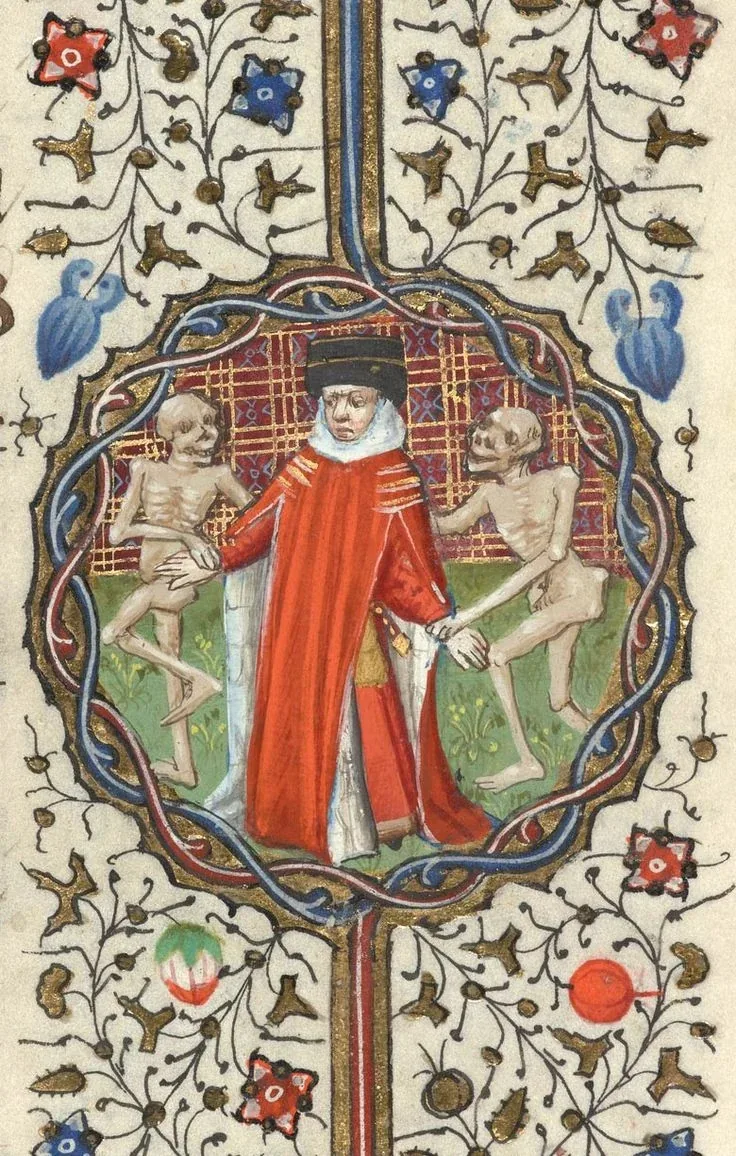
 <figcaption><div class="caption-copy"><strong>Figure V · Two Encounters</strong><p data-caption>Two encounters from a Parisian Book of Hours, produced around 1430–1435. Left: A probable knight, wearing a chaperon hat with a badge, a gold collar, a sheathed sword, and spurs, stands with his arms extended as two skeletal figures grasp him on either side. The scene occupies a marginal medallion surrounded by elaborate foliage and vinescroll ornament. Right: A probable magistrate, distinguished by his long robes and hat, is similarly confronted by two skeletal figures. Although their clothing and attributes proclaim different positions within medieval society, neither can escape the summons of the dead.</p></div><div class="caption-tools"><button type="button" data-examine>⌕ Examine image</button><details class="object-details"><summary>ⓘ Image credit</summary><div class="museum-credit"><p data-credit>Left: Dance of Death: Knight (?), Book of Hours, Paris, c. 1430–1435. Illuminated manuscript, MS M.359, fol. 129v. The Morgan Library & Museum, New York. Collection record. Right: Dance of Death: Magistrate (?), Book of Hours, Paris, c. 1430–1435. Illuminated manuscript, MS M.359, fol. 128r. The Morgan Library & Museum, New York. Collection record. Source: Folio 129v https://ica.themorgan.org/manuscript/page/255/76807; folio 128r https://ica.themorgan.org/manuscript/page/252/76807 Explore full manuscript: https://ica.themorgan.org/manuscript/page/1/76807</p><a data-source href="https://ica.themorgan.org/manuscript/page/255/76807" target="_blank" rel="noopener">Original source</a> · <a href="https://ica.themorgan.org/manuscript/page/252/76807" target="_blank" rel="noopener">Folio 128r source</a></div></details></div></figcaption>
</figure>


<p>The pope came first.</p>
<p>In the French Danse Macabre, the procession opened with the highest representatives of ecclesiastical authority. The pope was followed by the emperor, the cardinal by the king, and the sequence continued, altering between the hierarchies of Church and society.<sup><a href="#ref-44" aria-label="Reference 44">[44]</a></sup> The arrangement was very much deliberate.</p>
<p>Their identities were proclaimed through clothing, insignia, and the objects associated with their offices. An emperor could be recognized by his crown and symbols of sovereignty, a bishop by his miter and vestments, a merchant by the attributes of his trade.<sup><a href="#ref-45" aria-label="Reference 45">[45]</a></sup> And yet beside each stood a figure whose appearance seemed to mock such distinctions. The dead gestured, grasped, and beckoned, apparently indifferent to the authority their companions had wielded in life.</p>
<p>The French poem gave each pairing its script. Each representative of the dead summoned their living counterpart, who responded with a brief reflection upon the approaching end of their earthly existence.<sup><a href="#ref-46" aria-label="Reference 46">[46]</a></sup> The emperor discovered that sovereign authority could not secure his survival, the king confronted the loss of his dominion, and others lamented the wealth, ambitions, responsibilities, or pleasures they were being forced to abandon.<sup><a href="#ref-47" aria-label="Reference 47">[47]</a></sup> These were not interchangeable expressions of fear. The dialogue was shaped by the identity of the person being addressed. Earthly occupations and privileges furnished their substance of the warning. The powerful were reminded of the impermanence of their authority, while individuals occupying other positions confronted the particular attachments and obligations associated with their lives.<sup><a href="#ref-48" aria-label="Reference 48">[48]</a></sup> The dance thus belonged to a wider tradition of medieval estates satire, in which the characteristic conduct and moral failings of different social groups became subjects of criticism.<sup><a href="#ref-49" aria-label="Reference 49">[49]</a></sup></p>
<p>There was something quietly subversive about the spectacle. An emperor who commanded armies could not command a corpse to leave. A pope whose office represented the highest earthly authority of the Church could not obtain an exemption from his summons. The dead, stripped of the splendor that distinguished the living, seemed to hold an authority before which even the most prestigious were powerless.</p>
<p>But did this really make the Dance a declaration of equality?</p>


<figure class="danse-figure" id="figure-6" data-museum-figure >
 
 <div class="panorama-viewport" tabindex="0" ><div class="figure-images"><img src="/assets/articles/danse-macabre/ESS002-fig-6.webp" srcset="/assets/articles/danse-macabre/ESS002-fig-6-small.webp 723w, /assets/articles/danse-macabre/ESS002-fig-6.webp 1157w" sizes="(max-width:800px) 90vw, 1100px" data-original="/assets/articles/danse-macabre/ESS002-fig-6.jpg" alt="Society and Death" loading="lazy" decoding="async"></div></div>
 
 <figcaption><div class="caption-copy"><strong>Figure VI · Society and Death</strong><p data-caption>Ecclesiastical dignitaries, secular rulers, and other richly dressed figures join skeletal partners in this sixteenth-century German interpretation of the Dance of Death. Although the participants share a common fate, their clothing, attributes, and positions preserve the distinctions of the society they represent. The contrast between the animated skeletons and their living companions makes the procession's central paradox immediately visible: death comes for everyone, but the living are never quite anonymous.</p></div><div class="caption-tools"><button type="button" data-examine>⌕ Examine image</button><details class="object-details"><summary>ⓘ Image credit</summary><div class="museum-credit"><p data-credit>Anonymous German artist, The Dance of Death, sixteenth century. Pen and brown ink, brush and brown ink, watercolor, gouache, and gold paint. The Metropolitan Museum of Art, New York, accession no. 1996.70. Public Domain. .</p><a data-source href="https://www.metmuseum.org/art/collection/search/334871" target="_blank" rel="noopener">Original source</a></div></details></div></figcaption>
</figure>


<p>The answer is more complicated than it first appears. As observed by Johan Mackenbach, the Danse Macabre’s insistence upon universal mortality did not necessarily amount to a criticism of the social hierarchy itself.<sup><a href="#ref-50" aria-label="Reference 50">[50]</a></sup> Indeed, the procession depended upon that very hierarchy for its meaning. The pope appeared before the lesser cleric, the emperor before the ordinary laborer, and each was distinguished by precisely the privileges and positions that death would ultimately render temporary.</p>
<p>When the mural first appeared at the Cemetery of the Holy Innocents around 1425, Paris was a city of contested crowns. Following the Treaty of Troyes in 1420, the French succession had become entangled with English and Burgundian claims to authority. Henry V of England and Charles VI of France had both died in 1422, leaving the infant Henry VI recognized as heir to the French crown under the Anglo-Burgundian settlement, while the disinherited dauphin, the future Charles VII, maintained a rival claim.<sup><a href="#ref-51" aria-label="Reference 51">[51]</a></sup></p>
<p>The painted procession nevertheless presented a seemingly familiar political and ecclesiastical order. It contained kings, emperors, and officers whose titles implied the continuity of institutions, even as the identities and legitimacy of those exercising authority were being contested beyond the cemetery walls.<sup><a href="#ref-52" aria-label="Reference 52">[52]</a></sup> For a Parisian spectator, the image of a monarch summoned by death might therefore have possessed a resonance considerably more immediate than an abstract warning about the vanity of worldly power. Sophie Oosterwijk has suggested that certain figures may even have evoked recognizable historical individuals. The king represented in an early Parisian Book of Hours, for example, possesses features and heraldic attributes that she compares with representations of Charles VI.<sup><a href="#ref-53" aria-label="Reference 53">[53]</a></sup> The identification remains uncertain. The original mural has long since disappeared, and the surviving manuscript cannot establish that its painted monarch was intended as a portrait.<sup><a href="#ref-53" aria-label="Reference 53">[53]</a></sup> Still, the possibility raises an important question. Could the Dace have addressed not only the transience of kingship, but the memory of particular kings?</p>
<p>Perhaps an even more revealing detail concerns someone who was apparently missing.</p>
<p>Among the ranks represented in the Parisian sequence, there was no duke.<sup><a href="#ref-54" aria-label="Reference 54">[54]</a></sup> This absence stands out because ducal figures appeared in other Dance of Death traditions, and Guy Marchant would eventually include one in his expanded printed edition of 1486.<sup><a href="#ref-54" aria-label="Reference 54">[54]</a></sup></p>
<p>In early fifteenth-century France, the title carried particularly charged political associations. Louis of Orléans had been assassinated in 1407, John the Fearless, Duke of Burgundy, in 1419, and Charles of Orléans remained a prisoner in England. Philip the Good, meanwhile, held a position of considerable influence within the Anglo-Burgundian alliance.<sup><a href="#ref-55" aria-label="Reference 55">[55]</a></sup> Oosterwijk proposes that the omission might have reflected the political sensitivities surrounding these figures.<sup><a href="#ref-56" aria-label="Reference 56">[56]</a></sup> A duke humiliated by Death could perhaps have suggested rather more than a general warning concerning mortality.</p>
<p>Yet no surviving commission or contemporary explanation demonstrates that the omission was deliberate, much less politically motivated.<sup><a href="#ref-56" aria-label="Reference 56">[56]</a></sup> The absence may reflect an artistic convention, a textual choice, or some circumstance that the surviving evidence no longer allows us to recover.</p>
<p>Still, someone had to decide who would stand in that procession, and in what order. If those choices mattered in Paris, what happened when the Dance traveled elsewhere? Death might summon everyone. But who, ultimately, decided who would join the procession?</p>


<figure class="danse-figure" id="figure-7" data-museum-figure >
 
 <div class="panorama-viewport" tabindex="0" ><div class="figure-images"><img src="/assets/articles/danse-macabre/ESS002-fig-7.webp" srcset="/assets/articles/danse-macabre/ESS002-fig-7-small.webp 499w, /assets/articles/danse-macabre/ESS002-fig-7.webp 499w" sizes="(max-width:800px) 90vw, 1100px" data-original="/assets/articles/danse-macabre/ESS002-fig-7.jpg" alt="The Papal Legate and the Duke" loading="lazy" decoding="async"></div></div>
 
 <figcaption><div class="caption-copy"><strong>Figure VII · The Papal Legate and the Duke</strong><p data-caption>Guy Marchant’s printed Dance of Death pairs the papal legate and the duke with skeletal companions. The supplied image is labelled “Le legat” and “Le duc”.</p></div><div class="caption-tools"><button type="button" data-examine>⌕ Examine image</button><details class="object-details"><summary>ⓘ Image credit</summary><div class="museum-credit"><p data-credit>Guy Marchant, Dance of Death, papal legate and duke. Public domain, via Wikimedia Commons. The supplied draft’s women’s Dance caption does not describe this image; final caption and edition require editorial review.</p><a data-source href="https://commons.wikimedia.org/wiki/File:Danse_Macabre_-_Guyot_Marchand5_(Papal_Legate_and_Duke).jpg" target="_blank" rel="noopener">Original source</a></div></details></div></figcaption>
</figure>


<p>For more than sixty years after the Dance appeared on the walls of the Holy Innocents, one notable group was missing from its procession.</p>
<p>There were no women. Popes and emperors had been summoned, kings stripped of their authority, merchants of their possessions, and laborers of the lives they had spent working. Yet the women of medieval Paris were nowhere to be found among the living participants.<sup><a href="#ref-57" aria-label="Reference 57">[57]</a></sup> Death, it seemed, had overlooked half of humanity.</p>
<p>In 1486, the Parisian printer Guy Marchant published an expanded version of his illustrated Danse Macabre. Among its additions was an entirely separate procession of women. The dead now summoned queens and duchesses, wives and widows, young women and old.<sup><a href="#ref-58" aria-label="Reference 58">[58]</a></sup> The terms on which women entered the Dance, however, differed revealingly from those given to men.</p>
<p>Where the male procession emphasized ecclesiastical office, political authority, and occupation, many of the female participants were identified through marriage, family relationships, age, or sexual status. The widow, the newlywed, the pregnant woman, and the maiden appeared not only as individuals confronting death, but as representatives of particular expectations about women’s lives.<sup><a href="#ref-59" aria-label="Reference 59">[59]</a></sup> Their presence broadened the Dance&#x27;s claim to represent humanity while exposing the distinctions through which its creators understood that humanity.</p>
<p>Nor was the separation a rule. Elsewhere in Europe, women could appear within the same procession as men, their places determined by local convention.<sup><a href="#ref-60" aria-label="Reference 60">[60]</a></sup> Wherever the Dance went, its artists and authors had to decide who counted as a recognizable member of society.</p>
<p>Those decisions became more visible as the Danse Macabre traveled beyond France.</p>
<p>Across the Channel, the English poet John Lydgate adapted the French Dance in the fifteenth century, translating its moral encounters into Middle English while altering the company of the living.<sup><a href="#ref-61" aria-label="Reference 61">[61]</a></sup> His versions introduced figures and adjustments absent from the French sequence, including female participants, and a later revision was associated with a painted Dance at St Paul’s in London.<sup><a href="#ref-62" aria-label="Reference 62">[62]</a></sup> The Dance didn’t just cross the Channel. It arrived with a different cast. Other versions widened the circle in another direction, toward religious difference. In the Castillan Dança general de la muerte, Death summons an alfaquí, a Muslim religious scholar, among the Christian authorities and other representatives of society.<sup><a href="#ref-63" aria-label="Reference 63">[63]</a></sup> His presence is telling. The procession acknowledges a world in which different religious communities lived side by side, yet inclusion did not mean even-handedness. The words and attributes assigned to such figures were shaped by the religious assumptions of the society that produced the poem.<sup><a href="#ref-64" aria-label="Reference 64">[64]</a></sup></p>
<p>Farther east, on the Istrian peninsula, the Dance returned to the wall, this time in small village churches along the northern Adriatic.</p>


<figure class="danse-figure danse-panorama" id="figure-8" data-museum-figure data-fresco>
 <div class="figure-select" role="group" aria-label="Select fresco"><button type="button" data-fresco-select="beram" aria-pressed="true">Beram · 1474</button><button type="button" data-fresco-select="hrastovlje" aria-pressed="false">Hrastovlje · 1490</button></div>
 <div class="panorama-viewport" tabindex="0" aria-label="Artwork panorama, scroll sideways to explore"><div class="figure-images"><img src="/assets/articles/danse-macabre/ESS002-fig-8-beram.webp" srcset="/assets/articles/danse-macabre/ESS002-fig-8-beram-small.webp 800w, /assets/articles/danse-macabre/ESS002-fig-8-beram.webp 1600w" sizes="(max-width:800px) 90vw, 1100px" data-original="/assets/articles/danse-macabre/ESS002-fig-8-beram.jpeg" alt="Two Dances, Two Churches" loading="lazy" decoding="async"></div></div>
 <div class="panorama-controls"><button type="button" data-panorama-open>Explore the Procession</button><button type="button" data-pan-left aria-label="Move left">←</button><button type="button" data-pan-right aria-label="Move right">→</button><button type="button" data-pan-reset>Full-image overview</button></div>
 <figcaption><div class="caption-copy"><strong>Figure VIII · Two Dances, Two Churches</strong><p data-caption>Painted in 1474, the Dance of Death at Beram transforms the inevitability of mortality into an animated and occasionally irreverent spectacle. Skeletons play music, gesture toward their living companions, and lead representatives of society toward an enthroned Death. Among the participants are figures who attempt to purchase their release, including a pope, queen, and merchant or moneylender. The fresco exposes the futility of wealth and status through gestures that are at once theatrical and unmistakably moralizing.</p></div><div class="caption-tools"><button type="button" data-examine>⌕ Examine image</button><details class="object-details"><summary>ⓘ Image credit</summary><div class="museum-credit"><p data-credit>Vincent of Kastav, Dance of Death, 1474. Fresco, Church of St Mary on Škriline, Beram, Croatia. Photograph: Toffel, 2008, Wikimedia Commons, CC BY-SA 3.0.</p><a data-source href="https://commons.wikimedia.org/wiki/File:Totentanz_Maria_im_Fels_Beram.JPG" target="_blank" rel="noopener">Original source</a></div></details></div></figcaption>
</figure>


<p>In 1474, Vincent of Kastav painted a Dance of Death in the Church of St Mary on Škriline at Beram. Sixteen years later, John of Kastav produced another in the Church of the Holy Trinity at Hrastovlje.<sup><a href="#ref-65" aria-label="Reference 65">[65]</a></sup> Though painted only a short distance and a few years apart, the two frescoes approach the subject very differently. At Beram, the dead are anything but solemn. Skeletons gesture energetically, carry weapons, and play musical instruments as they escort ten living participants toward Death, who sits enthroned with a set of bagpipes.<sup><a href="#ref-66" aria-label="Reference 66">[66]</a></sup> The composition has an almost carnivalesque energy to it., yet beneath its apparent absurdity lies a pointed criticism of the attachments that bound individuals to the world.</p>
<p>Several participants try to buy their way out.</p>
<p>The pope offers money. So does a queen. A merchant or moneylender gestures toward the wealth displayed before him.<sup><a href="#ref-66" aria-label="Reference 66">[66]</a></sup> Their gestures make the procession’s warning almost comically literal. Even with Death standing before them, worldly privilege had not extinguished the hope that everything might still be negotiable. But Death was not interested in bargaining.</p>
<p>Beram also shows how hard it can be to recover the identities intended by medieval painters. One participant traditionally identified as a cardinal has been reinterpreted by Tomislav Vignjević as an abbess, based upon the figure’s appearance and clothing.<sup><a href="#ref-67" aria-label="Reference 67">[67]</a></sup> If correct, the identification would place a woman occupying religious authority within the procession itself. But without an inscription securely naming the figure, the proposal remains an interpretation rather than an established fact.</p>
<p>Hrastovlje offers a different setting. Its procession belongs to a longer painted program that includes imagery associated with the protection of the faithful and the inevitability of death.<sup><a href="#ref-68" aria-label="Reference 68">[68]</a></sup> The contrast is a reminder that these images were never isolated masterpieces. They belonged to the architecture and devotional life around them.</p>
<p>By the end of the fifteenth century, the Dance of Death had become far more than a single Parisian composition. It could be translated, expanded, illustrated, painted, and reorganized, and its participants changed with the languages, institutions, occupations, and assumptions of the societies that reproduced it. The warning remained recognizable, but there was no single, unchanging procession of humanity.</p>
<p>Soon, an artist working in the German-speaking world would transform the Dance further. Instead of leading the living through a continuous procession, Death would begin to interrupt them in the midst of their ordinary lives.</p>


<figure class="danse-figure" id="figure-9" data-museum-figure >
 
 <div class="panorama-viewport" tabindex="0" ><div class="figure-images"><img src="/assets/articles/danse-macabre/ESS002-fig-9.webp" srcset="/assets/articles/danse-macabre/ESS002-fig-9-small.webp 701w, /assets/articles/danse-macabre/ESS002-fig-9.webp 1121w" sizes="(max-width:800px) 90vw, 1100px" data-original="/assets/articles/danse-macabre/ESS002-fig-9.jpg" alt="The Nuremberg Chronicle" loading="lazy" decoding="async"></div></div>
 
 <figcaption><div class="caption-copy"><strong>Figure IX · The Nuremberg Chronicle</strong><p data-caption>Skeletons join in a lively dance in this woodcut from the Nuremberg Chronicle, published in 1493. Their animated gestures demonstrate how the imagery of death could combine theatrical movement with the contemplation of mortality. Within a generation, Hans Holbein the Younger would transform the tradition further, placing Death directly into the everyday activities of the living.</p></div><div class="caption-tools"><button type="button" data-examine>⌕ Examine image</button><details class="object-details"><summary>ⓘ Image credit</summary><div class="museum-credit"><p data-credit>Michael Wolgemut, Dance of Death, leaf from The Nuremberg Chronicle, 1493. Woodcut and letterpress text. The Metropolitan Museum of Art, New York. Bequest of Herbert Mitchell, 2008 (2018.839.160). Public Domain. Source: https://www.metmuseum.org/art/collection/search/390220</p><a data-source href="https://www.metmuseum.org/art/collection/search/390220" target="_blank" rel="noopener">Original source</a></div></details></div></figcaption>
</figure>


<p>In 1893, the London bookbinder Joseph Zaehnsdorf wrote an unusual letter concerning a volume he had bound for a collector.</p>
<p>The book was an illustrated edition of Hans Holbein’s Dance of Death, published in 1816. Its subject was already macabre enough, but Zeehnsdorf’s choice of binding material transformed it into something more unsettling still. The volume, he explained, had been bound in human skin.<sup><a href="#ref-69" aria-label="Reference 69">[69]</a></sup></p>
<p>There had apparently been a practical difficulty. The available skin was too small to cover the large book without being divided, which left different surfaces of the prepared material exposed on its front and back.<sup><a href="#ref-70" aria-label="Reference 70">[70]</a></sup> Zaehnsdorf described the problem with the practical attention of a craftsman. Zaehnsdorf described the problem as any craftsman would, as a matter of coverage and material. The material, however, had once been a person.</p>
<p>Such claims call for caution. Books supposedly bound in human skin have often gathered reputations through inscriptions, collectors’ stories, and booksellers’ descriptions, many of which have proved unreliable.<sup><a href="#ref-71" aria-label="Reference 71">[71]</a></sup> But this particular volume offers more than a sensational account. In 2015, scientific examination of the binding through peptide mass fingerprinting confirmed its human origin.<sup><a href="#ref-72" aria-label="Reference 72">[72]</a></sup></p>
<p>The discovery raises questions that Zaehnsdorf’s letter cannot answer. Whose skin had been used? Under what circumstances had it been obtained? Had the person ever consented to such treatment? The surviving evidence does not establish their identity or wishes.<sup><a href="#ref-73" aria-label="Reference 73">[73]</a></sup></p>
<p>More than three centuries after Holbein created his remarkable images of mortality, a collector could encounter those images within a book that physically incorporated human remains.</p>
<p>But to understand why Holbein’s illustrations continued to provoke such fascination, we need to return to the world in which they were created. In the 1520s, the German artist Hans Holbein the Younger was working in Basel, a city whose flourishing printing industry and humanist intellectual culture existed alongside increasingly bitter religious disagreement.<sup><a href="#ref-74" aria-label="Reference 74">[74]</a></sup> The Protestant Reformation was transforming the political and spiritual landscape of Europe, but the confessional divisions that would later characterize this upheaval had not yet fully crystallized.<sup><a href="#ref-74" aria-label="Reference 74">[74]</a></sup></p>
<p>In that unsettled environment, Holbein designed a series of extraordinarily intricate woodcuts depicting encounters between Death and the living. The designs were cut into printing blocks by Hans Lützelburger, whose technical skill enabled astonishingly elaborate scenes to be reproduced at a remarkably small scale.<sup><a href="#ref-75" aria-label="Reference 75">[75]</a></sup></p>
<p>The earliest surviving impressions probably date to around 1525–26, yet the celebrated print collection did not appear until 1538, when the images were published in Lyon under the title Les Simulachres &amp; historiées faces de la mort.<sup><a href="#ref-76" aria-label="Reference 76">[76]</a></sup> The familiar medieval subject now took a form far removed from processions painted on church walls.</p>
<p>Holbein’s dead no longer needed to lead their companions toward the grave. Instead, they entered the world of the living.</p>
<p>In one scene, Death interrupts a wealthy man and takes his money. In another, it snuffs out a candle beside a nun distracted from her religious duties. Elsewhere, it guides a plow beside a farmer engaged in the ordinary work of earning his living.<sup><a href="#ref-77" aria-label="Reference 77">[77]</a></sup> The encounters are brief, but each is now a self-contained story whose meaning emerges from the setting, occupation, gestures, and possessions of the person confronted.</p>
<p>Earlier Dances of Death had arranged humanity in a sequence of recognizable social identities, each receiving summons from the dead. Holbein kept those identities but placed his figures within the very activities that defined their lives.<sup><a href="#ref-78" aria-label="Reference 78">[78]</a></sup> Death no longer waited at the end of a procession. It had moved into daily life.</p>


<figure class="danse-figure" id="figure-10" data-museum-figure >
 
 <div class="panorama-viewport" tabindex="0" ><div class="figure-images"><img src="/assets/articles/danse-macabre/ESS002-fig-10.webp" srcset="/assets/articles/danse-macabre/ESS002-fig-10-small.webp 708w, /assets/articles/danse-macabre/ESS002-fig-10.webp 1132w" sizes="(max-width:800px) 90vw, 1100px" data-original="/assets/articles/danse-macabre/ESS002-fig-10.jpg" alt="The Price of Possession" loading="lazy" decoding="async"></div></div>
 
 <figcaption><div class="caption-copy"><strong>Figure X · The Price of Possession</strong><p data-caption>A wealthy man yells as Death reaches for the coins piled upon his table. Chests and money bags crowd the foreground, surrounding him with the possessions he can no longer protect. In Holbein's Dance of Death, the familiar medieval procession gives way to individual encounters, exposing the fragility of wealth and worldly security.</p></div><div class="caption-tools"><button type="button" data-examine>⌕ Examine image</button><details class="object-details"><summary>ⓘ Image credit</summary><div class="museum-credit"><p data-credit>Hans Holbein the Younger (designer), Dance of Death: The Miser, c. 1526. Woodcut, engraved by Hans Lützelburger. Cleveland Museum of Art, Gift of The Print Club of Cleveland, accession no. 1929.161. Image: Cleveland Museum of Art, Open Access, CC0 (public domain). Source: https://www.clevelandart.org/art/1929.161</p><a data-source href="https://www.clevelandart.org/art/1929.161" target="_blank" rel="noopener">Original source</a></div></details></div></figcaption>
</figure>


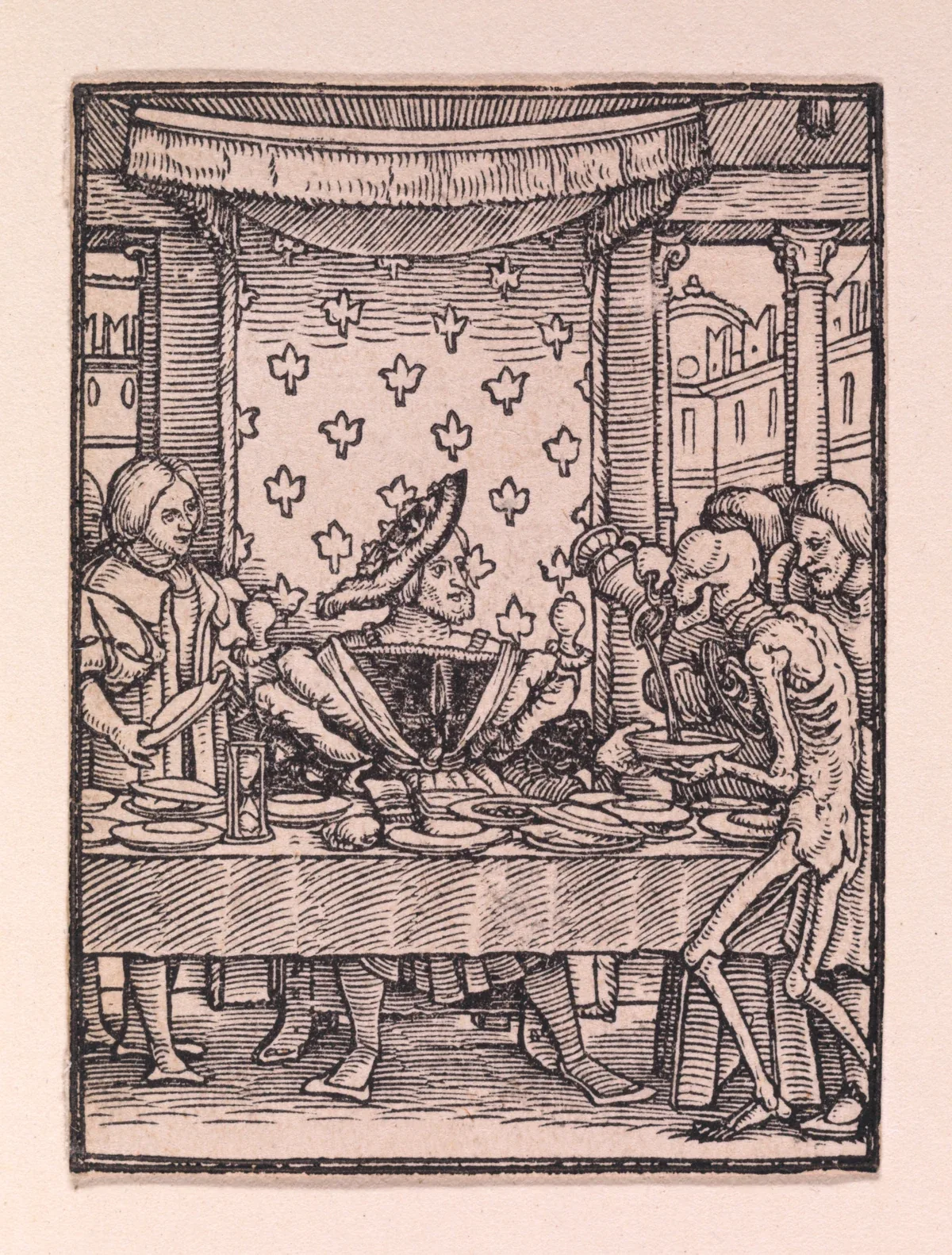
<a class="kerma-card" href="/objects-in-focus/when-death-comes-calling/?from=article"><img src="/assets/objects/holbein/OIF001-fig-1.webp" alt="" loading="lazy"><div><span>OBJECTS IN FOCUS · 31 OCTOBER 2026</span><h2>When Death Comes Calling</h2><p class="kerma-card-subtitle">Four Encounters in Holbein’s Dance of Death</p><p class="kerma-card-description">Four small woodcuts. Four encounters with Death. Examine the details of Holbein’s banquet, religious chamber, farmer’s field, and family hearth—and explore why each encounter invites a different interpretation.</p><span>Explore the four encounters →</span></div></a>
<p>The scene of Death and the rich man offers a telling example. Holbein does not merely depict a corpse dragging a wealthy individual toward his inevitable fate. Instead, Death seizes his money, so that the loss of possessions and the loss of life become inseparable.<sup><a href="#ref-79" aria-label="Reference 79">[79]</a></sup> The image suggests how thoroughly worldly identity could become entangled with wealth, and how completely death could unravel that attachment.</p>
<p>It would be tempting to read the entire series in this way, as a collection of punishments directed against human vanity, greed, and misconduct. But Holbein’s images resist such a simple explanation.</p>
<p>Consider the plowman. Death accompanies him as he works the soil, an activity neither obviously sinful nor unnecessary. Agricultural labor sustains life, but even this indispensable work unfolds under the certainty of mortality.<sup><a href="#ref-80" aria-label="Reference 80">[80]</a></sup> Or consider the child, whose encounter with Death can hardly be interpreted as punishment for some personal moral failing.<sup><a href="#ref-81" aria-label="Reference 81">[81]</a></sup></p>
<p>Peter Parshall has argued that this pairing of immediately recognizable action with interpretive ambiguity lies at the heart of Holbein’s achievement.<sup><a href="#ref-82" aria-label="Reference 82">[82]</a></sup> The viewer understands what happens in each picture without necessarily arriving at a single, definitive explanation of what it means.</p>
<p>Even the religious character of the series remained open to reinterpretation. Although Holbein&#x27;s images emerged during the Reformation, their subsequent publication histories were shaped by both Catholic and Protestant interests. The texts accompanying later editions could direct readers toward different theological conclusions, without demonstrating that Holbein himself had intended any one of them.<sup><a href="#ref-83" aria-label="Reference 83">[83]</a></sup></p>
<p>Over the following centuries, Holbein’s images circulated through new editions, translations, adaptations, and collections. The nineteenth century, with its antiquarian fascination for the medieval past, continued to reinterpret the Dance through its own religious assumptions and artistic tastes.<sup><a href="#ref-84" aria-label="Reference 84">[84]</a></sup></p>
<p>Zaehnsdorf’s binding belongs to that later world of collectors. It was not alone. Another edition of Holbein&#x27;s Dance of Death, published in 1898 and subsequently bound by Alfred Cox, was likewise identified as having a human-skin binding. Scientific analysis confirmed the material of both volumes.<sup><a href="#ref-85" aria-label="Reference 85">[85]</a></sup></p>
<p>There is a disturbing irony here, but it would be a mistake to treat it merely as one more macabre curiosity. The skin belonged to actual people whose identities and circumstances have largely vanished from the historical record. Their remains became materials in objects valued and collected by others, while the images those objects contained continued to proclaim the importance of worldly possessions and vulnerability of every human life.<sup><a href="#ref-86" aria-label="Reference 86">[86]</a></sup></p>


<figure class="danse-figure danse-panorama" id="figure-11" data-museum-figure >
 
 <div class="panorama-viewport" tabindex="0" aria-label="Artwork panorama, scroll sideways to explore"><div class="figure-images"><img src="/assets/articles/danse-macabre/ESS002-fig-11.webp" srcset="/assets/articles/danse-macabre/ESS002-fig-11-small.webp 800w, /assets/articles/danse-macabre/ESS002-fig-11.webp 2200w" sizes="(max-width:800px) 90vw, 1100px" data-original="/assets/articles/danse-macabre/ESS002-fig-11.jpg" alt="The Unfinished Dance" loading="lazy" decoding="async"></div></div>
 <div class="panorama-controls"><button type="button" data-panorama-open>Explore the Procession</button><button type="button" data-pan-left aria-label="Move left">←</button><button type="button" data-pan-right aria-label="Move right">→</button><button type="button" data-pan-reset>Full-image overview</button></div>
 <figcaption><div class="caption-copy"><strong>Figure XI · The Unfinished Dance</strong><p data-caption>Thirteen figures remain from a monumental Dance of Death painted in the late fifteenth century. A preacher introduces a procession of skeletal figures and representatives of earthly authority, accompanied by dialogue in Low German. The surviving canvas extends approximately 7.5 metres, but the original composition was probably considerably longer. Its abrupt ending offers a reminder of how much of the medieval Dance of Death has disappeared and how carefully its surviving evidence must be interpreted.</p></div><div class="caption-tools"><button type="button" data-examine>⌕ Examine image</button><details class="object-details"><summary>ⓘ Image credit</summary><div class="museum-credit"><p data-credit>Workshop of Bernt Notke, Dance of Death (Surmatants), late fifteenth century. Oil and tempera on canvas, 163 × 750 cm. Art Museum of Estonia, Niguliste Museum, Tallinn, accession no. EKM j 18761 N 153.  Source: BerntNotke, Public domain, via Wikimedia Commons</p><a data-source href="https://commons.wikimedia.org/wiki/File:Bernt_Notke_Danse_Macabre.jpg" target="_blank" rel="noopener">Original source</a></div></details></div></figcaption>
</figure>


<p>In Tallinn’s old town, a medieval church stands among the narrow streets and historic buildings of the former Hanseatic city. Its Gothic walls once enclosed the ceremonies of a prosperous merchant community, and today, the Church of St Nicholas houses a branch of the Art Museum of Estonia.</p>
<p>Inside, a visitor passes beneath high vaults, and among artworks that once belonged to the religious life of the Estonian capital. But it is within St Anthony’s Chapel that one of the church’s most greatest treasures awaits.<sup><a href="#ref-87" aria-label="Reference 87">[87]</a></sup></p>
<p>Across a long stretch of painted canvas, the dead are dancing.</p>
<p>A preacher stands in his pulpit, addressing an audience now separated from him by centuries. Beside him, a skeletal figure plays the bagpipes, while another carries a coffin. Then the living begin to appear. A pope in his tiara, an emperor with his sword and orb, an empress, a cardinal, and a king. Their clothing and insignia announce the positions they hold in society. The dead seem entirely unconcerned by such distinctions.<sup><a href="#ref-88" aria-label="Reference 88">[88]</a></sup></p>
<p>Beneath their feet, a winding band of Low German verse preserves the words of the encounter.<sup><a href="#ref-88" aria-label="Reference 88">[88]</a></sup> The painted figures are silent, but their voices have not entirely disappeared. For a moment, the scene seems familiar, the same hierarchy of the living confronted by the inevitability of death that we met in Paris. Then, as the visitor follows the painting toward its right-hand edge, the Dance abruptly stops.</p>
<p>Only the first edge of a bishop’s robe is visible. Beyond it, the procession is gone.<sup><a href="#ref-89" aria-label="Reference 89">[89]</a></sup></p>
<p>What survives is just seven and a half meters of a work that may have once stretched nearly thirty. Its thirteen remaining figures offer an amazing glimpse into a late-medieval representation of mortality, but most of the painting has been lost.<sup><a href="#ref-89" aria-label="Reference 89">[89]</a></sup></p>
<p>And the missing figures are only the first of its mysteries. The painting is generally attributed to Bernt Notke, a prominent late-medieval artist working primarily in the Hanseatic city of Lübeck. His workshop produced another monumental Dance of Death for St Mary’s Church there in 1463.<sup><a href="#ref-90" aria-label="Reference 90">[90]</a></sup> The two compositions were closely related, sharing recognizable figures and elements of their poetic structure, although their backgrounds and accompanying verses differed.<sup><a href="#ref-91" aria-label="Reference 91">[91]</a></sup></p>
<p>Even so, the relationship between them has long provoked disagreement. Was the Tallinn painting an independent commission? A later copy? Or might it have been a surviving fragment removed from the larger Lübeck composition? Throughout the twentieth century, scholars proposed competing explanations, sometimes drawing confident conclusions from similarities in painted techniques, materials, and style.<sup><a href="#ref-92" aria-label="Reference 92">[92]</a></sup></p>
<p>Even the painting’s original location is uncertain. Its present display in St Anthony’s Chapel has encouraged the suggestion that it was commissioned for that space in the late fifteenth century, when the chapel was being rebuilt. But the earliest surviving written reference dates only to 1603, and no document names the original patron.<sup><a href="#ref-93" aria-label="Reference 93">[93]</a></sup></p>
<p>Between 1962 and 1965, the canvas underwent an extensive restoration in Moscow. Conservators investigating its surface discovered that much of the medieval painting lay beneath later interventions. Layers of overpainting, including substantial nineteenth-century additions, had altered the appearance upon which earlier scholars had based some of their interpretations.<sup><a href="#ref-94" aria-label="Reference 94">[94]</a></sup></p>
<p>The investigation combined technical examination alongside the careful removal of secondary paint layers, exposing elements of the original composition and revealing evidence of its construction.<sup><a href="#ref-95" aria-label="Reference 95">[95]</a></sup> Traces that had been hidden for generations could be seen again.</p>
<p>The restoration contributed important evidence against the idea that Tallinn held a piece physically cut from the Lübeck composition. Still, the technical findings could not conclusively identify the artist, reconstruct the missing procession, or establish the exact circumstances of the commission.<sup><a href="#ref-96" aria-label="Reference 96">[96]</a></sup></p>
<p>St Nicholas’ Church was also a place where the living kept their rank in the presence of the dead. It was also a place where the social divisions of the living continued to shape the treatment and commemoration of the dead. Burial inside the church was a privilege that required money, and the placement of graves and memorials followed gradations of prestige. Wealthy merchants, guilds, and other corporate associations maintained burial spaces for their members.<sup><a href="#ref-97" aria-label="Reference 97">[97]</a></sup></p>
<p>A painting that warned of universal death thus hung in a building where status followed people into the ground. The painting did not necessarily challenge those arrangements, and we cannot say that those who commissioned or viewed it saw the contrast in these exact terms. But the funerary evidence is a reminder that medieval attitudes toward death were expressed not only in paintings and poetry but in the ground itself, in where bodies were buried, remembered, and ranked. Elina Gertsman has argued that the Tallinn Dance may be understood as an encounter between a painted preacher and the spectators standing before him. The opening figure addresses the audience, while the procession and its accompanying dialogue invite viewers to recognize their own eventual place among the dead.<sup><a href="#ref-98" aria-label="Reference 98">[98]</a></sup></p>
<p>Yet its historical audience remains hard to reconstruct. We do not know precisely where every part of the original painting was displayed, who commissioned it, or how individual spectators responded.<sup><a href="#ref-99" aria-label="Reference 99">[99]</a></sup> The visitor standing before the fragment today meets a medieval artwork whose survival has preserved its warning without preserving all the circumstances that once gave it meaning.</p>
<p>In Paris, the original composition disappeared. Elsewhere, its figures survived through manuscripts, printed books, altered frescoes, and later reproductions. In Tallinn, the dead remain painted upon the canvas itself, even as much of the world that surrounded them has vanished.</p>


<figure class="danse-figure" id="figure-12" data-museum-figure >
 
 <div class="panorama-viewport" tabindex="0" ><div class="figure-images"><img src="/assets/articles/danse-macabre/ESS002-fig-12.webp" srcset="/assets/articles/danse-macabre/ESS002-fig-12-small.webp 800w, /assets/articles/danse-macabre/ESS002-fig-12.webp 1600w" sizes="(max-width:800px) 90vw, 1100px" data-original="/assets/articles/danse-macabre/ESS002-fig-12.jpg" alt="The Living Before the Dead" loading="lazy" decoding="async"></div></div>
 
 <figcaption><div class="caption-copy"><strong>Figure XII · The Living Before the Dead</strong><p data-caption>The surviving Dance of Death displayed in St Anthony's Chapel of the Niguliste Museum, Tallinn. Centuries after its creation, the monumental painting continues to confront visitors with a procession whose original extent, location, and audience remain incompletely understood. Its medieval spectators have disappeared, but the encounter between the living and the painted dead continues.</p></div><div class="caption-tools"><button type="button" data-examine>⌕ Examine image</button><details class="object-details"><summary>ⓘ Image credit</summary><div class="museum-credit"><p data-credit>Attributed to the workshop of Bernt Notke, Dance of Death, late fifteenth century. Art Museum of Estonia, Niguliste Museum, Tallinn. Source: https://nigulistemuuseum.ekm.ee/en/dance-of-death/</p><a data-source href="https://nigulistemuuseum.ekm.ee/en/dance-of-death/" target="_blank" rel="noopener">Original source</a></div></details></div></figcaption>
</figure>


<p>Nearly five centuries after the first figures appeared upon the walls of the Cemetery of the Holy Innocents, Walt Disney sent his own skeletons dancing through a moonlit graveyard. Much had changed. The solemn warnings of medieval preachers had become the material of comedy, artistic invention, and entertainment. Still, the dancing dead had proved remarkably difficult to lay to rest.</p>
<p>They had travelled across church walls and manuscript pages, entered the workshops of printers, and found themselves among the possessions of collectors. Along the way, they acquired new companions, new gestures, and new meanings. Some were painted over, some destroyed, and others survived in forms their original creators would hardly recognize.</p>
<p>In Tallinn, a handful of them are still dancing.</p>
<p>The visitors who stand before them today inhabit a world very different from the one in which they were painted. The offices, garments, and conventions that once made their living companions immediately recognizable now require explanation. Even the words beneath their feet belong to a language unfamiliar to most who pass before them.</p>
<p>And yet the encounter remains strangely intelligible. The dead extend their hands. The living hesitate. Somewhere beyond the surviving edge of the canvas, the procession continues.</p>
<p>We can no longer see where it leads.</p>
<p>Happy Halloween everyone.</p>
<section class="danse-references" id="image-credits"><h2>Image credits</h2><p><strong>I The Skeleton Song and Dance</strong> H. C. Miner Litho. Co., A Magical Musical Comedy, Bimbo of Bombay, 1897. Lithograph. Library of Congress, Theatrical Poster Collection. U.S. public domain; no known restrictions on publication. </p><p><strong>II The Cemetery of the Holy Innocents</strong> Fédor Hoffbauer, Le Cimetière des Innocents en 1750, published in Paris à travers les âges (1875–1882), Plate II. Lithograph by A. Bayalos. Original drawing held by Musée Carnavalet, Paris, inv. D.7922.  (CC0). <a href="https://www.parismuseescollections.paris.fr/fr/musee-carnavalet/oeuvres/le-cimetiere-des-innocents-en-1750-composition-retrospective" target="_blank" rel="noopener">Source</a></p><p><strong>III A Portable Procession</strong> Guy Marchant, La Danse macabre nouvelle (Paris, 1486). Bibliothèque nationale de France, Réserve des livres rares, Rés. Ye-189. Digitized by Gallica, BnF. View original. Source: https://gallica.bnf.fr/ark:/12148/btv1b2200008n/f2.item?__cf_chl_tk=Shkml2IT013Em4F1Eg7MLO01RL6 p8_tfbH1FjDFR7AA-1793395713-1.0.1.1-L0dKTk6aP617e5b_FPnKhca_7518J07t0kMQ3ISuxCE# <a href="https://gallica.bnf.fr/ark:/12148/btv1b2200008n/f2.item" target="_blank" rel="noopener">Source</a></p><p><strong>IV Before the Dead Danced</strong> The Three Living and the Three Dead, Psalter of Robert de Lisle, c. 1310. British Library, Arundel MS 83, fol. 127r. Image reproduction rights to be confirmed for the selected digital file. Specific photo in use from: https://www.facsimilefinder.com/articles/de-lisle-psalter-facsimile-alumina/ <a href="https://www.facsimilefinder.com/articles/de-lisle-psalter-facsimile-alumina/" target="_blank" rel="noopener">Source</a></p><p><strong>V Two Encounters</strong> Left: Dance of Death: Knight (?), Book of Hours, Paris, c. 1430–1435. Illuminated manuscript, MS M.359, fol. 129v. The Morgan Library & Museum, New York. Collection record. Right: Dance of Death: Magistrate (?), Book of Hours, Paris, c. 1430–1435. Illuminated manuscript, MS M.359, fol. 128r. The Morgan Library & Museum, New York. Collection record. Source: Folio 129v https://ica.themorgan.org/manuscript/page/255/76807; folio 128r https://ica.themorgan.org/manuscript/page/252/76807 Explore full manuscript: https://ica.themorgan.org/manuscript/page/1/76807 <a href="https://ica.themorgan.org/manuscript/page/255/76807" target="_blank" rel="noopener">Source</a></p><p><strong>VI Society and Death</strong> Anonymous German artist, The Dance of Death, sixteenth century. Pen and brown ink, brush and brown ink, watercolor, gouache, and gold paint. The Metropolitan Museum of Art, New York, accession no. 1996.70. Public Domain. . <a href="https://www.metmuseum.org/art/collection/search/334871" target="_blank" rel="noopener">Source</a></p><p><strong>VII The Papal Legate and the Duke</strong> Guy Marchant, Dance of Death, papal legate and duke. Public domain, via Wikimedia Commons. The supplied draft’s women’s Dance caption does not describe this image; final caption and edition require editorial review. <a href="https://commons.wikimedia.org/wiki/File:Danse_Macabre_-_Guyot_Marchand5_(Papal_Legate_and_Duke).jpg" target="_blank" rel="noopener">Source</a></p><p><strong>VIII Two Dances, Two Churches</strong> Vincent of Kastav, Dance of Death, 1474. Fresco, Church of St Mary on Škriline, Beram, Croatia. Photograph: Toffel, 2008, Wikimedia Commons, CC BY-SA 3.0. <a href="https://commons.wikimedia.org/wiki/File:Totentanz_Maria_im_Fels_Beram.JPG" target="_blank" rel="noopener">Source</a></p><p><strong>IX The Nuremberg Chronicle</strong> Michael Wolgemut, Dance of Death, leaf from The Nuremberg Chronicle, 1493. Woodcut and letterpress text. The Metropolitan Museum of Art, New York. Bequest of Herbert Mitchell, 2008 (2018.839.160). Public Domain. Source: https://www.metmuseum.org/art/collection/search/390220 <a href="https://www.metmuseum.org/art/collection/search/390220" target="_blank" rel="noopener">Source</a></p><p><strong>X The Price of Possession</strong> Hans Holbein the Younger (designer), Dance of Death: The Miser, c. 1526. Woodcut, engraved by Hans Lützelburger. Cleveland Museum of Art, Gift of The Print Club of Cleveland, accession no. 1929.161. Image: Cleveland Museum of Art, Open Access, CC0 (public domain). Source: https://www.clevelandart.org/art/1929.161 <a href="https://www.clevelandart.org/art/1929.161" target="_blank" rel="noopener">Source</a></p><p><strong>XI The Unfinished Dance</strong> Workshop of Bernt Notke, Dance of Death (Surmatants), late fifteenth century. Oil and tempera on canvas, 163 × 750 cm. Art Museum of Estonia, Niguliste Museum, Tallinn, accession no. EKM j 18761 N 153.  Source: BerntNotke, Public domain, via Wikimedia Commons <a href="https://commons.wikimedia.org/wiki/File:Bernt_Notke_Danse_Macabre.jpg" target="_blank" rel="noopener">Source</a></p><p><strong>XII The Living Before the Dead</strong> Attributed to the workshop of Bernt Notke, Dance of Death, late fifteenth century. Art Museum of Estonia, Niguliste Museum, Tallinn. Source: https://nigulistemuuseum.ekm.ee/en/dance-of-death/ <a href="https://nigulistemuuseum.ekm.ee/en/dance-of-death/" target="_blank" rel="noopener">Source</a></p><p><strong> Beram</strong> Vincent of Kastav, Dance of Death, 1474. Fresco, Church of St Mary on Škriline, Beram, Croatia. Photograph: Toffel, 2008, Wikimedia Commons, CC BY-SA 3.0. <a href="https://commons.wikimedia.org/wiki/File:Totentanz_Maria_im_Fels_Beram.JPG" target="_blank" rel="noopener">Source</a></p><p><strong> Hrastovlje</strong> John of Kastav, Dance of Death, 1490. Fresco, Church of the Holy Trinity, Hrastovlje, Slovenia. Photograph: János Korom Dr., 2009, Wikimedia Commons, CC BY-SA 2.0. <a href="https://commons.wikimedia.org/wiki/File:Dance_of_Death_-_Hrastovlje_fresco.jpg" target="_blank" rel="noopener">Source</a></p></section><section class="danse-references" id="references"><h2>References</h2>
<p id="ref-1"><strong>[1]</strong> Walt Disney Productions, The Skeleton Dance, directed by Walt Disney, animation principally by Ub Iwerks, music by Carl Stalling (1929); American Film Institute, “The Skeleton Dance,” AFI Catalog, https://catalog.afi.com/Film/70418-THE-SKELETON-DANCE.</p>
<p id="ref-2"><strong>[2]</strong> Russell Merritt and J. B. Kaufman, “The Skeleton of an Idea,” Walt Disney Family Museum, October 25, 2011, https://www.waltdisney.org/blog/skeleton-idea.</p>
<p id="ref-3"><strong>[3]</strong> Merritt and Kaufman, “The Skeleton of an Idea.”</p>
<p id="ref-4"><strong>[4]</strong> Garry Apgar, A Mickey Mouse Reader (Jackson: University Press of Mississippi, 2014), discussion of the contemporary New York Times report “Danes Ban ‘Mickey Mouse’” [exact page and newspaper date not verified].</p>
<p id="ref-5"><strong>[5]</strong> Ross Care, “Composing Walt Disney’s Silly Symphonies with Historian Ross Care: Stalling After Mickey,” Walt Disney Family Museum, August 19, 2019; American Film Institute, “The Skeleton Dance.”</p>
<p id="ref-6"><strong>[6]</strong> Jim Korkis, “The Spooky Story of ‘The Skeleton Dance,’” Cartoon Research, October 23, 2020, https://cartoonresearch.com/index.php/the-spooky-story-of-the-skeleton-dance/.</p>
<p id="ref-7"><strong>[7]</strong> Elina Gertsman, “Pleyinge and Peyntynge: Performing the Dance of Death,” Studies in Iconography 27 (2006); James M. Clark, The Dance of Death in the Middle Ages and the Renaissance (Glasgow: Jackson, Son &amp; Company, 1950).</p>
<p id="ref-8"><strong>[8]</strong> Sophie Oosterwijk, “Of Dead Kings, Dukes and Constables: The Historical Context of the Danse Macabre in Late Medieval Paris,” Journal of the British Archaeological Association 161 (2008): 132–36, https://doi.org/10.1179/174767008x330563; Caitlin John, “Urban Space, Power and People through the Optic of Cemeteries in Late Medieval Cairo and Paris,” Urban History 50 (2023): 641–42, 647, https://doi.org/10.1017/S0963926822000360.</p>
<p id="ref-9"><strong>[9]</strong> Oosterwijk, “Of Dead Kings,” 132–36; Maja Dujakovic, “Dancing with the Dance of the Dead: Cemetery of the Innocents and the Ramifications of the Macabre” (MA thesis, University of British Columbia, 2004), 33–45; John, “Urban Space,” 641–42.</p>
<p id="ref-10"><strong>[10]</strong> Oosterwijk, “Of Dead Kings,” 131–36.</p>
<p id="ref-11"><strong>[11]</strong> Oosterwijk, “Of Dead Kings,” 139–42, 145–47.</p>
<p id="ref-12"><strong>[12]</strong> Oosterwijk, “Of Dead Kings,” 139–42; Megan L. Cook and Elizaveta Strakhov, eds., John Lydgate’s Dance of Death and Related Works (Kalamazoo, MI: Medieval Institute Publications, 2019), French Danse macabre.</p>
<p id="ref-13"><strong>[13]</strong> Oosterwijk, “Of Dead Kings,” 132–36, 139–42; Dujakovic, “Dancing with the Dance of the Dead,” 33–45.</p>
<p id="ref-14"><strong>[14]</strong> The Dance of Death, of the Celebrated Hans Holbein; in a Series of Fifty-Two Engravings on Wood by Mr. Bewick: With Letter-Press Illustrations (London: William Charlton Wright, 1825), introductory commentary [exact page not verified].</p>
<p id="ref-15"><strong>[15]</strong> Oosterwijk, “Of Dead Kings,” 139–47; Cook and Strakhov, John Lydgate’s Dance of Death, French Danse macabre.</p>
<p id="ref-16"><strong>[16]</strong> Faranirina Esoavelomandroso, “Résistance à la médecine en situation coloniale: La peste à Madagascar,” Annales. Histoire, Sciences Sociales 36, no. 2 (1981): 168–69, https://www.jstor.org/stable/27581256.</p>
<p id="ref-17"><strong>[17]</strong> Esoavelomandroso, “Résistance à la médecine,” 171–76.</p>
<p id="ref-18"><strong>[18]</strong> David Graeber, “Dancing with Corpses Reconsidered: An Interpretation of Famadihana (in Arivonimamo, Madagascar),” American Ethnologist 22, no. 2 (1995): 261–63, https://www.jstor.org/stable/646702.</p>
<p id="ref-19"><strong>[19]</strong> Susan McGeorge, “Imerina Famadihana as a Secondary Burial,” Archipel 7 (1974): 29–34, https://doi.org/10.3406/arch.1974.1155; Esoavelomandroso, “Résistance à la médecine,” 177–81.</p>
<p id="ref-20"><strong>[20]</strong> Graeber, “Dancing with Corpses Reconsidered,” 259–60.</p>
<p id="ref-21"><strong>[21]</strong> Graeber, “Dancing with Corpses Reconsidered,” 260–61.</p>
<p id="ref-22"><strong>[22]</strong> Graeber, “Dancing with Corpses Reconsidered,” 264–66, 271–74.</p>
<p id="ref-23"><strong>[23]</strong> McGeorge, “Imerina Famadihana,” 31–34; Graeber, “Dancing with Corpses Reconsidered,” 262–63.</p>
<p id="ref-24"><strong>[24]</strong> Esoavelomandroso, “Résistance à la médecine,” 176–78.</p>
<p id="ref-25"><strong>[25]</strong> Esoavelomandroso, “Résistance à la médecine,” 177–80.</p>
<p id="ref-26"><strong>[26]</strong> Esoavelomandroso, “Résistance à la médecine,” 172–76, 181–84.</p>
<p id="ref-27"><strong>[27]</strong> McGeorge, “Imerina Famadihana,” 38–39 [general discussion of changing funerary practices; does not fully document the article’s statement about missionary criticism].</p>
<p id="ref-28"><strong>[28]</strong> Graeber, “Dancing with Corpses Reconsidered,” 260–63.</p>
<p id="ref-29"><strong>[29]</strong> Oosterwijk, “Of Dead Kings,” 139–47.</p>
<p id="ref-30"><strong>[30]</strong> Dujakovic, “Dancing with the Dance of the Dead,” 8–18.</p>
<p id="ref-31"><strong>[31]</strong> Dujakovic, “Dancing with the Dance of the Dead,” 8–22.</p>
<p id="ref-32"><strong>[32]</strong> Clark, The Dance of Death in the Middle Ages and the Renaissance, discussion of origins; Dujakovic, “Dancing with the Dance of the Dead,” 14–32.</p>
<p id="ref-33"><strong>[33]</strong> Dujakovic, “Dancing with the Dance of the Dead,” 23–32.</p>
<p id="ref-34"><strong>[34]</strong> Dujakovic, “Dancing with the Dance of the Dead,” 8–18.</p>
<p id="ref-35"><strong>[35]</strong> Dujakovic, “Dancing with the Dance of the Dead,” 10–18.</p>
<p id="ref-36"><strong>[36]</strong> Dujakovic, “Dancing with the Dance of the Dead,” 14–22.</p>
<p id="ref-37"><strong>[37]</strong> Cook and Strakhov, John Lydgate’s Dance of Death, introduction, 1–4.</p>
<p id="ref-38"><strong>[38]</strong> Cook and Strakhov, John Lydgate’s Dance of Death, introduction, 3–4.</p>
<p id="ref-39"><strong>[39]</strong> Oosterwijk, “Of Dead Kings,” 131–32.</p>
<p id="ref-40"><strong>[40]</strong> Clark, The Dance of Death in the Middle Ages and the Renaissance, 340–42.</p>
<p id="ref-41"><strong>[41]</strong> Gertsman, “Pleyinge and Peyntynge,” discussion of dramatic dialogue [exact page not verified].</p>
<p id="ref-42"><strong>[42]</strong> Gertsman, “Pleyinge and Peyntynge,” discussion of performance and theatrical interpretation [exact page not verified]; Clark, The Dance of Death in the Middle Ages and the Renaissance, 340–42.</p>
<p id="ref-43"><strong>[43]</strong> Oosterwijk, “Of Dead Kings,” 139–47; Cook and Strakhov, John Lydgate’s Dance of Death, introduction, 3–4.</p>
<p id="ref-44"><strong>[44]</strong> Oosterwijk, “Of Dead Kings,” 139–42.</p>
<p id="ref-45"><strong>[45]</strong> Oosterwijk, “Of Dead Kings,” 139–42, 147–52.</p>
<p id="ref-46"><strong>[46]</strong> Cook and Strakhov, John Lydgate’s Dance of Death, French Danse macabre, edited dialogues [edition-specific line locator not verified].</p>
<p id="ref-47"><strong>[47]</strong> Cook and Strakhov, John Lydgate’s Dance of Death, French Danse macabre, dialogues of the emperor and king; Oosterwijk, “Of Dead Kings,” 139–42.</p>
<p id="ref-48"><strong>[48]</strong> Cook and Strakhov, John Lydgate’s Dance of Death, introduction, 3–4, and edited French poem.</p>
<p id="ref-49"><strong>[49]</strong> Oosterwijk, “Of Dead Kings,” 145–47; Dujakovic, “Dancing with the Dance of the Dead,” 56–75.</p>
<p id="ref-50"><strong>[50]</strong> Johan P. Mackenbach, “Social Inequality and Death as Illustrated in Late-Medieval Death Dances,” American Journal of Public Health 85, no. 9 (1995): 1287–89, https://doi.org/10.2105/AJPH.85.9.1285.</p>
<p id="ref-51"><strong>[51]</strong> Oosterwijk, “Of Dead Kings,” 137–38.</p>
<p id="ref-52"><strong>[52]</strong> Oosterwijk, “Of Dead Kings,” 137–39.</p>
<p id="ref-53"><strong>[53]</strong> Oosterwijk, “Of Dead Kings,” 147–52.</p>
<p id="ref-54"><strong>[54]</strong> Oosterwijk, “Of Dead Kings,” 145–47, especially table 1.</p>
<p id="ref-55"><strong>[55]</strong> Oosterwijk, “Of Dead Kings,” 137–38, 145–47.</p>
<p id="ref-56"><strong>[56]</strong> Oosterwijk, “Of Dead Kings,” 145–47.</p>
<p id="ref-57"><strong>[57]</strong> Mackenbach, “Social Inequality and Death,” 1287–89.</p>
<p id="ref-58"><strong>[58]</strong> Mackenbach, “Social Inequality and Death,” 1288–89, especially table 3.</p>
<p id="ref-59"><strong>[59]</strong> Mackenbach, “Social Inequality and Death,” 1288–89.</p>
<p id="ref-60"><strong>[60]</strong> Mackenbach, “Social Inequality and Death,” 1287–89.</p>
<p id="ref-61"><strong>[61]</strong> Cook and Strakhov, John Lydgate’s Dance of Death, introduction and edited Lydgate texts [exact passage locator not verified].</p>
<p id="ref-62"><strong>[62]</strong> Cook and Strakhov, John Lydgate’s Dance of Death, introduction, discussion of the A and B versions and St Paul’s Pardon Churchyard [exact page not verified].</p>
<p id="ref-63"><strong>[63]</strong> L. P. Harvey, “The Alfaquí in La Dança General de la Muerte,” Hispanic Review 41, no. 3 (1973): 498–510, https://doi.org/10.2307/472228 [exact passage page not verified].</p>
<p id="ref-64"><strong>[64]</strong> Harvey, “The Alfaquí in La Dança General de la Muerte,” 498–510 [exact passage page not verified]; J. M. Solà-Solé, “En torno a la Dança general de la Muerte,” Hispanic Review 36, no. 4 (1968): 303–27.</p>
<p id="ref-65"><strong>[65]</strong> Tomislav Vignjević, “Beram, Hrastovlje and Their Dances of Death,” in “Vergine madre figlia del tuo figlio”: Itinerari orientali attorno all’opera di Dante. Percorsi di studio mitteleuropei, ed. Federico Guariglia and Matteo Parodi (Wrocław: Società Dante Alighieri Wrocław, 2025), 213–14, 217–18, https://doi.org/10.53248/SDA215122.</p>
<p id="ref-66"><strong>[66]</strong> Vignjević, “Beram, Hrastovlje,” 215–17.</p>
<p id="ref-67"><strong>[67]</strong> Vignjević, “Beram, Hrastovlje,” 216.</p>
<p id="ref-68"><strong>[68]</strong> Vignjević, “Beram, Hrastovlje,” 218–19.</p>
<p id="ref-69"><strong>[69]</strong> Jacob Gordon, “In the Flesh? Anthropodermic Bibliopegy Verification and Its Implications,” RBM: A Journal of Rare Books, Manuscripts, and Cultural Heritage 17, no. 2 (2016): 129, https://doi.org/10.5860/rbm.17.2.9664.</p>
<p id="ref-70"><strong>[70]</strong> Gordon, “In the Flesh?,” 129.</p>
<p id="ref-71"><strong>[71]</strong> Gordon, “In the Flesh?,” 118, 121–28.</p>
<p id="ref-72"><strong>[72]</strong> Gordon, “In the Flesh?,” 128–30.</p>
<p id="ref-73"><strong>[73]</strong> Gordon, “In the Flesh?,” 129–30.</p>
<p id="ref-74"><strong>[74]</strong> Peter Parshall, “Hans Holbein’s ‘Pictures of Death,’” Studies in the History of Art 60 (2001): 83–84, https://www.jstor.org/stable/42622763.</p>
<p id="ref-75"><strong>[75]</strong> Parshall, “Hans Holbein’s ‘Pictures of Death,’” 84–85.</p>
<p id="ref-76"><strong>[76]</strong> Parshall, “Hans Holbein’s ‘Pictures of Death,’” 84–85.</p>
<p id="ref-77"><strong>[77]</strong> Parshall, “Hans Holbein’s ‘Pictures of Death,’” 85–86.</p>
<p id="ref-78"><strong>[78]</strong> Parshall, “Hans Holbein’s ‘Pictures of Death,’” 85.</p>
<p id="ref-79"><strong>[79]</strong> Parshall, “Hans Holbein’s ‘Pictures of Death,’” 85–86.</p>
<p id="ref-80"><strong>[80]</strong> Parshall, “Hans Holbein’s ‘Pictures of Death,’” 85–86.</p>
<p id="ref-81"><strong>[81]</strong> Parshall, “Hans Holbein’s ‘Pictures of Death,’” 86.</p>
<p id="ref-82"><strong>[82]</strong> Parshall, “Hans Holbein’s ‘Pictures of Death,’” 87–88, 90–92.</p>
<p id="ref-83"><strong>[83]</strong> Parshall, “Hans Holbein’s ‘Pictures of Death,’” 87, 89–92.</p>
<p id="ref-84"><strong>[84]</strong> The Dance of Death, of the Celebrated Hans Holbein; in a Series of Fifty-Two Engravings on Wood by Mr. Bewick: With Letter-Press Illustrations (London: William Charlton Wright, 1825), introductory commentary [exact page not verified].</p>
<p id="ref-85"><strong>[85]</strong> Gordon, “In the Flesh?,” 128–30.</p>
<p id="ref-86"><strong>[86]</strong> Gordon, “In the Flesh?,” 129–30, 133.</p>
<p id="ref-87"><strong>[87]</strong> Niguliste Museum, “Dance of Death,” Art Museum of Estonia, https://nigulistemuuseum.ekm.ee/en/dance-of-death/.</p>
<p id="ref-88"><strong>[88]</strong> Niguliste Museum, “Dance of Death”; Elina Gertsman, “The Dance of Death in Reval (Tallinn): The Preacher and His Audience,” Gesta 42, no. 2 (2003): 143–59, https://doi.org/10.2307/25067083.</p>
<p id="ref-89"><strong>[89]</strong> Niguliste Museum, “Dance of Death.”</p>
<p id="ref-90"><strong>[90]</strong> Niguliste Museum, “Dance of Death”; Krista Andreson, “Research on Tallinn’s Dance of Death and Mai Lumiste—Questions and Possibilities in the 20th Century,” Kunstiteaduslikke Uurimusi / Studies on Art and Architecture 22, nos. 3–4 (2013): 96–99.</p>
<p id="ref-91"><strong>[91]</strong> Niguliste Museum, “Dance of Death”; Andreson, “Research on Tallinn’s Dance of Death,” 96–100.</p>
<p id="ref-92"><strong>[92]</strong> Andreson, “Research on Tallinn’s Dance of Death,” 98–101.</p>
<p id="ref-93"><strong>[93]</strong> Niguliste Museum, “Dance of Death”; Andreson, “Research on Tallinn’s Dance of Death,” 98–99, 104.</p>
<p id="ref-94"><strong>[94]</strong> Andreson, “Research on Tallinn’s Dance of Death,” 100–101.</p>
<p id="ref-95"><strong>[95]</strong> Andreson, “Research on Tallinn’s Dance of Death,” 100–101.</p>
<p id="ref-96"><strong>[96]</strong> Andreson, “Research on Tallinn’s Dance of Death,” 101, 108–9.</p>
<p id="ref-97"><strong>[97]</strong> Merike Kurisoo, “Patching Together a Thousand Pieces: Tombstones of Tallinn’s St Nicholas’ Church: History, Restoration and Layout in the Exposition of the Niguliste Museum in the 1970s,” Kunstiteaduslikke Uurimusi / Studies on Art and Architecture 22, nos. 3–4 (2013): 156–57.</p>
<p id="ref-98"><strong>[98]</strong> Gertsman, “The Dance of Death in Reval (Tallinn),” 143–59 [exact passage page not verified].</p>
<p id="ref-99"><strong>[99]</strong> Andreson, “Research on Tallinn’s Dance of Death,” 98–99, 104–9; Gertsman, “The Dance of Death in Reval (Tallinn),” 143–59 [exact passage page not verified].</p>
</section><script type="application/json" id="fresco-data">{"1":{"number":"I","title":"The Skeleton Song and Dance","caption":"An 1897 vaudeville theatrical poster for Bimbo of Bombay, a musical comedy directed by Ed M. Graves. Along the bottom, four dancing skeletons advertise a performance titled The Skeleton Song and Dance, illustrating the popularity of animated death imagery in theatrical entertainment decades before Disney's The Skeleton Dance (1929).","credit":"H. C. Miner Litho. Co., A Magical Musical Comedy, Bimbo of Bombay, 1897. Lithograph. Library of Congress, Theatrical Poster Collection. U.S. public domain; no known restrictions on publication.","source":"","image":"ESS002-fig-1.jpg","display":"ESS002-fig-1.webp","display_width":1600,"display_height":1077,"small_width":800},"2":{"number":"II","title":"The Cemetery of the Holy Innocents","caption":"Fédor Hoffbauer's nineteenth-century reconstruction of the Cemetery of the Holy Innocents in Paris, depicting its appearance around 1750. Along the left, the covered charnel-house galleries recall a burial landscape in which the remains of the dead were stored above the activities of the living. The celebrated Danse Macabre of 1424–25 had occupied another gallery, the Charnier des Lingères, before its destruction in the seventeenth century.","credit":"Fédor Hoffbauer, Le Cimetière des Innocents en 1750, published in Paris à travers les âges (1875–1882), Plate II. Lithograph by A. Bayalos. Original drawing held by Musée Carnavalet, Paris, inv. D.7922.  (CC0).","source":"https://www.parismuseescollections.paris.fr/fr/musee-carnavalet/oeuvres/le-cimetiere-des-innocents-en-1750-composition-retrospective","image":"ESS002-fig-2.jpg","display":"ESS002-fig-2.webp","display_width":1600,"display_height":1311,"small_width":800},"3":{"number":"III","title":"A Portable Procession","caption":"A page from Guy Marchant's La Danse macabre nouvelle, published in Paris in 1486. Marchant's illustrated editions helped transform the monumental Dance of Death associated with the Cemetery of the Holy Innocents into a portable printed work, allowing its imagery and verses to circulate beyond the cemetery walls.","credit":"Guy Marchant, La Danse macabre nouvelle (Paris, 1486). Bibliothèque nationale de France, Réserve des livres rares, Rés. Ye-189. Digitized by Gallica, BnF. View original. Source: https://gallica.bnf.fr/ark:/12148/btv1b2200008n/f2.item?__cf_chl_tk=Shkml2IT013Em4F1Eg7MLO01RL6 p8_tfbH1FjDFR7AA-1793395713-1.0.1.1-L0dKTk6aP617e5b_FPnKhca_7518J07t0kMQ3ISuxCE#","source":"https://gallica.bnf.fr/ark:/12148/btv1b2200008n/f2.item","image":"ESS002-fig-3.jpg","display":"ESS002-fig-3.webp","display_width":507,"display_height":750,"small_width":507},"4":{"number":"IV","title":"Before the Dead Danced","caption":"Three richly dressed kings confront three decomposing corpses in an illuminated manuscript dating to approximately 1310. The encounter, known as The Three Living and the Three Dead, warned that worldly splendour could offer no protection against bodily decay. Predating the Black Death, it provides evidence of the religious and visual traditions of mortality that existed before the monumental Danse Macabre of fifteenth-century Paris.","credit":"The Three Living and the Three Dead, Psalter of Robert de Lisle, c. 1310. British Library, Arundel MS 83, fol. 127r. Image reproduction rights to be confirmed for the selected digital file. Specific photo in use from: https://www.facsimilefinder.com/articles/de-lisle-psalter-facsimile-alumina/","source":"https://www.facsimilefinder.com/articles/de-lisle-psalter-facsimile-alumina/","image":"figure-4-modified.png","display":"figure-4-modified.webp","display_width":1600,"display_height":1067,"small_width":800},"5":{"number":"V","title":"Two Encounters","caption":"Two encounters from a Parisian Book of Hours, produced around 1430–1435. Left: A probable knight, wearing a chaperon hat with a badge, a gold collar, a sheathed sword, and spurs, stands with his arms extended as two skeletal figures grasp him on either side. The scene occupies a marginal medallion surrounded by elaborate foliage and vinescroll ornament. Right: A probable magistrate, distinguished by his long robes and hat, is similarly confronted by two skeletal figures. Although their clothing and attributes proclaim different positions within medieval society, neither can escape the summons of the dead.","credit":"Left: Dance of Death: Knight (?), Book of Hours, Paris, c. 1430–1435. Illuminated manuscript, MS M.359, fol. 129v. The Morgan Library & Museum, New York. Collection record. Right: Dance of Death: Magistrate (?), Book of Hours, Paris, c. 1430–1435. Illuminated manuscript, MS M.359, fol. 128r. The Morgan Library & Museum, New York. Collection record. Source: Folio 129v https://ica.themorgan.org/manuscript/page/255/76807; folio 128r https://ica.themorgan.org/manuscript/page/252/76807 Explore full manuscript: https://ica.themorgan.org/manuscript/page/1/76807","source":"https://ica.themorgan.org/manuscript/page/255/76807","image":"ESS002-fig-5-129.jpg","display":"ESS002-fig-5-129.webp","display_width":736,"display_height":1282,"small_width":574},"6":{"number":"VI","title":"Society and Death","caption":"Ecclesiastical dignitaries, secular rulers, and other richly dressed figures join skeletal partners in this sixteenth-century German interpretation of the Dance of Death. Although the participants share a common fate, their clothing, attributes, and positions preserve the distinctions of the society they represent. The contrast between the animated skeletons and their living companions makes the procession's central paradox immediately visible: death comes for everyone, but the living are never quite anonymous.","credit":"Anonymous German artist, The Dance of Death, sixteenth century. Pen and brown ink, brush and brown ink, watercolor, gouache, and gold paint. The Metropolitan Museum of Art, New York, accession no. 1996.70. Public Domain. .","source":"https://www.metmuseum.org/art/collection/search/334871","image":"ESS002-fig-6.jpg","display":"ESS002-fig-6.webp","display_width":1157,"display_height":1600,"small_width":723},"7":{"number":"VII","title":"The Papal Legate and the Duke","caption":"Guy Marchant’s printed Dance of Death pairs the papal legate and the duke with skeletal companions. The supplied image is labelled “Le legat” and “Le duc”.","credit":"Guy Marchant, Dance of Death, papal legate and duke. Public domain, via Wikimedia Commons. The supplied draft’s women’s Dance caption does not describe this image; final caption and edition require editorial review.","source":"https://commons.wikimedia.org/wiki/File:Danse_Macabre_-_Guyot_Marchand5_(Papal_Legate_and_Duke).jpg","image":"ESS002-fig-7.jpg","display":"ESS002-fig-7.webp","display_width":499,"display_height":768,"small_width":499},"8":{"number":"VIII","title":"Two Dances, Two Churches","caption":"Painted in 1474, the Dance of Death at Beram transforms the inevitability of mortality into an animated and occasionally irreverent spectacle. Skeletons play music, gesture toward their living companions, and lead representatives of society toward an enthroned Death. Among the participants are figures who attempt to purchase their release, including a pope, queen, and merchant or moneylender. The fresco exposes the futility of wealth and status through gestures that are at once theatrical and unmistakably moralizing.","credit":"Vincent of Kastav, Dance of Death, 1474. Fresco, Church of St Mary on Škriline, Beram, Croatia. Photograph: Toffel, 2008, Wikimedia Commons, CC BY-SA 3.0.","source":"https://commons.wikimedia.org/wiki/File:Totentanz_Maria_im_Fels_Beram.JPG","image":"ESS002-fig-8-beram.jpeg","display":"ESS002-fig-8-beram.webp","display_width":1600,"display_height":683,"small_width":800},"9":{"number":"IX","title":"The Nuremberg Chronicle","caption":"Skeletons join in a lively dance in this woodcut from the Nuremberg Chronicle, published in 1493. Their animated gestures demonstrate how the imagery of death could combine theatrical movement with the contemplation of mortality. Within a generation, Hans Holbein the Younger would transform the tradition further, placing Death directly into the everyday activities of the living.","credit":"Michael Wolgemut, Dance of Death, leaf from The Nuremberg Chronicle, 1493. Woodcut and letterpress text. The Metropolitan Museum of Art, New York. Bequest of Herbert Mitchell, 2008 (2018.839.160). Public Domain. Source: https://www.metmuseum.org/art/collection/search/390220","source":"https://www.metmuseum.org/art/collection/search/390220","image":"ESS002-fig-9.jpg","display":"ESS002-fig-9.webp","display_width":1121,"display_height":1600,"small_width":701},"10":{"number":"X","title":"The Price of Possession","caption":"A wealthy man yells as Death reaches for the coins piled upon his table. Chests and money bags crowd the foreground, surrounding him with the possessions he can no longer protect. In Holbein's Dance of Death, the familiar medieval procession gives way to individual encounters, exposing the fragility of wealth and worldly security.","credit":"Hans Holbein the Younger (designer), Dance of Death: The Miser, c. 1526. Woodcut, engraved by Hans Lützelburger. Cleveland Museum of Art, Gift of The Print Club of Cleveland, accession no. 1929.161. Image: Cleveland Museum of Art, Open Access, CC0 (public domain). Source: https://www.clevelandart.org/art/1929.161","source":"https://www.clevelandart.org/art/1929.161","image":"ESS002-fig-10.jpg","display":"ESS002-fig-10.webp","display_width":1132,"display_height":1600,"small_width":708},"11":{"number":"XI","title":"The Unfinished Dance","caption":"Thirteen figures remain from a monumental Dance of Death painted in the late fifteenth century. A preacher introduces a procession of skeletal figures and representatives of earthly authority, accompanied by dialogue in Low German. The surviving canvas extends approximately 7.5 metres, but the original composition was probably considerably longer. Its abrupt ending offers a reminder of how much of the medieval Dance of Death has disappeared and how carefully its surviving evidence must be interpreted.","credit":"Workshop of Bernt Notke, Dance of Death (Surmatants), late fifteenth century. Oil and tempera on canvas, 163 × 750 cm. Art Museum of Estonia, Niguliste Museum, Tallinn, accession no. EKM j 18761 N 153.  Source: BerntNotke, Public domain, via Wikimedia Commons","source":"https://commons.wikimedia.org/wiki/File:Bernt_Notke_Danse_Macabre.jpg","image":"ESS002-fig-11.jpg","display":"ESS002-fig-11.webp","display_width":2200,"display_height":506,"small_width":800},"12":{"number":"XII","title":"The Living Before the Dead","caption":"The surviving Dance of Death displayed in St Anthony's Chapel of the Niguliste Museum, Tallinn. Centuries after its creation, the monumental painting continues to confront visitors with a procession whose original extent, location, and audience remain incompletely understood. Its medieval spectators have disappeared, but the encounter between the living and the painted dead continues.","credit":"Attributed to the workshop of Bernt Notke, Dance of Death, late fifteenth century. Art Museum of Estonia, Niguliste Museum, Tallinn. Source: https://nigulistemuuseum.ekm.ee/en/dance-of-death/","source":"https://nigulistemuuseum.ekm.ee/en/dance-of-death/","image":"ESS002-fig-12.jpg","display":"ESS002-fig-12.webp","display_width":1600,"display_height":900,"small_width":800},"beram":{"image":"ESS002-fig-8-beram.jpeg","display":"ESS002-fig-8-beram.webp","caption":"Painted in 1474, the Dance of Death at Beram transforms the inevitability of mortality into an animated and occasionally irreverent spectacle. Skeletons play music, gesture toward their living companions, and lead representatives of society toward an enthroned Death. Among the participants are figures who attempt to purchase their release, including a pope, queen, and merchant or moneylender. The fresco exposes the futility of wealth and status through gestures that are at once theatrical and unmistakably moralizing.","credit":"Vincent of Kastav, Dance of Death, 1474. Fresco, Church of St Mary on Škriline, Beram, Croatia. Photograph: Toffel, 2008, Wikimedia Commons, CC BY-SA 3.0.","title":"Beram","source":"https://commons.wikimedia.org/wiki/File:Totentanz_Maria_im_Fels_Beram.JPG","display_width":1600,"display_height":683,"small_width":800},"hrastovlje":{"image":"ESS002-fig-8-hrastovlje.jpg","display":"ESS002-fig-8-hrastovlje.webp","caption":"Completed in 1490, the Dance of Death at Hrastovlje leads representatives of different social ranks and stages of life toward a common destination. Popes and rulers share the procession with those possessing far less earthly authority. Set within a larger programme of Christian imagery, the fresco demonstrates how the familiar medieval warning about mortality could acquire a distinctive visual character in a different community and religious setting.","credit":"John of Kastav, Dance of Death, 1490. Fresco, Church of the Holy Trinity, Hrastovlje, Slovenia. Photograph: János Korom Dr., 2009, Wikimedia Commons, CC BY-SA 2.0.","title":"Hrastovlje","source":"https://commons.wikimedia.org/wiki/File:Dance_of_Death_-_Hrastovlje_fresco.jpg","display_width":2200,"display_height":306,"small_width":800}}</script>

<section class="danse-continue"><h2>Continue Exploring</h2><a href="/topics/medieval-archaeology/">Medieval Archaeology →</a> · <a href="/#explore">Explore all topics →</a></section>]]></content><author><name>Sebastian Olmsted</name></author><category term="Europe" /><summary type="html"><![CDATA[In 1929, Walt Disney brought the dead back to life. Beneath the darkness of a moonlit cemetery, a skeleton crawls out of its grave. Three companions soon join him, and what began as a rather ominous gathering turns into something altogether stranger. The dead rattle their bones, leap and twist through the night, and turn one another into musical instruments. One skeleton even removes the bones of another and plays his spine like a xylophone.[1] Their antics grow wilder until the first crow of a rooster sends every performer scrambling back to their graves. The spectacle is over. Play silent filmThe Skeleton Dance · When the Dead Took the StageAn excerpt from Walt Disney’s The Skeleton Dance (1929), the first of the Silly Symphonies. Animated principally by Ub Iwerks, the short transforms a moonlit cemetery into a stage for dancing skeletons, combining macabre imagery with slapstick comedy. The film belongs to a much longer history of imagining the dead in motion.Film creditWalt Disney Productions, 1929. Directed by Walt Disney; animation principally by Ub Iwerks; music by Carl Stalling. Source: 16 mm film print digitized by GumdroplandFilms, via Wikimedia Commons. Public-domain film in the United States. Silent excerpt, 03:00–04:30.Original film The Skeleton Dance, released in 1929 as the first of Disney’s Silly Symphonies, was an experiment in the possibilities of music and animation.[2] Its concept owed much to the composer Carl Stalling, who had proposed a series of animated shorts in which music would shape the action rather than merely accompany it.[3] Animator Ubi Iwerks, working well ahead of his time, gave the idea its visual form.[3] The result was a cemetery transformed into a stage, its inhabitants seeming more interested in musical mischief than the solemn business of being dead.[2] The joke, however, was not universally appreciated. In Denmark, the cartoon was rejected by the state censor in 1931, reportedly considering it too macabre to appear on the screen.[4] A film that invited audiences to laugh at death had, somewhere in the laughter, crossed the line between comedy and horror. Yet whatever alarmed the censor was hardly new. The dead had been dancing for centuries before Disney gave them a soundtrack. Stalling’s original inspiration had included Camille Saint-Saëns&#x27;s celebrated Danse macabre, composed in the late nineteenth century, although none of that music appeared in the finished cartoon.[5] Iwerks, meanwhile, reportedly consulted illustrations by the English caricaturist Thomas Rowlandson, whose own representations of dancing skeletons belonged to a much older European artistic tradition.[6] Stalling himself later recalled a dancing skeleton toy from his childhood, as well as the skeleton performances he’d encountered in vaudeville.[6]The animated corpses of 1929 were, in a sense, the latest performers in a very old spectacle. Figure I · The Skeleton Song and DanceAn 1897 vaudeville theatrical poster for Bimbo of Bombay, a musical comedy directed by Ed M. Graves. Along the bottom, four dancing skeletons advertise a performance titled The Skeleton Song and Dance, illustrating the popularity of animated death imagery in theatrical entertainment decades before Disney's The Skeleton Dance (1929).⌕ Examine imageⓘ Image creditH. C. Miner Litho. Co., A Magical Musical Comedy, Bimbo of Bombay, 1897. Lithograph. Library of Congress, Theatrical Poster Collection. U.S. public domain; no known restrictions on publication. For centuries, European artists, poets, and performers had imagined the dead moving among the living.[7] They could be terrifying, mocking, theatrical, or darkly humorous, and they changed with their audiences as they passed through paintings, manuscripts, printed books, music, and eventually film.[7] Beneath each disguise lay the same unsettling notion, that death was not only something that happened to a person but something a person might meet. Disney’s skeletons seemingly danced for their own amusement. But their medieval predecessors had a rather different purpose. They had come for the living. Figure II · The Cemetery of the Holy InnocentsFédor Hoffbauer's nineteenth-century reconstruction of the Cemetery of the Holy Innocents in Paris, depicting its appearance around 1750. Along the left, the covered charnel-house galleries recall a burial landscape in which the remains of the dead were stored above the activities of the living. The celebrated Danse Macabre of 1424–25 had occupied another gallery, the Charnier des Lingères, before its destruction in the seventeenth century.⌕ Examine imageⓘ Image creditFédor Hoffbauer, Le Cimetière des Innocents en 1750, published in Paris à travers les âges (1875–1882), Plate II. Lithograph by A. Bayalos. Original drawing held by Musée Carnavalet, Paris, inv. D.7922. (CC0).Original source In 1424, the Cemetery of the Holy Innocents in Paris was already an old and crowded place. Situated near the busy commercial heart of the city, its burial grounds were anything but removed from ordinary urban life. People passed through, gathered, conducted business, and listened to sermons within its walls.[8] Beneath the ground lay generations of the dead. Above it, in the galleries that ringed the cemetery, their remains gradually accumulated. As burial space became increasingly sparse, older graves could be reopened, their occupants exhumed and their bones transferred to charnel houses.[9] Here, death was neither concealed from view nor confined to the moment of burial. Along the southern charnel-house gallery, beside the rue de la Ferronnerie, a wall was about to acquire some company.[10] Between approximately August 1424 and Lent 1425, a painted procession took shape on this wall.[10] Its participants were far from an anonymous crowd. A pope appeared in the regalia of his office, an emperor and a king bore signs of their authority, and others represented the ranks and occupations of the society around them.[11] Each living participant was met by a decomposing counterpart, a corpse endowed with the power of gesture, speak, and summon.[6] Verses beneath the figures gave words to these encounters and turned the painted procession into a succession of unsettling dialogues.[12] The wall was crowded on both sides. Above it, in the galleries, lay the bones of actual human beings lifted from the graves around them. Upon it, the dead had been given movement and voice. And before them stood the living, invited to contemplate a procession in which even the highest earthly dignities offered no exemption from the fate awaiting us all.[13] This was the Danse Macabre, the Dance of Death. Its message might appear somewhat simple. Kings and laborers, wealthy merchants and humble clerics, the powerful and the powerless would all die. Indeed, later commentators often read such imagery as the sign of a society consumed by thoughts of mortality. An illustrated edition of the Dance of Death published in London in 1825, for example, portrayed its medieval predecessors as having been consumed by religious superstition and an excessive fear of death.[14] But such explanations risk obscuring the incredible complexity of the images themselves. The order of the procession, the identities of its participants, and the words placed in their mouths point at something more than an undifferentiated warning about life’s inevitable end.[15] The dead might summon everyone, but the living were not represented without distinction. They belonged to a recognizable social world, within its hierarchies, privileges, obligations, and exclusions.[15] Why, then, did medieval Europeans imagine the dead dancing with the living? And what might these strange processions reveal about the societies that created them? Figure III · A Portable ProcessionA page from Guy Marchant's La Danse macabre nouvelle, published in Paris in 1486. Marchant's illustrated editions helped transform the monumental Dance of Death associated with the Cemetery of the Holy Innocents into a portable printed work, allowing its imagery and verses to circulate beyond the cemetery walls.⌕ Examine imageⓘ Image creditGuy Marchant, La Danse macabre nouvelle (Paris, 1486). Bibliothèque nationale de France, Réserve des livres rares, Rés. Ye-189. Digitized by Gallica, BnF. View original. Source: https://gallica.bnf.fr/ark:/12148/btv1b2200008n/f2.item?__cf_chl_tk=Shkml2IT013Em4F1Eg7MLO01RL6 p8_tfbH1FjDFR7AA-1793395713-1.0.1.1-L0dKTk6aP617e5b_FPnKhca_7518J07t0kMQ3ISuxCE#Original source In 1921, plague arrived in Madagascar’s central highlands.[16] Within months, the disease had reached Tananarive, the island’s capital, then under French colonial rule.[16] As the epidemic spread, the authorities imposed increasingly intrusive measures intended to contain it. Houses were disinfected, suspected cases isolated, and the movements of inhabitants restricted.[17] Among the most contentious regulations, however, were those concerning the dead. For many families in the region of Imerina, death did not sever the relationship between an individual and their community. The deceased remained bound to the living through obligations of kinship, remembrance, and ancestral belonging.[18] To die far from one’s ancestral tomb, or to be buried where one’s descendants could not eventually recover the remains, threatened a relationship extending well beyond the grave.[19] These relationships found particularly vivid expression in a ceremony known as famadihana. Among Merina communities, famadihana could involve the transfer of remains into ancestral tombs or the ceremonial removal and rewrapping of ancestors already buried there.[20] The occasion might bring together relatives, neighbors, and musicians. Names were called, tombs were opened, and ancestral remains carefully brought into the presence of their descendants.[21] Wrapped in fresh cloth, the bodies could be carried around the tomb amid music, dancing, and communal celebration before being returned to their resting places.[21] Yet it would be a mistake to treat the occasion as simple rejoicing. Ancestral relationships carried obligations, expectations, and sometimes fears.[22] The dead were not necessarily powerless figures of the past. Through memories, inherited restrictions, and their place within the family, they could continue to exercise considerable authority over the living.[22] These ceremonies also belonged to a social world with its distinctions. A place in a particular ancestral tomb was not a universal right, but depended on kinship, membership, and inherited obligation.[23] Even in death, people did not necessarily cease to occupy their positions within society. To French colonial authorities, the handling and exhumation of human remains presented an urgent problem. Plague could spread through contact with infected bodies, and officials sought to regulate burial and prevent the exhumation of those who had died from the disease.[24] Families were sometimes unable to recover their relatives or return them to ancestral burial places.[25] What appeared to administrators as an epidemic-control measure could therefore threaten an enduring obligation to the dead. The resistance that followed cannot be dismissed as hostility to medicine. As pointed out by historian Faranirina Esoavelomandroso, colonial sanitary measures operated within a system of deep political inequality, in which restrictions, exemptions, and punishments were not always applied equally.[26] For affected families, the dispute concerned not just disease but the authority to determine where their relatives belonged, who could handle their remains, and whether ancestral obligations might ever be fulfilled. Missionaries added another voice to the quarrel. Christian missionary activity had introduced competing expectations concerning burial and relationships with ancestors, although Christian affiliation and participation in Malagasy mortuary customs were not necessarily mutually exclusive.[27] The precise relationship between missionary criticism, local religious practice, and colonial intervention varied considerably. There is a historical irony here that is hard to ignore. The French administration sought to regulate ceremonies involving the physical remains of the dead, while the country it represented has once produced one of Europe’s most celebrated traditions of dancing corpses. Still, the resemblance between famadihana and the Danse Macabre is largely a superficial one. In the Malagasy ceremonies, living descendants handled the remains of particular ancestors whose relationships with their families continued after death.[28] In the medieval European procession, painted corpses summoned representatives of the living to contemplate the impermanence of worldly status.[29] One tradition concerned the continuing place of the dead within society while the other confronted the living within the certainty that their earthly positions would eventually come to an end. The comparison points not to a common origin but to the danger of assuming that similar encounters with the dead must express similar ideas. And plague, curiously enough, stands at the center of both histories. Madagascar’s was far from the first epidemic to unsettle a society’s relationship with its dead. Between 1347 and 1353, the Black Death killed off a considerable portion of the Europe’s population, disrupting communities and transforming the circumstances in which Europeans experienced mortality.[30] It is hardly surprising, then, that the Dance of Death has so frequently been associated with this catastrophe. A society had faced death on an almost unimaginable scale, and in the generations that followed came images of corpses leading every rank of humanity toward the grave. The explanation seems almost irresistible. But the chronology alone cannot establish causation. Medieval Europeans had been contemplating bodily decay, the instability of worldly possessions, and the inevitability of death long before the first great outbreak of plague reached the continent.[31] The literary and theological traditions from which the Danse Macabre drew its language and imagery had histories of their own, and the relationship between those traditions remains far from straightforward.[32] The Black Death may have intensified the cultural significance of mortality, but it cannot explain why the dead were imagined dancing, why they addressed the living in verse, or why their partners appeared in such a carefully orchestrated procession. For those answers, we must look further back. Figure IV · Before the Dead DancedThree richly dressed kings confront three decomposing corpses in an illuminated manuscript dating to approximately 1310. The encounter, known as The Three Living and the Three Dead, warned that worldly splendour could offer no protection against bodily decay. Predating the Black Death, it provides evidence of the religious and visual traditions of mortality that existed before the monumental Danse Macabre of fifteenth-century Paris.⌕ Examine imageⓘ Image creditThe Three Living and the Three Dead, Psalter of Robert de Lisle, c. 1310. British Library, Arundel MS 83, fol. 127r. Image reproduction rights to be confirmed for the selected digital file. Specific photo in use from: https://www.facsimilefinder.com/articles/de-lisle-psalter-facsimile-alumina/Original source The dead had been stopping kings in their tracks long before they reached the walls of the Holy Innocents. In the Psalter of Robert de Lisle, produced sometime around 1310, three richly dressed figures confront three corpses, their bodies displaying successive stages of decay.[33] The contrast is unmistakable. The living wear the outward signs of privilege, their clothing and bearing announcing the status they occupy in the world. Before them stand the remains of men who have surrendered everything that once distinguished them. The dead offer no escape from the comparison. What the living are now, they themselves once were, and what they have become, the living must eventually be.[33] Known as The Three Living and the Three Dead, the encounter belongs to a well-established medieval tradition in which the deceased confronted their living counterparts with the impermanence of earthly existence.[33] Its warning was neither subtle nor particularly reassuring. Youth would vanish, beauty would decay, and the splendor of worldly possessions would eventually surrender to the physical corruption of the grave. The disturbing imagery was not just an expression of an unusually morbid imagination. Long before the Black Death, Christian writers had urged believers to contemplate the instability of earthly life and the inevitable decomposition of the body. The tradition known as contemptus mundi, or contempt for the world, emphasized the fleeting character of worldly pleasures, honors, and attachments.[34] In 1195, more than a century and a half before the plague struck Europe, Lotario dei Segni, the future Pope Innocent III, composed De Miseria Condicionis Humane (On the Misery of the Human Condition). Its reflections upon bodily corruption, human frailty, and the worthlessness of earthly distinctions belonged to a much older religious effort to direct attention away from the temporary world of the living and toward the fate awaiting the body and soul.[35] Contemplating death was therefore not necessarily an indulgence in terror. It could be a spiritual exercise, meant to encourage repentance and prepare the individual for an existence beyond earthly life.[36] But as these ideas circulated beyond their original theological settings, they acquired increasingly vivid literary and visual forms. Vernacular poetry made mortality accessible through memorable encounters, warnings, and personifications.[36] In the Vado Mori tradition, figures representing different positions in society voiced their recognition that death was approaching.[37] Their earthly identities remained recognizable, even as their words acknowledged a destiny from which none could claim exemption. Something extremely important was beginning to take shape. The inevitability of death was no longer expressed solely through reflections upon the human body. It could be articulated through the individual voices of the society that would eventually perish. By 1376, the expression associated with the Danse Macabre had appeared in Jehan le Fèvre&#x27;s Le Respit de la mort, although the precise meaning of his reference remains disputed.[38] The surviving words cannot establish that fully developed Dance of Death already exited, much less that it possessed the arrangement familiar from later painted processions.[39] The relationships among the earlier poems, religious teachings, visual encounters, and eventual Dance of Death remain difficult to reconstruct. Their similarities do not necessarily demonstrate a single, uninterrupted line of descent.[40] What distinguishes the later Danse Macabre, however, is the extraordinary dramatic character of its encounters. The dead no longer merely demonstrate what will become of the living, nor do the living simply lament their approaching end. Instead, the two exchange words. A corpse issues its summons, and its living counterpart responds. Some protest the interruption of their earthly ambitions, while others confront the loss of their possessions, privileges, or authority.[41] Each exchange constitutes a miniature drama whose conclusion is already certain. The movements of the painted figures made these confrontations even more immediate. Corpses gesture, turn, and reach toward their unwilling companions, while the progression of bodies suggests an action unfolding beyond the boundaries of any single encounter.[41] The relationship between such imagery and actual medieval performances remains contested, but the theatrical qualities of the composition are difficult to overlook.[42] The dead had acquired voices. They had acquired movement. And, most importantly, they had acquired an audience. Yet the Danse Macabre was not content to confront humanity as an undifferentiated whole. Its participants possessed names of office, recognizable occupations, distinctive clothing, and carefully ordered positions within society.[43] Death might arrive for everyone, but it did not summon them at random. Figure V · Two EncountersTwo encounters from a Parisian Book of Hours, produced around 1430–1435. Left: A probable knight, wearing a chaperon hat with a badge, a gold collar, a sheathed sword, and spurs, stands with his arms extended as two skeletal figures grasp him on either side. The scene occupies a marginal medallion surrounded by elaborate foliage and vinescroll ornament. Right: A probable magistrate, distinguished by his long robes and hat, is similarly confronted by two skeletal figures. Although their clothing and attributes proclaim different positions within medieval society, neither can escape the summons of the dead.⌕ Examine imageⓘ Image creditLeft: Dance of Death: Knight (?), Book of Hours, Paris, c. 1430–1435. Illuminated manuscript, MS M.359, fol. 129v. The Morgan Library & Museum, New York. Collection record. Right: Dance of Death: Magistrate (?), Book of Hours, Paris, c. 1430–1435. Illuminated manuscript, MS M.359, fol. 128r. The Morgan Library & Museum, New York. Collection record. Source: Folio 129v https://ica.themorgan.org/manuscript/page/255/76807; folio 128r https://ica.themorgan.org/manuscript/page/252/76807 Explore full manuscript: https://ica.themorgan.org/manuscript/page/1/76807Original source · Folio 128r source The pope came first. In the French Danse Macabre, the procession opened with the highest representatives of ecclesiastical authority. The pope was followed by the emperor, the cardinal by the king, and the sequence continued, altering between the hierarchies of Church and society.[44] The arrangement was very much deliberate. Their identities were proclaimed through clothing, insignia, and the objects associated with their offices. An emperor could be recognized by his crown and symbols of sovereignty, a bishop by his miter and vestments, a merchant by the attributes of his trade.[45] And yet beside each stood a figure whose appearance seemed to mock such distinctions. The dead gestured, grasped, and beckoned, apparently indifferent to the authority their companions had wielded in life. The French poem gave each pairing its script. Each representative of the dead summoned their living counterpart, who responded with a brief reflection upon the approaching end of their earthly existence.[46] The emperor discovered that sovereign authority could not secure his survival, the king confronted the loss of his dominion, and others lamented the wealth, ambitions, responsibilities, or pleasures they were being forced to abandon.[47] These were not interchangeable expressions of fear. The dialogue was shaped by the identity of the person being addressed. Earthly occupations and privileges furnished their substance of the warning. The powerful were reminded of the impermanence of their authority, while individuals occupying other positions confronted the particular attachments and obligations associated with their lives.[48] The dance thus belonged to a wider tradition of medieval estates satire, in which the characteristic conduct and moral failings of different social groups became subjects of criticism.[49] There was something quietly subversive about the spectacle. An emperor who commanded armies could not command a corpse to leave. A pope whose office represented the highest earthly authority of the Church could not obtain an exemption from his summons. The dead, stripped of the splendor that distinguished the living, seemed to hold an authority before which even the most prestigious were powerless. But did this really make the Dance a declaration of equality? Figure VI · Society and DeathEcclesiastical dignitaries, secular rulers, and other richly dressed figures join skeletal partners in this sixteenth-century German interpretation of the Dance of Death. Although the participants share a common fate, their clothing, attributes, and positions preserve the distinctions of the society they represent. The contrast between the animated skeletons and their living companions makes the procession's central paradox immediately visible: death comes for everyone, but the living are never quite anonymous.⌕ Examine imageⓘ Image creditAnonymous German artist, The Dance of Death, sixteenth century. Pen and brown ink, brush and brown ink, watercolor, gouache, and gold paint. The Metropolitan Museum of Art, New York, accession no. 1996.70. Public Domain. .Original source The answer is more complicated than it first appears. As observed by Johan Mackenbach, the Danse Macabre’s insistence upon universal mortality did not necessarily amount to a criticism of the social hierarchy itself.[50] Indeed, the procession depended upon that very hierarchy for its meaning. The pope appeared before the lesser cleric, the emperor before the ordinary laborer, and each was distinguished by precisely the privileges and positions that death would ultimately render temporary. When the mural first appeared at the Cemetery of the Holy Innocents around 1425, Paris was a city of contested crowns. Following the Treaty of Troyes in 1420, the French succession had become entangled with English and Burgundian claims to authority. Henry V of England and Charles VI of France had both died in 1422, leaving the infant Henry VI recognized as heir to the French crown under the Anglo-Burgundian settlement, while the disinherited dauphin, the future Charles VII, maintained a rival claim.[51] The painted procession nevertheless presented a seemingly familiar political and ecclesiastical order. It contained kings, emperors, and officers whose titles implied the continuity of institutions, even as the identities and legitimacy of those exercising authority were being contested beyond the cemetery walls.[52] For a Parisian spectator, the image of a monarch summoned by death might therefore have possessed a resonance considerably more immediate than an abstract warning about the vanity of worldly power. Sophie Oosterwijk has suggested that certain figures may even have evoked recognizable historical individuals. The king represented in an early Parisian Book of Hours, for example, possesses features and heraldic attributes that she compares with representations of Charles VI.[53] The identification remains uncertain. The original mural has long since disappeared, and the surviving manuscript cannot establish that its painted monarch was intended as a portrait.[53] Still, the possibility raises an important question. Could the Dace have addressed not only the transience of kingship, but the memory of particular kings? Perhaps an even more revealing detail concerns someone who was apparently missing. Among the ranks represented in the Parisian sequence, there was no duke.[54] This absence stands out because ducal figures appeared in other Dance of Death traditions, and Guy Marchant would eventually include one in his expanded printed edition of 1486.[54] In early fifteenth-century France, the title carried particularly charged political associations. Louis of Orléans had been assassinated in 1407, John the Fearless, Duke of Burgundy, in 1419, and Charles of Orléans remained a prisoner in England. Philip the Good, meanwhile, held a position of considerable influence within the Anglo-Burgundian alliance.[55] Oosterwijk proposes that the omission might have reflected the political sensitivities surrounding these figures.[56] A duke humiliated by Death could perhaps have suggested rather more than a general warning concerning mortality. Yet no surviving commission or contemporary explanation demonstrates that the omission was deliberate, much less politically motivated.[56] The absence may reflect an artistic convention, a textual choice, or some circumstance that the surviving evidence no longer allows us to recover. Still, someone had to decide who would stand in that procession, and in what order. If those choices mattered in Paris, what happened when the Dance traveled elsewhere? Death might summon everyone. But who, ultimately, decided who would join the procession? Figure VII · The Papal Legate and the DukeGuy Marchant’s printed Dance of Death pairs the papal legate and the duke with skeletal companions. The supplied image is labelled “Le legat” and “Le duc”.⌕ Examine imageⓘ Image creditGuy Marchant, Dance of Death, papal legate and duke. Public domain, via Wikimedia Commons. The supplied draft’s women’s Dance caption does not describe this image; final caption and edition require editorial review.Original source For more than sixty years after the Dance appeared on the walls of the Holy Innocents, one notable group was missing from its procession. There were no women. Popes and emperors had been summoned, kings stripped of their authority, merchants of their possessions, and laborers of the lives they had spent working. Yet the women of medieval Paris were nowhere to be found among the living participants.[57] Death, it seemed, had overlooked half of humanity. In 1486, the Parisian printer Guy Marchant published an expanded version of his illustrated Danse Macabre. Among its additions was an entirely separate procession of women. The dead now summoned queens and duchesses, wives and widows, young women and old.[58] The terms on which women entered the Dance, however, differed revealingly from those given to men. Where the male procession emphasized ecclesiastical office, political authority, and occupation, many of the female participants were identified through marriage, family relationships, age, or sexual status. The widow, the newlywed, the pregnant woman, and the maiden appeared not only as individuals confronting death, but as representatives of particular expectations about women’s lives.[59] Their presence broadened the Dance&#x27;s claim to represent humanity while exposing the distinctions through which its creators understood that humanity. Nor was the separation a rule. Elsewhere in Europe, women could appear within the same procession as men, their places determined by local convention.[60] Wherever the Dance went, its artists and authors had to decide who counted as a recognizable member of society. Those decisions became more visible as the Danse Macabre traveled beyond France. Across the Channel, the English poet John Lydgate adapted the French Dance in the fifteenth century, translating its moral encounters into Middle English while altering the company of the living.[61] His versions introduced figures and adjustments absent from the French sequence, including female participants, and a later revision was associated with a painted Dance at St Paul’s in London.[62] The Dance didn’t just cross the Channel. It arrived with a different cast. Other versions widened the circle in another direction, toward religious difference. In the Castillan Dança general de la muerte, Death summons an alfaquí, a Muslim religious scholar, among the Christian authorities and other representatives of society.[63] His presence is telling. The procession acknowledges a world in which different religious communities lived side by side, yet inclusion did not mean even-handedness. The words and attributes assigned to such figures were shaped by the religious assumptions of the society that produced the poem.[64] Farther east, on the Istrian peninsula, the Dance returned to the wall, this time in small village churches along the northern Adriatic. Beram · 1474Hrastovlje · 1490 Explore the Procession←→Full-image overview Figure VIII · Two Dances, Two ChurchesPainted in 1474, the Dance of Death at Beram transforms the inevitability of mortality into an animated and occasionally irreverent spectacle. Skeletons play music, gesture toward their living companions, and lead representatives of society toward an enthroned Death. Among the participants are figures who attempt to purchase their release, including a pope, queen, and merchant or moneylender. The fresco exposes the futility of wealth and status through gestures that are at once theatrical and unmistakably moralizing.⌕ Examine imageⓘ Image creditVincent of Kastav, Dance of Death, 1474. Fresco, Church of St Mary on Škriline, Beram, Croatia. Photograph: Toffel, 2008, Wikimedia Commons, CC BY-SA 3.0.Original source In 1474, Vincent of Kastav painted a Dance of Death in the Church of St Mary on Škriline at Beram. Sixteen years later, John of Kastav produced another in the Church of the Holy Trinity at Hrastovlje.[65] Though painted only a short distance and a few years apart, the two frescoes approach the subject very differently. At Beram, the dead are anything but solemn. Skeletons gesture energetically, carry weapons, and play musical instruments as they escort ten living participants toward Death, who sits enthroned with a set of bagpipes.[66] The composition has an almost carnivalesque energy to it., yet beneath its apparent absurdity lies a pointed criticism of the attachments that bound individuals to the world. Several participants try to buy their way out. The pope offers money. So does a queen. A merchant or moneylender gestures toward the wealth displayed before him.[66] Their gestures make the procession’s warning almost comically literal. Even with Death standing before them, worldly privilege had not extinguished the hope that everything might still be negotiable. But Death was not interested in bargaining. Beram also shows how hard it can be to recover the identities intended by medieval painters. One participant traditionally identified as a cardinal has been reinterpreted by Tomislav Vignjević as an abbess, based upon the figure’s appearance and clothing.[67] If correct, the identification would place a woman occupying religious authority within the procession itself. But without an inscription securely naming the figure, the proposal remains an interpretation rather than an established fact. Hrastovlje offers a different setting. Its procession belongs to a longer painted program that includes imagery associated with the protection of the faithful and the inevitability of death.[68] The contrast is a reminder that these images were never isolated masterpieces. They belonged to the architecture and devotional life around them. By the end of the fifteenth century, the Dance of Death had become far more than a single Parisian composition. It could be translated, expanded, illustrated, painted, and reorganized, and its participants changed with the languages, institutions, occupations, and assumptions of the societies that reproduced it. The warning remained recognizable, but there was no single, unchanging procession of humanity. Soon, an artist working in the German-speaking world would transform the Dance further. Instead of leading the living through a continuous procession, Death would begin to interrupt them in the midst of their ordinary lives. Figure IX · The Nuremberg ChronicleSkeletons join in a lively dance in this woodcut from the Nuremberg Chronicle, published in 1493. Their animated gestures demonstrate how the imagery of death could combine theatrical movement with the contemplation of mortality. Within a generation, Hans Holbein the Younger would transform the tradition further, placing Death directly into the everyday activities of the living.⌕ Examine imageⓘ Image creditMichael Wolgemut, Dance of Death, leaf from The Nuremberg Chronicle, 1493. Woodcut and letterpress text. The Metropolitan Museum of Art, New York. Bequest of Herbert Mitchell, 2008 (2018.839.160). Public Domain. Source: https://www.metmuseum.org/art/collection/search/390220Original source In 1893, the London bookbinder Joseph Zaehnsdorf wrote an unusual letter concerning a volume he had bound for a collector. The book was an illustrated edition of Hans Holbein’s Dance of Death, published in 1816. Its subject was already macabre enough, but Zeehnsdorf’s choice of binding material transformed it into something more unsettling still. The volume, he explained, had been bound in human skin.[69] There had apparently been a practical difficulty. The available skin was too small to cover the large book without being divided, which left different surfaces of the prepared material exposed on its front and back.[70] Zaehnsdorf described the problem with the practical attention of a craftsman. Zaehnsdorf described the problem as any craftsman would, as a matter of coverage and material. The material, however, had once been a person. Such claims call for caution. Books supposedly bound in human skin have often gathered reputations through inscriptions, collectors’ stories, and booksellers’ descriptions, many of which have proved unreliable.[71] But this particular volume offers more than a sensational account. In 2015, scientific examination of the binding through peptide mass fingerprinting confirmed its human origin.[72] The discovery raises questions that Zaehnsdorf’s letter cannot answer. Whose skin had been used? Under what circumstances had it been obtained? Had the person ever consented to such treatment? The surviving evidence does not establish their identity or wishes.[73] More than three centuries after Holbein created his remarkable images of mortality, a collector could encounter those images within a book that physically incorporated human remains. But to understand why Holbein’s illustrations continued to provoke such fascination, we need to return to the world in which they were created. In the 1520s, the German artist Hans Holbein the Younger was working in Basel, a city whose flourishing printing industry and humanist intellectual culture existed alongside increasingly bitter religious disagreement.[74] The Protestant Reformation was transforming the political and spiritual landscape of Europe, but the confessional divisions that would later characterize this upheaval had not yet fully crystallized.[74] In that unsettled environment, Holbein designed a series of extraordinarily intricate woodcuts depicting encounters between Death and the living. The designs were cut into printing blocks by Hans Lützelburger, whose technical skill enabled astonishingly elaborate scenes to be reproduced at a remarkably small scale.[75] The earliest surviving impressions probably date to around 1525–26, yet the celebrated print collection did not appear until 1538, when the images were published in Lyon under the title Les Simulachres &amp; historiées faces de la mort.[76] The familiar medieval subject now took a form far removed from processions painted on church walls. Holbein’s dead no longer needed to lead their companions toward the grave. Instead, they entered the world of the living. In one scene, Death interrupts a wealthy man and takes his money. In another, it snuffs out a candle beside a nun distracted from her religious duties. Elsewhere, it guides a plow beside a farmer engaged in the ordinary work of earning his living.[77] The encounters are brief, but each is now a self-contained story whose meaning emerges from the setting, occupation, gestures, and possessions of the person confronted. Earlier Dances of Death had arranged humanity in a sequence of recognizable social identities, each receiving summons from the dead. Holbein kept those identities but placed his figures within the very activities that defined their lives.[78] Death no longer waited at the end of a procession. It had moved into daily life. Figure X · The Price of PossessionA wealthy man yells as Death reaches for the coins piled upon his table. Chests and money bags crowd the foreground, surrounding him with the possessions he can no longer protect. In Holbein's Dance of Death, the familiar medieval procession gives way to individual encounters, exposing the fragility of wealth and worldly security.⌕ Examine imageⓘ Image creditHans Holbein the Younger (designer), Dance of Death: The Miser, c. 1526. Woodcut, engraved by Hans Lützelburger. Cleveland Museum of Art, Gift of The Print Club of Cleveland, accession no. 1929.161. Image: Cleveland Museum of Art, Open Access, CC0 (public domain). Source: https://www.clevelandart.org/art/1929.161Original source OBJECTS IN FOCUS · 31 OCTOBER 2026When Death Comes CallingFour Encounters in Holbein’s Dance of DeathFour small woodcuts. Four encounters with Death. Examine the details of Holbein’s banquet, religious chamber, farmer’s field, and family hearth—and explore why each encounter invites a different interpretation.Explore the four encounters → The scene of Death and the rich man offers a telling example. Holbein does not merely depict a corpse dragging a wealthy individual toward his inevitable fate. Instead, Death seizes his money, so that the loss of possessions and the loss of life become inseparable.[79] The image suggests how thoroughly worldly identity could become entangled with wealth, and how completely death could unravel that attachment. It would be tempting to read the entire series in this way, as a collection of punishments directed against human vanity, greed, and misconduct. But Holbein’s images resist such a simple explanation. Consider the plowman. Death accompanies him as he works the soil, an activity neither obviously sinful nor unnecessary. Agricultural labor sustains life, but even this indispensable work unfolds under the certainty of mortality.[80] Or consider the child, whose encounter with Death can hardly be interpreted as punishment for some personal moral failing.[81] Peter Parshall has argued that this pairing of immediately recognizable action with interpretive ambiguity lies at the heart of Holbein’s achievement.[82] The viewer understands what happens in each picture without necessarily arriving at a single, definitive explanation of what it means. Even the religious character of the series remained open to reinterpretation. Although Holbein&#x27;s images emerged during the Reformation, their subsequent publication histories were shaped by both Catholic and Protestant interests. The texts accompanying later editions could direct readers toward different theological conclusions, without demonstrating that Holbein himself had intended any one of them.[83] Over the following centuries, Holbein’s images circulated through new editions, translations, adaptations, and collections. The nineteenth century, with its antiquarian fascination for the medieval past, continued to reinterpret the Dance through its own religious assumptions and artistic tastes.[84] Zaehnsdorf’s binding belongs to that later world of collectors. It was not alone. Another edition of Holbein&#x27;s Dance of Death, published in 1898 and subsequently bound by Alfred Cox, was likewise identified as having a human-skin binding. Scientific analysis confirmed the material of both volumes.[85] There is a disturbing irony here, but it would be a mistake to treat it merely as one more macabre curiosity. The skin belonged to actual people whose identities and circumstances have largely vanished from the historical record. Their remains became materials in objects valued and collected by others, while the images those objects contained continued to proclaim the importance of worldly possessions and vulnerability of every human life.[86] Explore the Procession←→Full-image overview Figure XI · The Unfinished DanceThirteen figures remain from a monumental Dance of Death painted in the late fifteenth century. A preacher introduces a procession of skeletal figures and representatives of earthly authority, accompanied by dialogue in Low German. The surviving canvas extends approximately 7.5 metres, but the original composition was probably considerably longer. Its abrupt ending offers a reminder of how much of the medieval Dance of Death has disappeared and how carefully its surviving evidence must be interpreted.⌕ Examine imageⓘ Image creditWorkshop of Bernt Notke, Dance of Death (Surmatants), late fifteenth century. Oil and tempera on canvas, 163 × 750 cm. Art Museum of Estonia, Niguliste Museum, Tallinn, accession no. EKM j 18761 N 153. Source: BerntNotke, Public domain, via Wikimedia CommonsOriginal source In Tallinn’s old town, a medieval church stands among the narrow streets and historic buildings of the former Hanseatic city. Its Gothic walls once enclosed the ceremonies of a prosperous merchant community, and today, the Church of St Nicholas houses a branch of the Art Museum of Estonia. Inside, a visitor passes beneath high vaults, and among artworks that once belonged to the religious life of the Estonian capital. But it is within St Anthony’s Chapel that one of the church’s most greatest treasures awaits.[87] Across a long stretch of painted canvas, the dead are dancing. A preacher stands in his pulpit, addressing an audience now separated from him by centuries. Beside him, a skeletal figure plays the bagpipes, while another carries a coffin. Then the living begin to appear. A pope in his tiara, an emperor with his sword and orb, an empress, a cardinal, and a king. Their clothing and insignia announce the positions they hold in society. The dead seem entirely unconcerned by such distinctions.[88] Beneath their feet, a winding band of Low German verse preserves the words of the encounter.[88] The painted figures are silent, but their voices have not entirely disappeared. For a moment, the scene seems familiar, the same hierarchy of the living confronted by the inevitability of death that we met in Paris. Then, as the visitor follows the painting toward its right-hand edge, the Dance abruptly stops. Only the first edge of a bishop’s robe is visible. Beyond it, the procession is gone.[89] What survives is just seven and a half meters of a work that may have once stretched nearly thirty. Its thirteen remaining figures offer an amazing glimpse into a late-medieval representation of mortality, but most of the painting has been lost.[89] And the missing figures are only the first of its mysteries. The painting is generally attributed to Bernt Notke, a prominent late-medieval artist working primarily in the Hanseatic city of Lübeck. His workshop produced another monumental Dance of Death for St Mary’s Church there in 1463.[90] The two compositions were closely related, sharing recognizable figures and elements of their poetic structure, although their backgrounds and accompanying verses differed.[91] Even so, the relationship between them has long provoked disagreement. Was the Tallinn painting an independent commission? A later copy? Or might it have been a surviving fragment removed from the larger Lübeck composition? Throughout the twentieth century, scholars proposed competing explanations, sometimes drawing confident conclusions from similarities in painted techniques, materials, and style.[92] Even the painting’s original location is uncertain. Its present display in St Anthony’s Chapel has encouraged the suggestion that it was commissioned for that space in the late fifteenth century, when the chapel was being rebuilt. But the earliest surviving written reference dates only to 1603, and no document names the original patron.[93] Between 1962 and 1965, the canvas underwent an extensive restoration in Moscow. Conservators investigating its surface discovered that much of the medieval painting lay beneath later interventions. Layers of overpainting, including substantial nineteenth-century additions, had altered the appearance upon which earlier scholars had based some of their interpretations.[94] The investigation combined technical examination alongside the careful removal of secondary paint layers, exposing elements of the original composition and revealing evidence of its construction.[95] Traces that had been hidden for generations could be seen again. The restoration contributed important evidence against the idea that Tallinn held a piece physically cut from the Lübeck composition. Still, the technical findings could not conclusively identify the artist, reconstruct the missing procession, or establish the exact circumstances of the commission.[96] St Nicholas’ Church was also a place where the living kept their rank in the presence of the dead. It was also a place where the social divisions of the living continued to shape the treatment and commemoration of the dead. Burial inside the church was a privilege that required money, and the placement of graves and memorials followed gradations of prestige. Wealthy merchants, guilds, and other corporate associations maintained burial spaces for their members.[97] A painting that warned of universal death thus hung in a building where status followed people into the ground. The painting did not necessarily challenge those arrangements, and we cannot say that those who commissioned or viewed it saw the contrast in these exact terms. But the funerary evidence is a reminder that medieval attitudes toward death were expressed not only in paintings and poetry but in the ground itself, in where bodies were buried, remembered, and ranked. Elina Gertsman has argued that the Tallinn Dance may be understood as an encounter between a painted preacher and the spectators standing before him. The opening figure addresses the audience, while the procession and its accompanying dialogue invite viewers to recognize their own eventual place among the dead.[98] Yet its historical audience remains hard to reconstruct. We do not know precisely where every part of the original painting was displayed, who commissioned it, or how individual spectators responded.[99] The visitor standing before the fragment today meets a medieval artwork whose survival has preserved its warning without preserving all the circumstances that once gave it meaning. In Paris, the original composition disappeared. Elsewhere, its figures survived through manuscripts, printed books, altered frescoes, and later reproductions. In Tallinn, the dead remain painted upon the canvas itself, even as much of the world that surrounded them has vanished. Figure XII · The Living Before the DeadThe surviving Dance of Death displayed in St Anthony's Chapel of the Niguliste Museum, Tallinn. Centuries after its creation, the monumental painting continues to confront visitors with a procession whose original extent, location, and audience remain incompletely understood. Its medieval spectators have disappeared, but the encounter between the living and the painted dead continues.⌕ Examine imageⓘ Image creditAttributed to the workshop of Bernt Notke, Dance of Death, late fifteenth century. Art Museum of Estonia, Niguliste Museum, Tallinn. Source: https://nigulistemuuseum.ekm.ee/en/dance-of-death/Original source Nearly five centuries after the first figures appeared upon the walls of the Cemetery of the Holy Innocents, Walt Disney sent his own skeletons dancing through a moonlit graveyard. Much had changed. The solemn warnings of medieval preachers had become the material of comedy, artistic invention, and entertainment. Still, the dancing dead had proved remarkably difficult to lay to rest. They had travelled across church walls and manuscript pages, entered the workshops of printers, and found themselves among the possessions of collectors. Along the way, they acquired new companions, new gestures, and new meanings. Some were painted over, some destroyed, and others survived in forms their original creators would hardly recognize. In Tallinn, a handful of them are still dancing. The visitors who stand before them today inhabit a world very different from the one in which they were painted. The offices, garments, and conventions that once made their living companions immediately recognizable now require explanation. Even the words beneath their feet belong to a language unfamiliar to most who pass before them. And yet the encounter remains strangely intelligible. The dead extend their hands. The living hesitate. Somewhere beyond the surviving edge of the canvas, the procession continues. We can no longer see where it leads. Happy Halloween everyone. Image creditsI The Skeleton Song and Dance H. C. Miner Litho. Co., A Magical Musical Comedy, Bimbo of Bombay, 1897. Lithograph. Library of Congress, Theatrical Poster Collection. U.S. public domain; no known restrictions on publication. II The Cemetery of the Holy Innocents Fédor Hoffbauer, Le Cimetière des Innocents en 1750, published in Paris à travers les âges (1875–1882), Plate II. Lithograph by A. Bayalos. Original drawing held by Musée Carnavalet, Paris, inv. D.7922. (CC0). SourceIII A Portable Procession Guy Marchant, La Danse macabre nouvelle (Paris, 1486). Bibliothèque nationale de France, Réserve des livres rares, Rés. Ye-189. Digitized by Gallica, BnF. View original. Source: https://gallica.bnf.fr/ark:/12148/btv1b2200008n/f2.item?__cf_chl_tk=Shkml2IT013Em4F1Eg7MLO01RL6 p8_tfbH1FjDFR7AA-1793395713-1.0.1.1-L0dKTk6aP617e5b_FPnKhca_7518J07t0kMQ3ISuxCE# SourceIV Before the Dead Danced The Three Living and the Three Dead, Psalter of Robert de Lisle, c. 1310. British Library, Arundel MS 83, fol. 127r. Image reproduction rights to be confirmed for the selected digital file. Specific photo in use from: https://www.facsimilefinder.com/articles/de-lisle-psalter-facsimile-alumina/ SourceV Two Encounters Left: Dance of Death: Knight (?), Book of Hours, Paris, c. 1430–1435. Illuminated manuscript, MS M.359, fol. 129v. The Morgan Library & Museum, New York. Collection record. Right: Dance of Death: Magistrate (?), Book of Hours, Paris, c. 1430–1435. Illuminated manuscript, MS M.359, fol. 128r. The Morgan Library & Museum, New York. Collection record. Source: Folio 129v https://ica.themorgan.org/manuscript/page/255/76807; folio 128r https://ica.themorgan.org/manuscript/page/252/76807 Explore full manuscript: https://ica.themorgan.org/manuscript/page/1/76807 SourceVI Society and Death Anonymous German artist, The Dance of Death, sixteenth century. Pen and brown ink, brush and brown ink, watercolor, gouache, and gold paint. The Metropolitan Museum of Art, New York, accession no. 1996.70. Public Domain. . SourceVII The Papal Legate and the Duke Guy Marchant, Dance of Death, papal legate and duke. Public domain, via Wikimedia Commons. The supplied draft’s women’s Dance caption does not describe this image; final caption and edition require editorial review. SourceVIII Two Dances, Two Churches Vincent of Kastav, Dance of Death, 1474. Fresco, Church of St Mary on Škriline, Beram, Croatia. Photograph: Toffel, 2008, Wikimedia Commons, CC BY-SA 3.0. SourceIX The Nuremberg Chronicle Michael Wolgemut, Dance of Death, leaf from The Nuremberg Chronicle, 1493. Woodcut and letterpress text. The Metropolitan Museum of Art, New York. Bequest of Herbert Mitchell, 2008 (2018.839.160). Public Domain. Source: https://www.metmuseum.org/art/collection/search/390220 SourceX The Price of Possession Hans Holbein the Younger (designer), Dance of Death: The Miser, c. 1526. Woodcut, engraved by Hans Lützelburger. Cleveland Museum of Art, Gift of The Print Club of Cleveland, accession no. 1929.161. Image: Cleveland Museum of Art, Open Access, CC0 (public domain). Source: https://www.clevelandart.org/art/1929.161 SourceXI The Unfinished Dance Workshop of Bernt Notke, Dance of Death (Surmatants), late fifteenth century. Oil and tempera on canvas, 163 × 750 cm. Art Museum of Estonia, Niguliste Museum, Tallinn, accession no. EKM j 18761 N 153. Source: BerntNotke, Public domain, via Wikimedia Commons SourceXII The Living Before the Dead Attributed to the workshop of Bernt Notke, Dance of Death, late fifteenth century. Art Museum of Estonia, Niguliste Museum, Tallinn. Source: https://nigulistemuuseum.ekm.ee/en/dance-of-death/ Source Beram Vincent of Kastav, Dance of Death, 1474. Fresco, Church of St Mary on Škriline, Beram, Croatia. Photograph: Toffel, 2008, Wikimedia Commons, CC BY-SA 3.0. Source Hrastovlje John of Kastav, Dance of Death, 1490. Fresco, Church of the Holy Trinity, Hrastovlje, Slovenia. Photograph: János Korom Dr., 2009, Wikimedia Commons, CC BY-SA 2.0. SourceReferences [1] Walt Disney Productions, The Skeleton Dance, directed by Walt Disney, animation principally by Ub Iwerks, music by Carl Stalling (1929); American Film Institute, “The Skeleton Dance,” AFI Catalog, https://catalog.afi.com/Film/70418-THE-SKELETON-DANCE. [2] Russell Merritt and J. B. Kaufman, “The Skeleton of an Idea,” Walt Disney Family Museum, October 25, 2011, https://www.waltdisney.org/blog/skeleton-idea. [3] Merritt and Kaufman, “The Skeleton of an Idea.” [4] Garry Apgar, A Mickey Mouse Reader (Jackson: University Press of Mississippi, 2014), discussion of the contemporary New York Times report “Danes Ban ‘Mickey Mouse’” [exact page and newspaper date not verified]. [5] Ross Care, “Composing Walt Disney’s Silly Symphonies with Historian Ross Care: Stalling After Mickey,” Walt Disney Family Museum, August 19, 2019; American Film Institute, “The Skeleton Dance.” [6] Jim Korkis, “The Spooky Story of ‘The Skeleton Dance,’” Cartoon Research, October 23, 2020, https://cartoonresearch.com/index.php/the-spooky-story-of-the-skeleton-dance/. [7] Elina Gertsman, “Pleyinge and Peyntynge: Performing the Dance of Death,” Studies in Iconography 27 (2006); James M. Clark, The Dance of Death in the Middle Ages and the Renaissance (Glasgow: Jackson, Son &amp; Company, 1950). [8] Sophie Oosterwijk, “Of Dead Kings, Dukes and Constables: The Historical Context of the Danse Macabre in Late Medieval Paris,” Journal of the British Archaeological Association 161 (2008): 132–36, https://doi.org/10.1179/174767008x330563; Caitlin John, “Urban Space, Power and People through the Optic of Cemeteries in Late Medieval Cairo and Paris,” Urban History 50 (2023): 641–42, 647, https://doi.org/10.1017/S0963926822000360. [9] Oosterwijk, “Of Dead Kings,” 132–36; Maja Dujakovic, “Dancing with the Dance of the Dead: Cemetery of the Innocents and the Ramifications of the Macabre” (MA thesis, University of British Columbia, 2004), 33–45; John, “Urban Space,” 641–42. [10] Oosterwijk, “Of Dead Kings,” 131–36. [11] Oosterwijk, “Of Dead Kings,” 139–42, 145–47. [12] Oosterwijk, “Of Dead Kings,” 139–42; Megan L. Cook and Elizaveta Strakhov, eds., John Lydgate’s Dance of Death and Related Works (Kalamazoo, MI: Medieval Institute Publications, 2019), French Danse macabre. [13] Oosterwijk, “Of Dead Kings,” 132–36, 139–42; Dujakovic, “Dancing with the Dance of the Dead,” 33–45. [14] The Dance of Death, of the Celebrated Hans Holbein; in a Series of Fifty-Two Engravings on Wood by Mr. Bewick: With Letter-Press Illustrations (London: William Charlton Wright, 1825), introductory commentary [exact page not verified]. [15] Oosterwijk, “Of Dead Kings,” 139–47; Cook and Strakhov, John Lydgate’s Dance of Death, French Danse macabre. [16] Faranirina Esoavelomandroso, “Résistance à la médecine en situation coloniale: La peste à Madagascar,” Annales. Histoire, Sciences Sociales 36, no. 2 (1981): 168–69, https://www.jstor.org/stable/27581256. [17] Esoavelomandroso, “Résistance à la médecine,” 171–76. [18] David Graeber, “Dancing with Corpses Reconsidered: An Interpretation of Famadihana (in Arivonimamo, Madagascar),” American Ethnologist 22, no. 2 (1995): 261–63, https://www.jstor.org/stable/646702. [19] Susan McGeorge, “Imerina Famadihana as a Secondary Burial,” Archipel 7 (1974): 29–34, https://doi.org/10.3406/arch.1974.1155; Esoavelomandroso, “Résistance à la médecine,” 177–81. [20] Graeber, “Dancing with Corpses Reconsidered,” 259–60. [21] Graeber, “Dancing with Corpses Reconsidered,” 260–61. [22] Graeber, “Dancing with Corpses Reconsidered,” 264–66, 271–74. [23] McGeorge, “Imerina Famadihana,” 31–34; Graeber, “Dancing with Corpses Reconsidered,” 262–63. [24] Esoavelomandroso, “Résistance à la médecine,” 176–78. [25] Esoavelomandroso, “Résistance à la médecine,” 177–80. [26] Esoavelomandroso, “Résistance à la médecine,” 172–76, 181–84. [27] McGeorge, “Imerina Famadihana,” 38–39 [general discussion of changing funerary practices; does not fully document the article’s statement about missionary criticism]. [28] Graeber, “Dancing with Corpses Reconsidered,” 260–63. [29] Oosterwijk, “Of Dead Kings,” 139–47. [30] Dujakovic, “Dancing with the Dance of the Dead,” 8–18. [31] Dujakovic, “Dancing with the Dance of the Dead,” 8–22. [32] Clark, The Dance of Death in the Middle Ages and the Renaissance, discussion of origins; Dujakovic, “Dancing with the Dance of the Dead,” 14–32. [33] Dujakovic, “Dancing with the Dance of the Dead,” 23–32. [34] Dujakovic, “Dancing with the Dance of the Dead,” 8–18. [35] Dujakovic, “Dancing with the Dance of the Dead,” 10–18. [36] Dujakovic, “Dancing with the Dance of the Dead,” 14–22. [37] Cook and Strakhov, John Lydgate’s Dance of Death, introduction, 1–4. [38] Cook and Strakhov, John Lydgate’s Dance of Death, introduction, 3–4. [39] Oosterwijk, “Of Dead Kings,” 131–32. [40] Clark, The Dance of Death in the Middle Ages and the Renaissance, 340–42. [41] Gertsman, “Pleyinge and Peyntynge,” discussion of dramatic dialogue [exact page not verified]. [42] Gertsman, “Pleyinge and Peyntynge,” discussion of performance and theatrical interpretation [exact page not verified]; Clark, The Dance of Death in the Middle Ages and the Renaissance, 340–42. [43] Oosterwijk, “Of Dead Kings,” 139–47; Cook and Strakhov, John Lydgate’s Dance of Death, introduction, 3–4. [44] Oosterwijk, “Of Dead Kings,” 139–42. [45] Oosterwijk, “Of Dead Kings,” 139–42, 147–52. [46] Cook and Strakhov, John Lydgate’s Dance of Death, French Danse macabre, edited dialogues [edition-specific line locator not verified]. [47] Cook and Strakhov, John Lydgate’s Dance of Death, French Danse macabre, dialogues of the emperor and king; Oosterwijk, “Of Dead Kings,” 139–42. [48] Cook and Strakhov, John Lydgate’s Dance of Death, introduction, 3–4, and edited French poem. [49] Oosterwijk, “Of Dead Kings,” 145–47; Dujakovic, “Dancing with the Dance of the Dead,” 56–75. [50] Johan P. Mackenbach, “Social Inequality and Death as Illustrated in Late-Medieval Death Dances,” American Journal of Public Health 85, no. 9 (1995): 1287–89, https://doi.org/10.2105/AJPH.85.9.1285. [51] Oosterwijk, “Of Dead Kings,” 137–38. [52] Oosterwijk, “Of Dead Kings,” 137–39. [53] Oosterwijk, “Of Dead Kings,” 147–52. [54] Oosterwijk, “Of Dead Kings,” 145–47, especially table 1. [55] Oosterwijk, “Of Dead Kings,” 137–38, 145–47. [56] Oosterwijk, “Of Dead Kings,” 145–47. [57] Mackenbach, “Social Inequality and Death,” 1287–89. [58] Mackenbach, “Social Inequality and Death,” 1288–89, especially table 3. [59] Mackenbach, “Social Inequality and Death,” 1288–89. [60] Mackenbach, “Social Inequality and Death,” 1287–89. [61] Cook and Strakhov, John Lydgate’s Dance of Death, introduction and edited Lydgate texts [exact passage locator not verified]. [62] Cook and Strakhov, John Lydgate’s Dance of Death, introduction, discussion of the A and B versions and St Paul’s Pardon Churchyard [exact page not verified]. [63] L. P. Harvey, “The Alfaquí in La Dança General de la Muerte,” Hispanic Review 41, no. 3 (1973): 498–510, https://doi.org/10.2307/472228 [exact passage page not verified]. [64] Harvey, “The Alfaquí in La Dança General de la Muerte,” 498–510 [exact passage page not verified]; J. M. Solà-Solé, “En torno a la Dança general de la Muerte,” Hispanic Review 36, no. 4 (1968): 303–27. [65] Tomislav Vignjević, “Beram, Hrastovlje and Their Dances of Death,” in “Vergine madre figlia del tuo figlio”: Itinerari orientali attorno all’opera di Dante. Percorsi di studio mitteleuropei, ed. Federico Guariglia and Matteo Parodi (Wrocław: Società Dante Alighieri Wrocław, 2025), 213–14, 217–18, https://doi.org/10.53248/SDA215122. [66] Vignjević, “Beram, Hrastovlje,” 215–17. [67] Vignjević, “Beram, Hrastovlje,” 216. [68] Vignjević, “Beram, Hrastovlje,” 218–19. [69] Jacob Gordon, “In the Flesh? Anthropodermic Bibliopegy Verification and Its Implications,” RBM: A Journal of Rare Books, Manuscripts, and Cultural Heritage 17, no. 2 (2016): 129, https://doi.org/10.5860/rbm.17.2.9664. [70] Gordon, “In the Flesh?,” 129. [71] Gordon, “In the Flesh?,” 118, 121–28. [72] Gordon, “In the Flesh?,” 128–30. [73] Gordon, “In the Flesh?,” 129–30. [74] Peter Parshall, “Hans Holbein’s ‘Pictures of Death,’” Studies in the History of Art 60 (2001): 83–84, https://www.jstor.org/stable/42622763. [75] Parshall, “Hans Holbein’s ‘Pictures of Death,’” 84–85. [76] Parshall, “Hans Holbein’s ‘Pictures of Death,’” 84–85. [77] Parshall, “Hans Holbein’s ‘Pictures of Death,’” 85–86. [78] Parshall, “Hans Holbein’s ‘Pictures of Death,’” 85. [79] Parshall, “Hans Holbein’s ‘Pictures of Death,’” 85–86. [80] Parshall, “Hans Holbein’s ‘Pictures of Death,’” 85–86. [81] Parshall, “Hans Holbein’s ‘Pictures of Death,’” 86. [82] Parshall, “Hans Holbein’s ‘Pictures of Death,’” 87–88, 90–92. [83] Parshall, “Hans Holbein’s ‘Pictures of Death,’” 87, 89–92. [84] The Dance of Death, of the Celebrated Hans Holbein; in a Series of Fifty-Two Engravings on Wood by Mr. Bewick: With Letter-Press Illustrations (London: William Charlton Wright, 1825), introductory commentary [exact page not verified]. [85] Gordon, “In the Flesh?,” 128–30. [86] Gordon, “In the Flesh?,” 129–30, 133. [87] Niguliste Museum, “Dance of Death,” Art Museum of Estonia, https://nigulistemuuseum.ekm.ee/en/dance-of-death/. [88] Niguliste Museum, “Dance of Death”; Elina Gertsman, “The Dance of Death in Reval (Tallinn): The Preacher and His Audience,” Gesta 42, no. 2 (2003): 143–59, https://doi.org/10.2307/25067083. [89] Niguliste Museum, “Dance of Death.” [90] Niguliste Museum, “Dance of Death”; Krista Andreson, “Research on Tallinn’s Dance of Death and Mai Lumiste—Questions and Possibilities in the 20th Century,” Kunstiteaduslikke Uurimusi / Studies on Art and Architecture 22, nos. 3–4 (2013): 96–99. [91] Niguliste Museum, “Dance of Death”; Andreson, “Research on Tallinn’s Dance of Death,” 96–100. [92] Andreson, “Research on Tallinn’s Dance of Death,” 98–101. [93] Niguliste Museum, “Dance of Death”; Andreson, “Research on Tallinn’s Dance of Death,” 98–99, 104. [94] Andreson, “Research on Tallinn’s Dance of Death,” 100–101. [95] Andreson, “Research on Tallinn’s Dance of Death,” 100–101. [96] Andreson, “Research on Tallinn’s Dance of Death,” 101, 108–9. [97] Merike Kurisoo, “Patching Together a Thousand Pieces: Tombstones of Tallinn’s St Nicholas’ Church: History, Restoration and Layout in the Exposition of the Niguliste Museum in the 1970s,” Kunstiteaduslikke Uurimusi / Studies on Art and Architecture 22, nos. 3–4 (2013): 156–57. [98] Gertsman, “The Dance of Death in Reval (Tallinn),” 143–59 [exact passage page not verified]. [99] Andreson, “Research on Tallinn’s Dance of Death,” 98–99, 104–9; Gertsman, “The Dance of Death in Reval (Tallinn),” 143–59 [exact passage page not verified]. Continue ExploringMedieval Archaeology → · Explore all topics →]]></summary></entry><entry><title type="html">Who Made Kerma’s Blue?</title><link href="https://mnemosynearchaeology.org/articles/who-made-kermas-blue/" rel="alternate" type="text/html" title="Who Made Kerma’s Blue?" /><published>2026-10-28T06:00:00+00:00</published><updated>2026-10-28T06:00:00+00:00</updated><id>https://mnemosynearchaeology.org/articles/who-made-kermas-blue</id><content type="html" xml:base="https://mnemosynearchaeology.org/articles/who-made-kermas-blue/"><![CDATA[<p>On 19 October 2026, a study published in the journal Antiquity brought renewed attention to an ancient technology. Beside a temple built more than 2,600 years ago, near the Kushite capital of Napata in what is now Sudan, archaeologists had uncovered the remains of a workshop: three firing pits, two mudbrick basins, grinding stones, discarded fragments, and hundreds of tiny beads in shades of blue, green, and white.<sup><a href="#reference-1" aria-label="Reference 1">[1]</a></sup> The material they were making was faience, and for thousands of years it had held the eye along the Nile.</p>
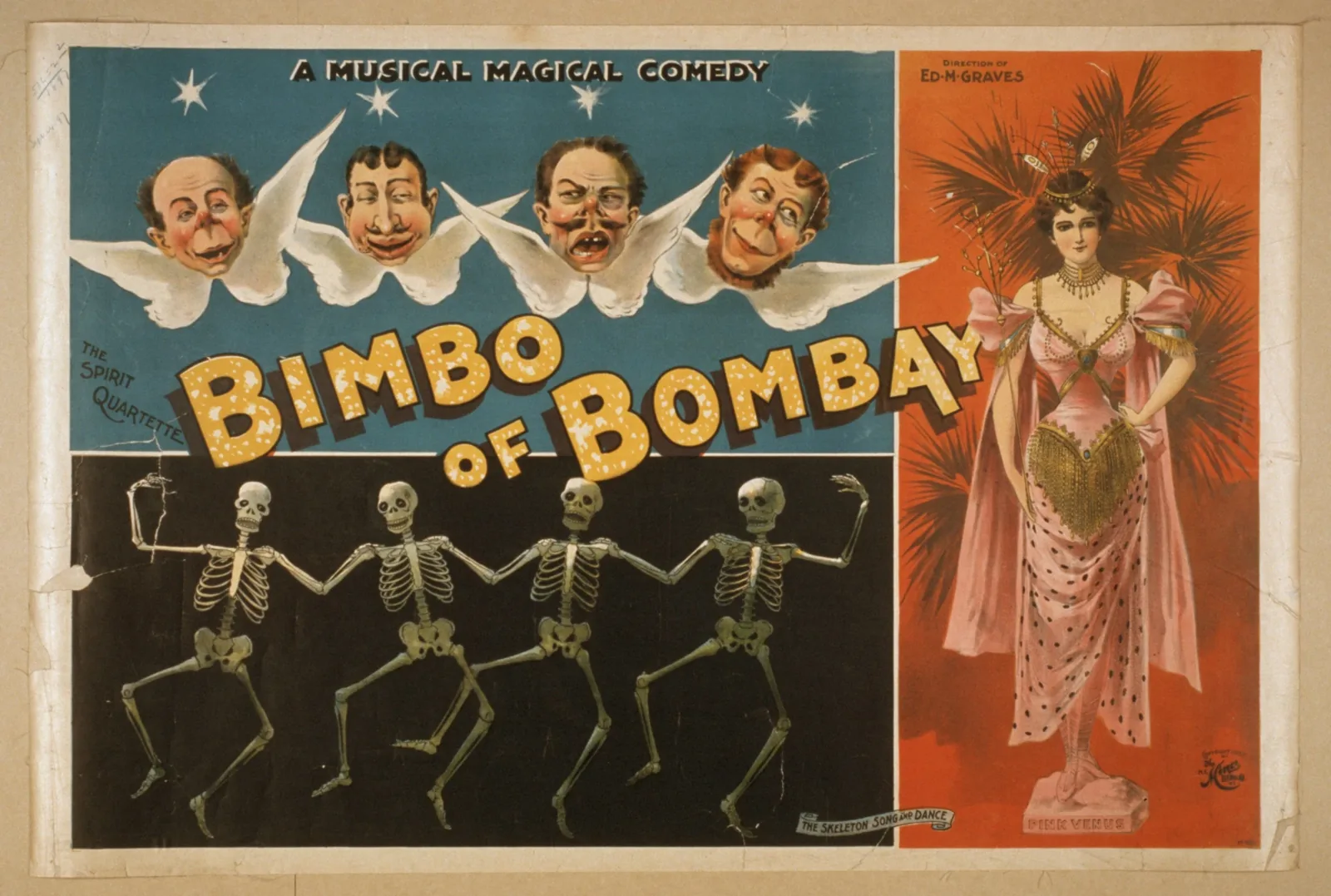
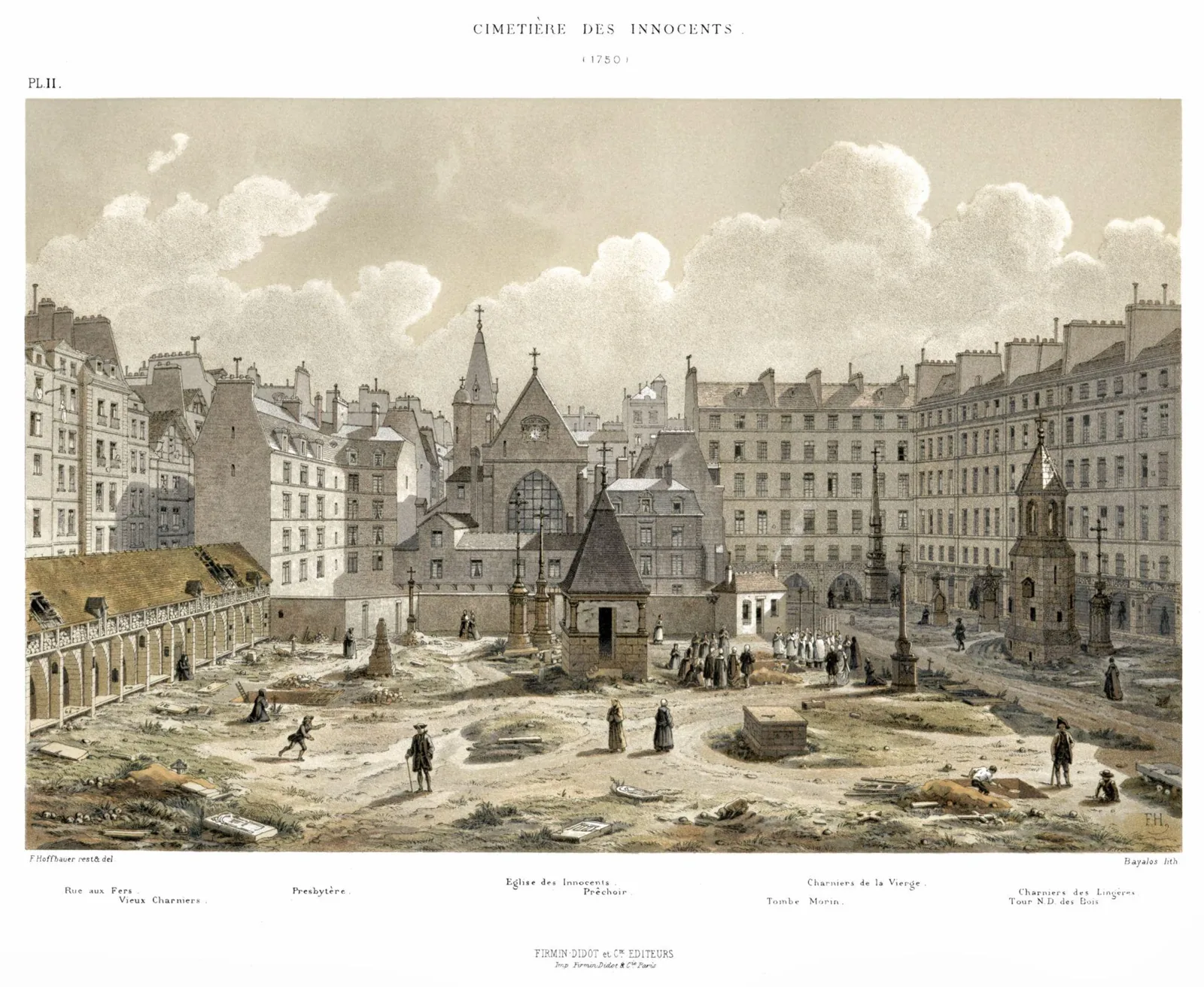
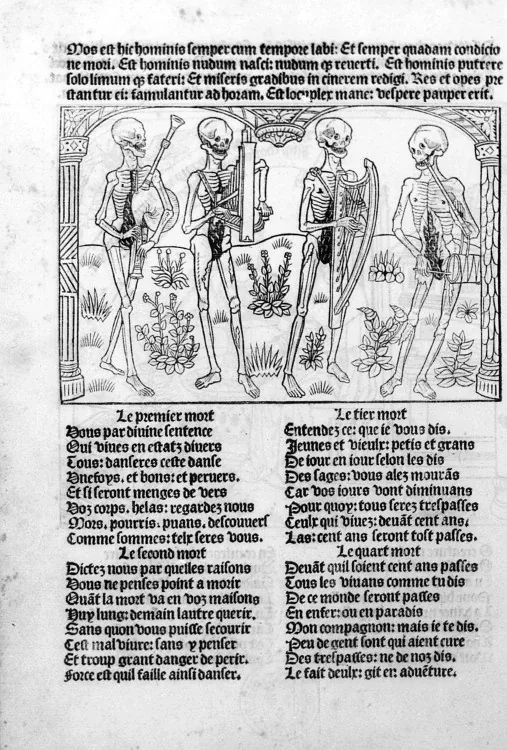
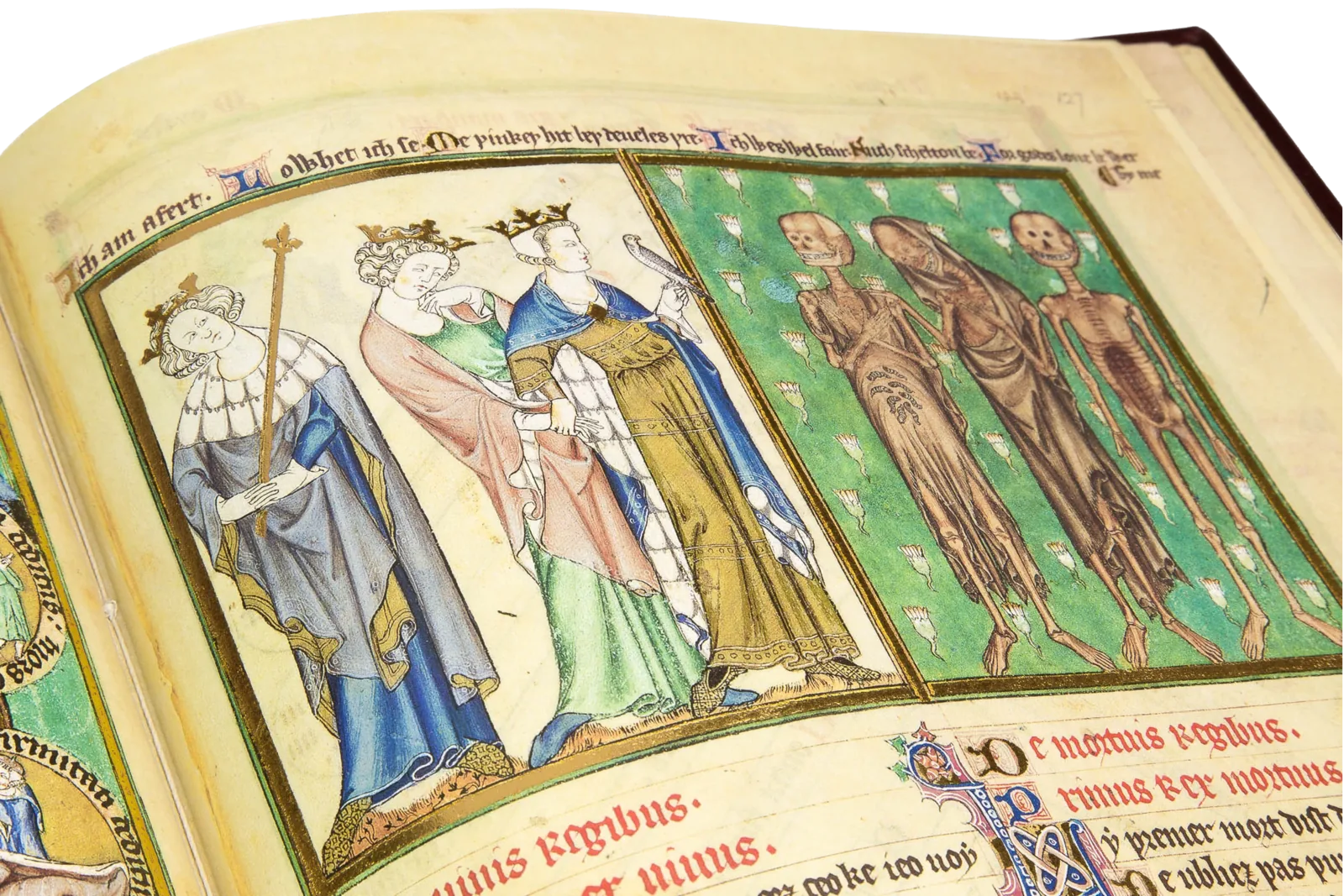
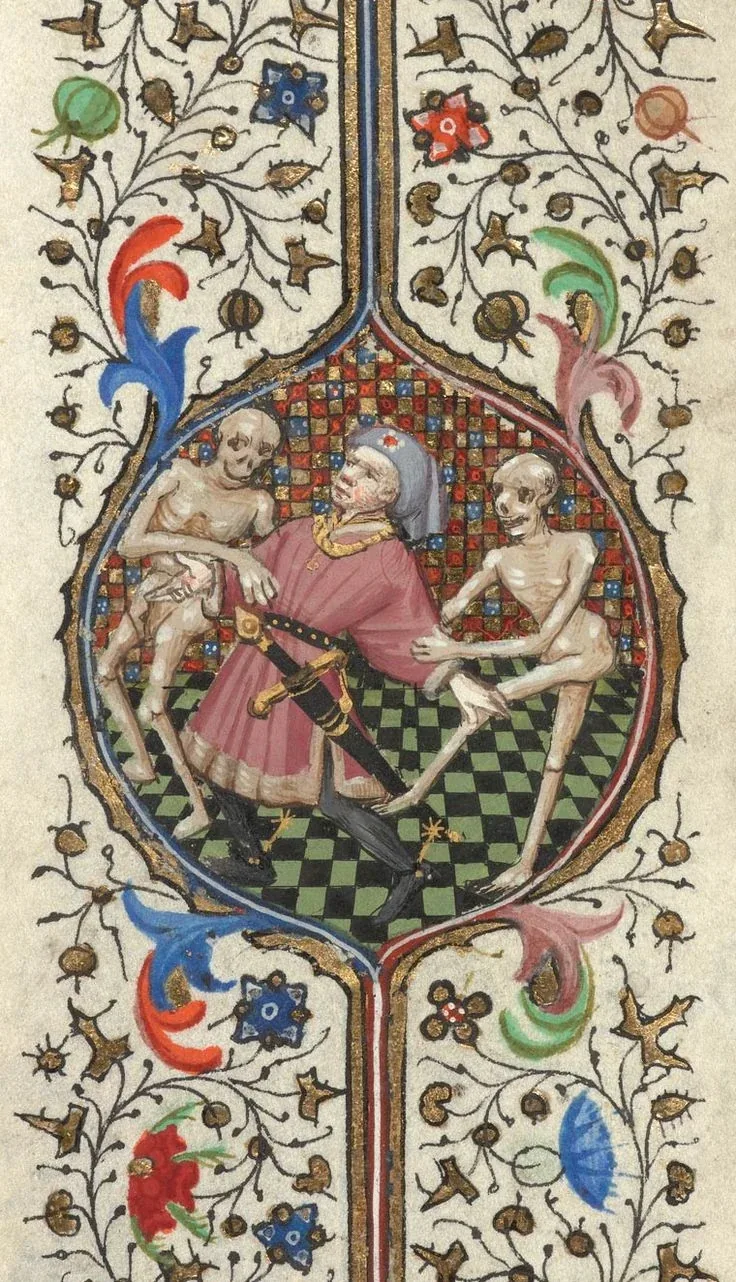
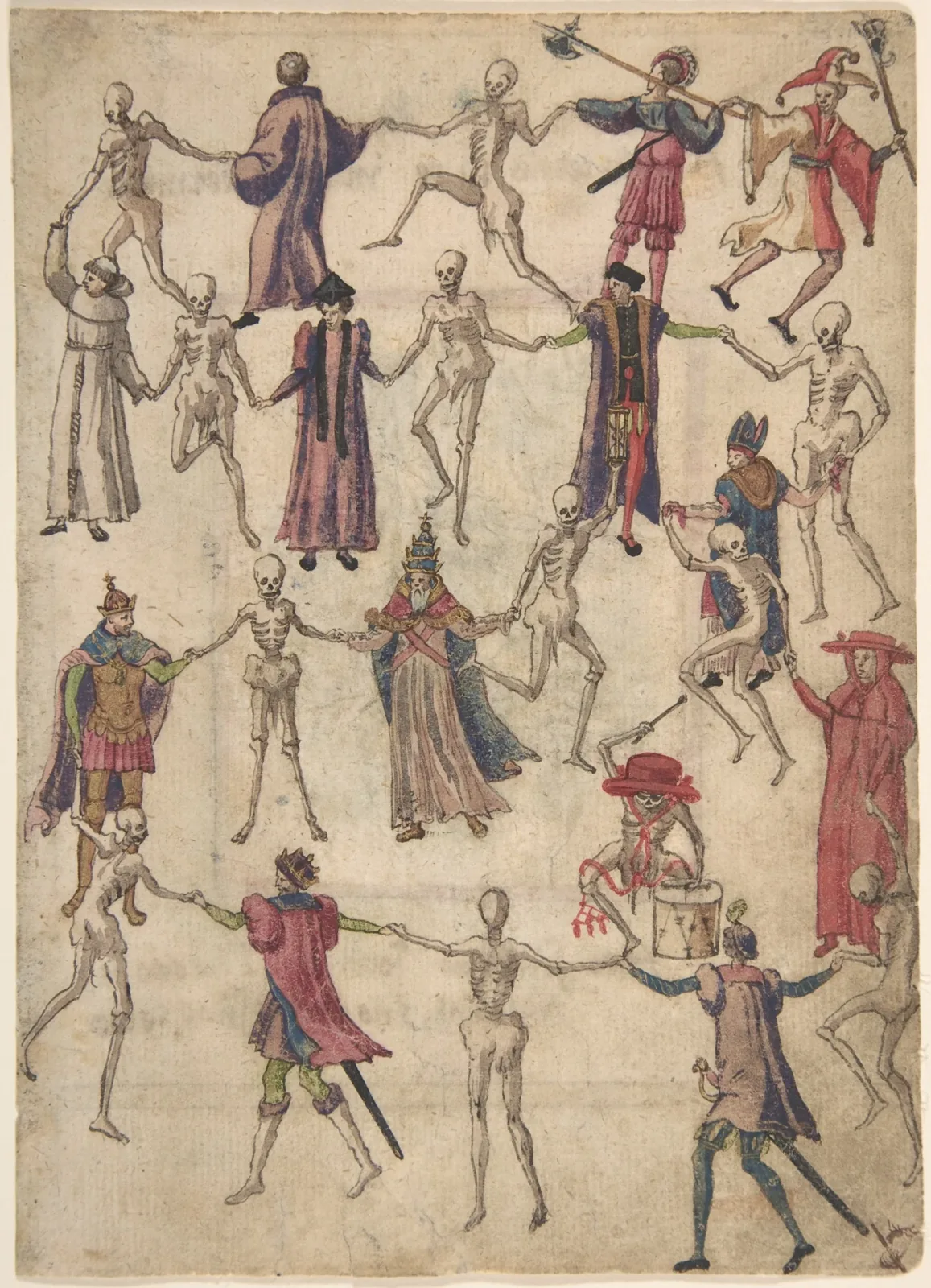
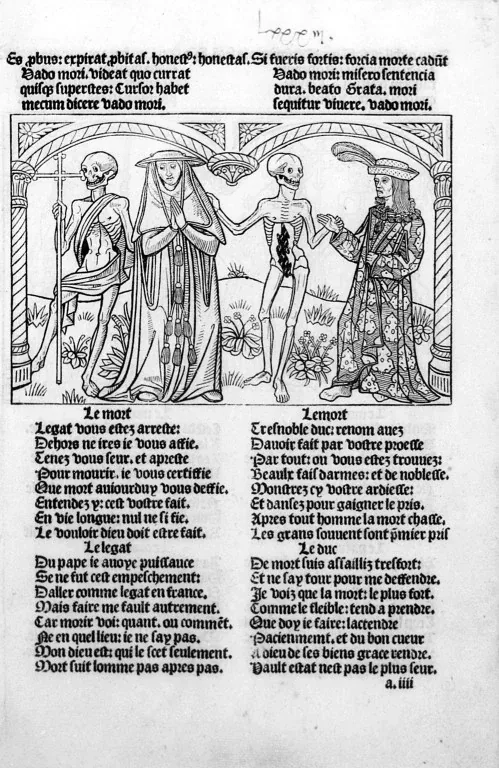
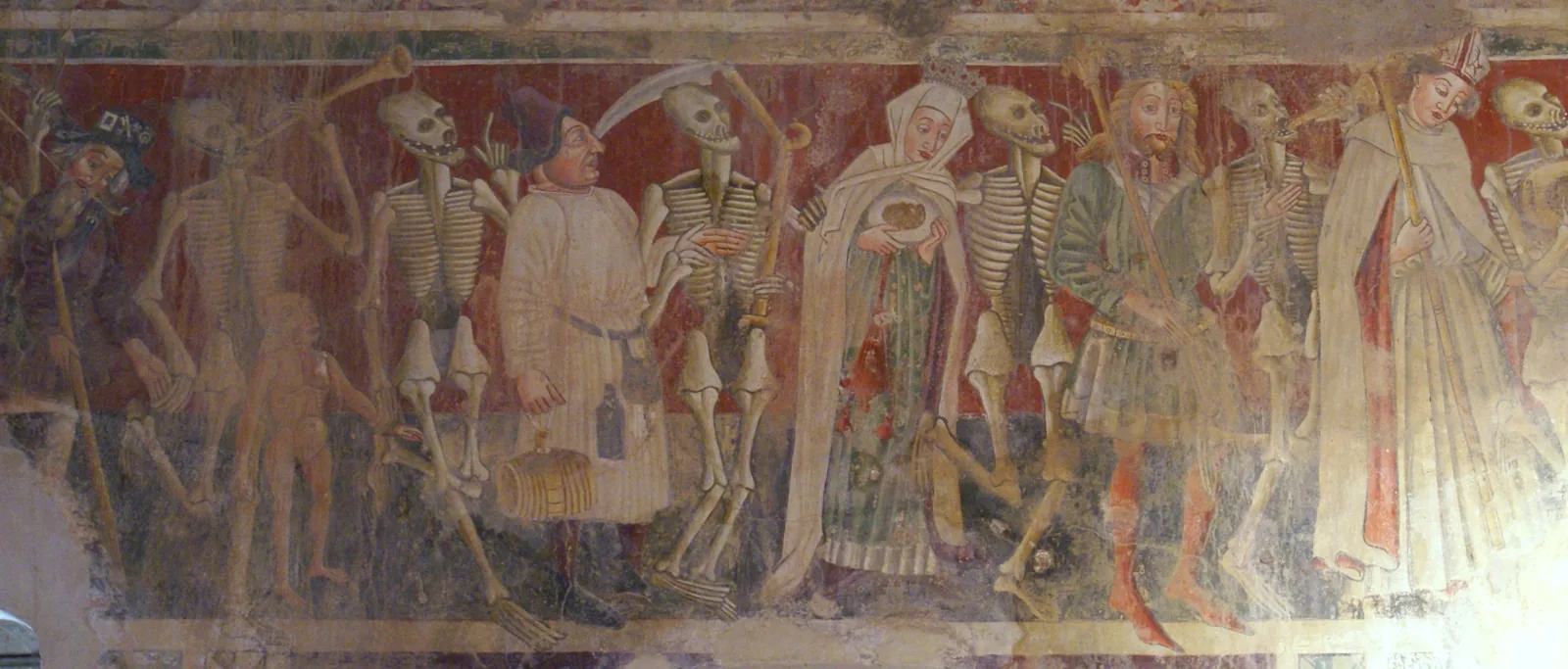
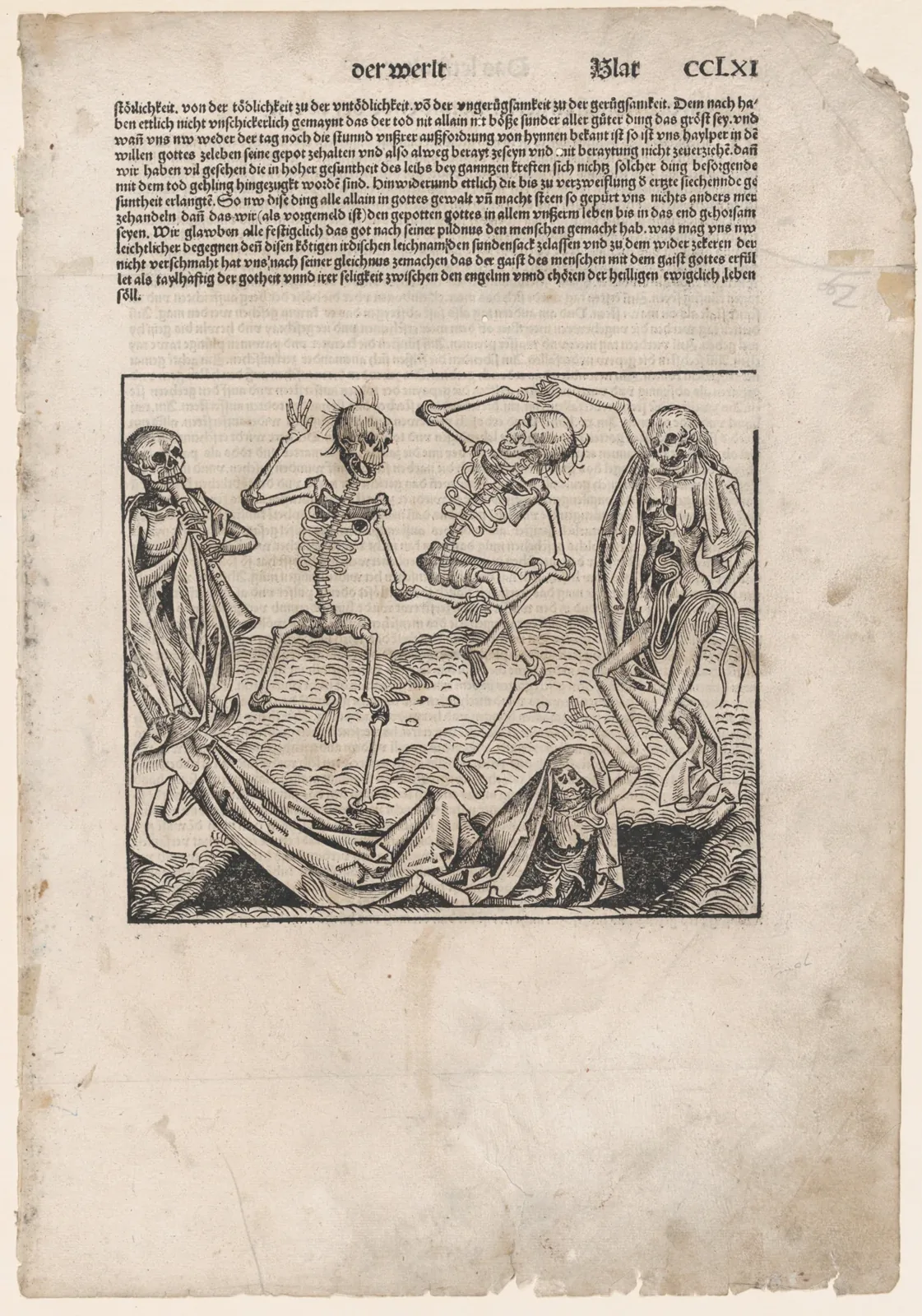
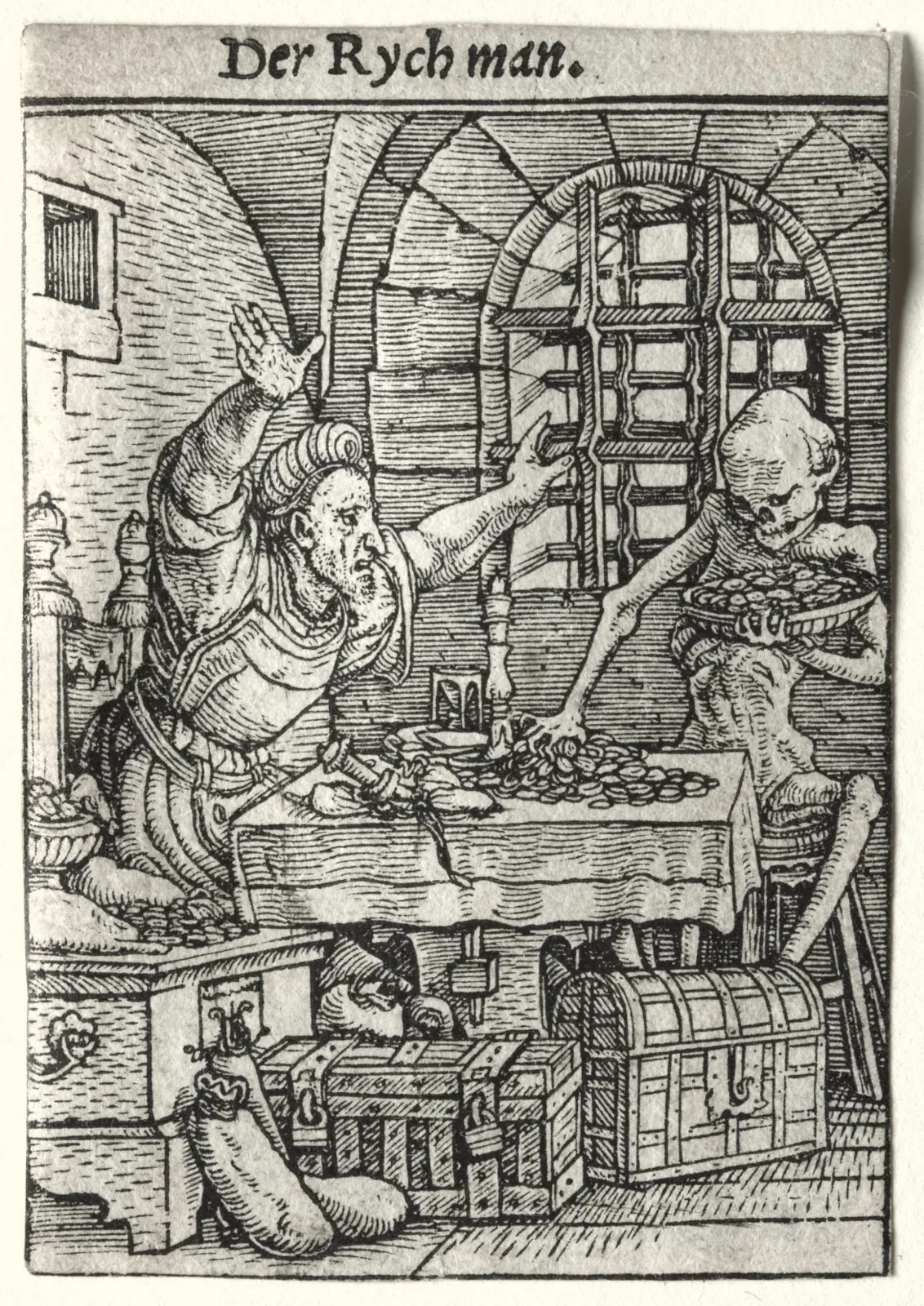
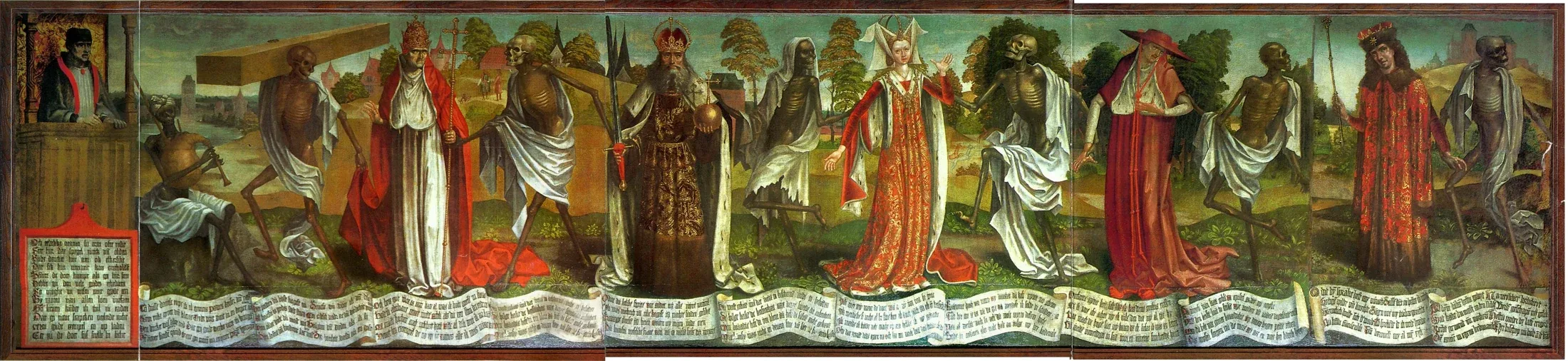
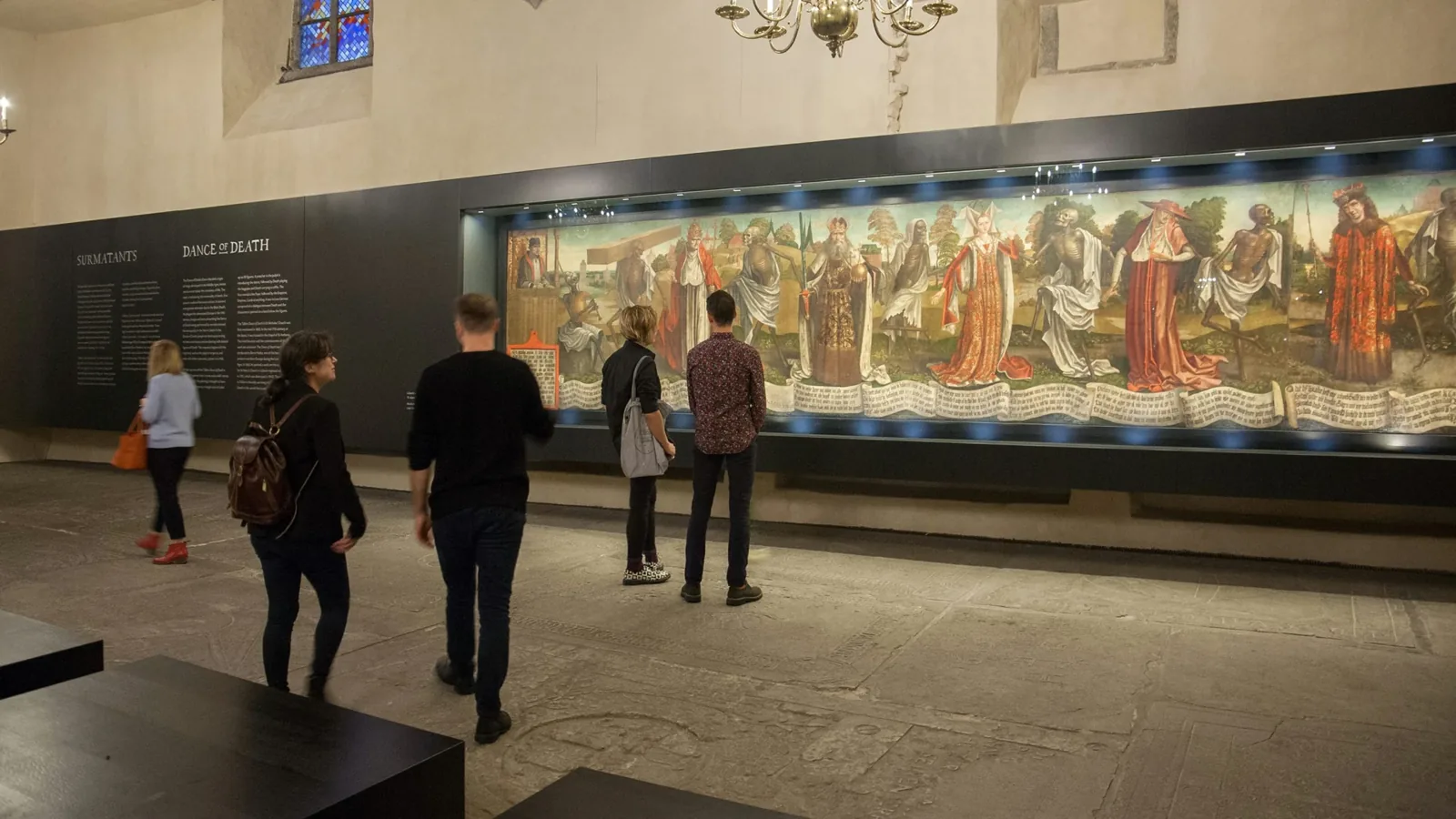
<p>Faience was neither pottery nor a precious stone, it was manufactured. Quartz-rich silica worked together with alkali and lime, then fired until the surface bloomed into a glassy glaze, most famously in brilliant shades of blue or green. It could be fashioned into beads, vessels, figurines, and objects intended to accompany the dead.<sup><a href="#reference-1" aria-label="Reference 1">[1]</a></sup> Behind that brilliance lies a long history of trial, secrecy, and exchange, one archaeologists are still piecing together today.</p>
<p>Sanam offers us rare proof that Kushite craftspeople produced their own faience. What it cannot tell us is how the knowledge arrived in Nubia, or who carried it, and that story is far older and more tangled than a single workshop allows us to see. To follow it, we have to go back more than a century, to 1913, when the American archaeologist George Andrew Reisner arrived at another great center of ancient Kush.</p>
<p>Across the broad plain of Kerma, two immense masses of mudbrick rose above the scattered remains of an ancient town. Centuries of wind and sun had worn their walls down, and the ground around them was strewn with potsherds, stone tools, and splinters of bone. These were the deffufas, the last standing witnesses of a city whose story no archaeologist had yet managed to tell. When George Andrew Reisner walked this ground in February 1913, on the eastern bank of the Nile in what is now northern Sudan, he could not have known how much this barren landscape was about to give up.<sup><a href="#reference-2" aria-label="Reference 2">[2]</a></sup></p>
<p>On 12 February, his expedition opened its first trenches beside the western deffufa. Within a month the work shifted east, toward a vast cemetery, and the soil there seemed to glitter. Vessels, ornaments, figurines, and architectural decorations fashioned from blue and green faience came up in astonishing quantities, often in fragments. Reisner himself wrote that no Egyptian site then known could match such abundance.<sup><a href="#reference-3" aria-label="Reference 3">[3]</a></sup> But the finds raised a harder question than what they were. Who had made them?</p>
<p>Reisner did see signs of manufacture. Around the western deffufa his team recovered unfinished pieces and workshop debris, he even accepted that faience had been made at Kerma.<sup><a href="#reference-3" aria-label="Reference 3">[3]</a></sup> Yet he treated it as an Egyptian craft practiced with local materials, and he read the whole settlement as an Egyptian colony rather than the center of an independent Nubian kingdom.<sup><a href="#reference-3" aria-label="Reference 3">[3]</a></sup> That assumption was not incidental. It grew from an intellectual climate that ranked Egypt as inherently superior to its African neighbors, and Reisner said so plainly, crediting Egyptians with the “mental qualities of the highest race.”<sup><a href="#reference-5" aria-label="Reference 5">[5]</a></sup> His reading of the evidence is difficult to separate from that bias, and later scholars have had to work carefully to pull apart what he found from what he believed.</p>
<p>In the funerary chapel designated K XI, the faience has been broken and built again. Rosettes were assembled from reused fragments, glaze that had once belonged to other objects now set into a new design.<sup><a href="#reference-4" aria-label="Reference 4">[4]</a></sup></p>

<figure class="museum-figure museum-figure--magnify" id="figure-one" data-museum-figure data-effect="magnify">
 <div class="museum-figure__track"><div class="museum-figure__sticky"><div class="museum-figure__canvas"><img class="museum-figure__image" src="/assets/articles/kerma-blue/figure-i-ESS001-display.webp" data-original="/assets/articles/kerma-blue/figure-i-ESS001.jpg" alt="Sandstone ceiling block with blue faience rosettes from funerary temple K XI at Kerma" width="1840" height="1228" loading="lazy" decoding="async"></div></div></div>
 <figcaption class="museum-figure__caption"><div><p class="museum-figure__name"><strong>Figure I · Fragments Given New Form</strong></p><p>Ceiling block with rosette pattern, funerary temple K XI, Kerma, Sudan, Classic Kerma period (c. 1700–1550 BCE). Fragments of earlier Egyptian faience objects were cut and inserted into carved cavities to form blue rosettes. Some retained traces of their original decoration, revealing how imported materials could be transformed within Nubian funerary architecture.</p></div><div class="museum-figure__tools"><button type="button" data-examine>⌕ <span>Examine image</span></button><button type="button" data-image-credit>ⓘ <span>Image credit</span></button></div></figcaption>
 <dialog class="museum-credit" aria-label="Figure I image credit"><button type="button" data-credit-close>Close ×</button><h2>Figure I · Fragments Given New Form</h2><p>Ceiling Block with Rosette Pattern, Kerma, Sudan, c. 1700–1550 BCE. Sandstone and faience. Museum of Fine Arts, Boston, accession 13.4360.1. Harvard University–Boston Museum of Fine Arts Expedition. Photograph supplied by the author; photographic reuse rights require confirmation before publication.</p><p><a href="https://www.mfa.org/" target="_blank" rel="noopener">Museum · photograph source unconfirmed</a></p></dialog>
</figure>

<p>Even so, Kerma posed a deeper problem than recycled pieces. Reisner had found finished ornaments and vessels, fragments of architectural decoration, and the leftovers of manufacture itself, but how they related to one another was far from clear. Which had come from Egypt? Which had been made at Kerma? And might the way they were made reveal what their familiar blue surfaces concealed?</p>
<p>That question would require archaeologists to look beyond the brilliant blue of faience itself.</p>

<figure class="museum-figure museum-figure--landscape" id="figure-two" data-museum-figure data-effect="landscape">
 <div class="museum-figure__track"><div class="museum-figure__sticky"><div class="museum-figure__canvas"><img class="museum-figure__image" src="/assets/articles/kerma-blue/ESS001-fig-02-kerma-landscape-display.webp" data-original="/assets/articles/kerma-blue/ESS001-fig-02-kerma-landscape.jpg" alt="Archaeological remains near the Western Deffufa at Kerma, with palm trees behind the excavated structures" width="3900" height="2613" loading="lazy" decoding="async"></div></div></div>
 <figcaption class="museum-figure__caption"><div><p class="museum-figure__name"><strong>Figure II · The Landscape of Kerma</strong></p><p>Archaeological remains near the Western Deffufa at Kerma, Sudan. The surviving landscape offers a view of the ancient urban setting excavated by Reisner and subsequently reinterpreted by generations of archaeologists.</p></div><div class="museum-figure__tools"><button type="button" data-examine>⌕ <span>Examine image</span></button><button type="button" data-image-credit>ⓘ <span>Image credit</span></button></div></figcaption>
 <dialog class="museum-credit" aria-label="Figure II image credit"><button type="button" data-credit-close>Close ×</button><h2>Figure II · The Landscape of Kerma</h2><p>Kerma NNE. Photograph by Bertramz, November 2008. Wikimedia Commons, CC BY 3.0. Original photograph; no changes to colour or composition.</p><p><a href="https://commons.wikimedia.org/wiki/File:Kerma_NNE.jpg" target="_blank" rel="noopener">Original source</a> · <a href="https://creativecommons.org/licenses/by/3.0/" target="_blank" rel="noopener">License</a></p></dialog>
</figure>

<p>More than a century after Reisner’s excavations, a collection of ancient beads from Kerma came under a different kind of scrutiny. In a study published in 2025, archaeometrist Juliet Spedding examined thirty faience objects recovered from five sites across Nubia, among them six beads from Tumulus K X, the great burial mound at Kerma.<sup><a href="#reference-6" aria-label="Reference 6">[6]</a></sup> Using scanning electron microscopy and chemical analysis, she looked at what no eye could see: how the elements were distributed, how the material was built, and what traces its making had managed to leave behind.<sup><a href="#reference-6" aria-label="Reference 6">[6]</a></sup></p>
<p>Those traces matter because faience could be glazed in more than one way. Sometimes soluble salts rose to the surface as the object dried and formed a glaze on their own. Elsewhere, craftspeople applied a prepared coating, or buried the shaped piece in a powder that reacted in the kiln.<sup><a href="#reference-6" aria-label="Reference 6">[6]</a></sup> Each method could leave its own microscopic signature, even when the finished objects looked nearly identical, their surfaces tinted blue or green by copper.</p>

<figure class="museum-figure museum-figure--sides" id="figure-three" data-museum-figure data-effect="sides">
 <div class="museum-figure__track"><div class="museum-figure__sticky"><div class="museum-figure__canvas"><div class="museum-turn" aria-label="Two photographed faces of the same object"><div class="museum-turn__photo museum-turn__front"><img class="museum-figure__image" src="/assets/articles/kerma-blue/ESS001-fig-03-side-a-display.webp" data-original="/assets/articles/kerma-blue/ESS001-fig-03-side-a.png" alt="Side A of an Egyptian faience spacer-bead: a king before solar deities, accession 2021.41.101 at The Metropolitan Museum of Art" width="3338" height="2225" loading="lazy" decoding="async"></div><div class="museum-turn__photo museum-turn__back"><img class="museum-turn-back" src="/assets/articles/kerma-blue/ESS001-fig-03-side-b-display.webp" data-original="/assets/articles/kerma-blue/ESS001-fig-03-side-b.png" alt="Side B of the same Egyptian faience spacer-bead: two winged deities protecting a lion-headed god" width="3338" height="2225" loading="lazy" decoding="async"></div></div><div class="museum-turn__controls"><span class="museum-turn__side" aria-live="polite">Side A</span><div role="group" aria-label="Select photographed side"><button type="button" data-side-select="a" aria-pressed="true">Side A</button><button type="button" data-side-select="b" aria-pressed="false">Side B</button></div></div></div></div></div>
 <figcaption class="museum-figure__caption"><div><p class="museum-figure__name"><strong>Figure III · Two Sides of Faience</strong></p><p>Spacer-bead with images of divinities and a king, Egypt, Third Intermediate Period, ca. 1080–721 BCE. The two documented faces invite closer examination of the object’s form and finish, though appearance alone cannot establish its method of manufacture. This Egyptian object is later than the Classic Kerma rosette installation and is not one of Spedding’s analyzed beads.</p><p class="museum-figure__note">Two documented faces of the same Egyptian spacer-bead. Select either side to examine its surface.</p></div><div class="museum-figure__tools"><button type="button" data-examine>⌕ <span>Examine image</span></button><button type="button" data-image-credit>ⓘ <span>Image credit</span></button></div></figcaption>
 <dialog class="museum-credit" aria-label="Figure III image credit"><button type="button" data-credit-close>Close ×</button><h2>Figure III · Two Sides of Faience</h2><p>Spacer-bead with images of divinities and a king. Egypt, Third Intermediate Period, ca. 1080–721 BCE. Faience, L. 5.1 × H. 3.4 × Th. 1 cm. The Metropolitan Museum of Art, Bequest of Nanette B. Kelekian, 2020, accession 2021.41.101. Public Domain. Transparent Side A and Side B PNGs supplied by the author, derived from photographs of the same object in the museum record.</p><p><a href="https://www.metmuseum.org/art/collection/search/329879" target="_blank" rel="noopener">Original source</a></p></dialog>
</figure>

<p>The Kerma beads did not follow the pattern. Ordinary faience has a glazed skin over a quartz-rich core, and these beads showed no such division.<sup><a href="#reference-6" aria-label="Reference 6">[6]</a></sup> The blue ran straight through a fairly uniform body. Spedding suggested they might represent glassy faience, a rare material that sits uneasily between faience and glass.<sup><a href="#reference-6" aria-label="Reference 6">[6]</a></sup></p>

<p>Their chemistry pointed the same way. Elevated potassium hinted at a different alkali, possibly plant ash.<sup><a href="#reference-6" aria-label="Reference 6">[6]</a></sup> That raised the possibility that Kerma’s craftspeople were working with different recipes and different resources. Earlier compositional research, discussed by Peter Lacovara, had already drawn a line between imported Egyptian faience and later material associated with manufacture at Kerma.<sup><a href="#reference-4" aria-label="Reference 4">[4]</a></sup></p>
<p>Among the debris recovered beside Sanam Temple lay a fragment of a green faience figurine, small enough to pass for waste. Then archaeologists matched it to a clay mold found inside the temple itself. Both belonged to the production of shabtis, the small funerary figures intended to accompany the dead. Earlier excavations at Sanam had recovered further moulds corresponding to shabtis discovered in the royal cemetery at Nuri, linking the manufacture of these objects to the funerary traditions of Kushite kings.<sup><a href="#reference-1" aria-label="Reference 1">[1]</a></sup></p>
<p>The workshop’s position said as much. It stood just outside the temple built under King Taharqo, and its craftspeople worked with materials that may have travelled considerable distances before reaching their hands. Shells among the debris, some likely originating from the Red Sea, may have supplied the lime for the faience.<sup><a href="#reference-1" aria-label="Reference 1">[1]</a></sup> If so, the workshop drew on resources well beyond the Nile Valley, while its placement beside the temple raises the possibility that religious institutions played an important role in organizing production.<sup><a href="#reference-1" aria-label="Reference 1">[1]</a></sup></p>
<p>At Nuri, royal demand was staggering. The tomb of King Senkaminsken held at least 1,277 shabtis, some propped upright against the walls of the burial chambers and corridors.<sup><a href="#reference-7" aria-label="Reference 7">[7]</a></sup> The figures belonged to an Egyptian-derived funerary tradition, but their number and arrangement set Kushite practice apart from many contemporary Egyptian burials.<sup><a href="#reference-7" aria-label="Reference 7">[7]</a></sup> In Napatan Nubia, they seem to have been reserved for royalty alone.</p>
<p>Faience itself, however, was never only a royal possession. In the cemetery at Sanam, beads turned up throughout the burials, alongside amulets, ornaments, and a much smaller number of faience vessels.<sup><a href="#reference-8" aria-label="Reference 8">[8]</a></sup> Some imitated cowrie shells, others lay near the head, neck, or limbs of the dead. Amulets were especially prominent in children’s graves, which suggests they served as protection and care as much as adornment.<sup><a href="#reference-8" aria-label="Reference 8">[8]</a></sup> The material that furnished a king’s tomb could also accompany people whose lives remain largely unknown to us, its meaning shifting with the form it took and the hands that placed it.</p>
<p>Then there is Gala Abu Ahmed. Some 110 kilometers west of the Nile, amid the arid reaches of the Lower Wadi Howar, stood a fortress where excavators recovered thousands of faience beads and amulets, along with fragments of Egyptian New Year’s flasks, vessels tied to renewal and regeneration.<sup><a href="#reference-1" aria-label="Reference 1">[1]</a></sup><sup><a href="#reference-11" aria-label="Reference 11">[11]</a></sup> Someone carried them across that dry country. Who, by what route, and what the objects meant to the people living behind those walls, we cannot say.</p>
<p>From the workshops of Sanam to the royal chambers of Nuri, from amulets in children’s graves to a fortress at the edge of the desert, faience passed through many worlds. Fire and chemistry can tell us how it was made. What it became depended on the people who acquired it, reshaped it, and gave it a purpose.</p>
<p>Centuries later, as the Kingdom of Kush entered its Meroitic age, faience still turned up among the possessions of the living and the dead. In the elite cemetery at Sedeinga, researchers found fragments of finely fashioned vessels whose forms closely mirror examples from Roman Egypt.<sup><a href="#reference-9" aria-label="Reference 9">[9]</a></sup> Some may indeed have travelled south from Egyptian workshops, though their appearance alone should not rule out the possibility of local manufacture. Other objects offered tantalizing clues. A decorated plaque from Meroe, once linked to royal clothing, bears feathered cartouches and religious symbols familiar from the Egyptian world. But an earlier chemical study, discussed by Aminata Sackho-Autissier, found a glaze unlike those usually associated with contemporary Roman Egyptian faience.<sup><a href="#reference-9" aria-label="Reference 9">[9]</a></sup> Even here, centuries removed from Reisner’s Kerma, the relationships between appearance, manufacture, and cultural identity remained difficult to untangle.</p>
<p>That is what makes the blue fragments at Kerma so hard to leave alone. Reisner saw their beauty, he measured their abundance, and noticed the debris of manufacture. What he could not see was the rest, such as which ingredients a maker reached for, what that maker had been taught, and how far a bead had travelled before it was laid in a grave. Those answers lay inside the material, and in 1913 no one had the means to look there.</p>
<p>Now someone has. The beads Spedding examined, with no seam between glaze and ore and a blue that runs straight through, do not settle who made them. They do make it harder to accept the answer provided by Reisner.</p>
<p>The color has outlasted everyone who chose it. The choices themselves have not quite vanished. They survive in an unexpected trace of potassium, in a missing boundary between surface and body, and in a green fragment that matched a mold, waiting for someone to ask the right question.</p>
<nav class="kerma-continue" aria-label="Continue exploring"><h2>Continue exploring</h2><div><a href="/topics/nubiology/"><img src="/assets/exhibition/explore/nubiology-thumbnail.webp" alt="Nubiology" width="600" height="591" loading="lazy"><span>Explore Nubiology →</span></a><a href="/topics/egyptology/"><img src="/assets/exhibition/explore/egyptology-thumbnail.webp" alt="Egyptology" width="600" height="591" loading="lazy"><span>Explore Egyptology →</span></a></div></nav>
<section class="kerma-image-credits" aria-labelledby="image-credits"><h2 id="image-credits">Image Credits</h2>
<p><strong>Cover artifact.</strong> Eye of Horus (wedjat) pectoral. Nubian, Sudan, 743–712 BCE, faience. Harvard University–Boston Museum of Fine Arts Expedition, 24.679. Photo © Museum of Fine Arts, Boston. Supplied image; public reuse rights require confirmation.</p>
<p><strong>Cover landscape.</strong> Orthophoto of the Sanam faience workshop, with individual structures identified. Figure by Rennan Lemos, Kathryn Howley, Siobhan Shinn, and Shadia Abdu Rabo, in <em>Crafting power in Kush</em> (2026), Figure 4. <a href="https://www.researchgate.net/figure/Orthophoto-of-the-Sanam-faience-workshop-with-individual-structures-identified-figure_fig4_416313945" target="_blank" rel="noopener">Source</a> · <a href="https://creativecommons.org/licenses/by/4.0/" target="_blank" rel="noopener">CC BY 4.0</a>. The cover shows a cropped view; the complete image is available for inspection.</p>
<p><strong>Figure I · Fragments Given New Form.</strong> Ceiling Block with Rosette Pattern, Kerma, Sudan, c. 1700–1550 BCE. Sandstone and faience. Museum of Fine Arts, Boston, accession 13.4360.1. Harvard University–Boston Museum of Fine Arts Expedition. Photograph supplied by the author; photographic reuse rights require confirmation before publication. <a href="https://www.mfa.org/" target="_blank" rel="noopener">Museum · photograph source unconfirmed</a></p><p><strong>Figure II · The Landscape of Kerma.</strong> Kerma NNE. Photograph by Bertramz, November 2008. Wikimedia Commons, CC BY 3.0. Original photograph; no changes to colour or composition. <a href="https://commons.wikimedia.org/wiki/File:Kerma_NNE.jpg" target="_blank" rel="noopener">Source</a> · <a href="https://creativecommons.org/licenses/by/3.0/" target="_blank" rel="noopener">License</a></p><p><strong>Figure III · Two Sides of Faience.</strong> Spacer-bead with images of divinities and a king. Egypt, Third Intermediate Period, ca. 1080–721 BCE. Faience, L. 5.1 × H. 3.4 × Th. 1 cm. The Metropolitan Museum of Art, Bequest of Nanette B. Kelekian, 2020, accession 2021.41.101. Public Domain. Transparent Side A and Side B PNGs supplied by the author, derived from photographs of the same object in the museum record. <a href="https://www.metmuseum.org/art/collection/search/329879" target="_blank" rel="noopener">Source</a></p></section>
<section class="kerma-references" aria-labelledby="references"><h2 id="references">References</h2>
<p id="reference-1">[1] Rennan Lemos, Kathryn Howley, Siobhan Shinn, and Shadia Abdu Rabo, “Crafting Power in Kush: Faience Production and State Control in the Napatan Region,” Antiquity (published online October 19, 2026), <a href="https://doi.org/10.15184/aqy.2026.10434">https://doi.org/10.15184/aqy.2026.10434</a></p>
<p id="reference-2">[2] George A. Reisner, “New Acquisitions of the Egyptian Department: A Garrison Which Held the Northern Sudan in the Hyksos Period, about 1700 B.C.,” Bulletin of the Museum of Fine Arts 12, no. 69 (April 1914): 9–24.</p>
<p id="reference-3">[3] George A. Reisner, “Accessions to the Egyptian Collections during 1914,” Bulletin of the Museum of Fine Arts 13, no. 80 (December 1915): 71–83, especially 74–75 and 80. See also George A. Reisner, Excavations at Kerma, Parts IV–V (Cambridge, MA: Peabody Museum of Harvard University, 1923), 134–175.</p>
<p id="reference-4">[4] Peter Lacovara, “The Faience Industry at Kerma,” Journal of Ancient Egyptian Interconnections 29 (2021): 32–38.</p>
<p id="reference-5">[5] George A. Reisner, Excavations at Kerma, Parts IV–V (Cambridge, MA: Peabody Museum of Harvard University, 1923), 556.</p>
<p id="reference-6">[6] Juliet V. Spedding, “A Chemical Examination of Faience Found in Nubia: Preliminary Observations,” Journal of Archaeological Science: Reports 67 (2025): 105341, especially 3–7 and 11–12. <a href="https://doi.org/10.1016/j.jasrep.2025.105341">https://doi.org/10.1016/j.jasrep.2025.105341</a></p>
<p id="reference-7">[7] Kathryn Howley, “Power Relations and the Adoption of Foreign Material Culture: A Different Perspective from First-Millennium BCE Nubia,” Journal of Ancient Egyptian Interconnections 17 (2018): 18–36, especially 23–25.</p>
<p id="reference-8">[8] Angelika Lohwasser, Aspekte der napatanischen Gesellschaft: Archäologisches Inventar und funeräre Praxis im Friedhof von Sanam—Perspektiven einer kulturhistorischen Interpretation (Vienna: Österreichische Akademie der Wissenschaften, 2012), especially 109–120, 157–160, and 259–262.</p>
<p id="reference-9">[9] Aminata Sackho-Autissier, “Les faïences d’époque méroïtique conservées au musée du Louvre. Technologie et production : les prémices d’une recherche,” Dotawo 3 (2016): 29–39, especially 31–35.</p>
<p id="reference-10">[10] Friederike Jesse, “Bollwerk im Niemandsland: Die Festung Gala Abu Ahmed zur Zeit der Pharaonen,” Der antike Sudan 26 (2015): 75–94, especially 85–90.</p>
<p id="reference-11">[11] Angelika Lohwasser, “Gala Abu Ahmed – The Small Finds,” Archéologie du Nil Moyen 10 (2006): 171–179, especially 171–174.</p>
</section>]]></content><author><name>Sebastian Olmsted</name></author><category term="Africa" /><summary type="html"><![CDATA[On 19 October 2026, a study published in the journal Antiquity brought renewed attention to an ancient technology. Beside a temple built more than 2,600 years ago, near the Kushite capital of Napata in what is now Sudan, archaeologists had uncovered the remains of a workshop: three firing pits, two mudbrick basins, grinding stones, discarded fragments, and hundreds of tiny beads in shades of blue, green, and white.[1] The material they were making was faience, and for thousands of years it had held the eye along the Nile. Faience was neither pottery nor a precious stone, it was manufactured. Quartz-rich silica worked together with alkali and lime, then fired until the surface bloomed into a glassy glaze, most famously in brilliant shades of blue or green. It could be fashioned into beads, vessels, figurines, and objects intended to accompany the dead.[1] Behind that brilliance lies a long history of trial, secrecy, and exchange, one archaeologists are still piecing together today. Sanam offers us rare proof that Kushite craftspeople produced their own faience. What it cannot tell us is how the knowledge arrived in Nubia, or who carried it, and that story is far older and more tangled than a single workshop allows us to see. To follow it, we have to go back more than a century, to 1913, when the American archaeologist George Andrew Reisner arrived at another great center of ancient Kush. Across the broad plain of Kerma, two immense masses of mudbrick rose above the scattered remains of an ancient town. Centuries of wind and sun had worn their walls down, and the ground around them was strewn with potsherds, stone tools, and splinters of bone. These were the deffufas, the last standing witnesses of a city whose story no archaeologist had yet managed to tell. When George Andrew Reisner walked this ground in February 1913, on the eastern bank of the Nile in what is now northern Sudan, he could not have known how much this barren landscape was about to give up.[2] On 12 February, his expedition opened its first trenches beside the western deffufa. Within a month the work shifted east, toward a vast cemetery, and the soil there seemed to glitter. Vessels, ornaments, figurines, and architectural decorations fashioned from blue and green faience came up in astonishing quantities, often in fragments. Reisner himself wrote that no Egyptian site then known could match such abundance.[3] But the finds raised a harder question than what they were. Who had made them? Reisner did see signs of manufacture. Around the western deffufa his team recovered unfinished pieces and workshop debris, he even accepted that faience had been made at Kerma.[3] Yet he treated it as an Egyptian craft practiced with local materials, and he read the whole settlement as an Egyptian colony rather than the center of an independent Nubian kingdom.[3] That assumption was not incidental. It grew from an intellectual climate that ranked Egypt as inherently superior to its African neighbors, and Reisner said so plainly, crediting Egyptians with the “mental qualities of the highest race.”[5] His reading of the evidence is difficult to separate from that bias, and later scholars have had to work carefully to pull apart what he found from what he believed. In the funerary chapel designated K XI, the faience has been broken and built again. Rosettes were assembled from reused fragments, glaze that had once belonged to other objects now set into a new design.[4] Figure I · Fragments Given New FormCeiling block with rosette pattern, funerary temple K XI, Kerma, Sudan, Classic Kerma period (c. 1700–1550 BCE). Fragments of earlier Egyptian faience objects were cut and inserted into carved cavities to form blue rosettes. Some retained traces of their original decoration, revealing how imported materials could be transformed within Nubian funerary architecture.⌕ Examine imageⓘ Image credit Close ×Figure I · Fragments Given New FormCeiling Block with Rosette Pattern, Kerma, Sudan, c. 1700–1550 BCE. Sandstone and faience. Museum of Fine Arts, Boston, accession 13.4360.1. Harvard University–Boston Museum of Fine Arts Expedition. Photograph supplied by the author; photographic reuse rights require confirmation before publication.Museum · photograph source unconfirmed Even so, Kerma posed a deeper problem than recycled pieces. Reisner had found finished ornaments and vessels, fragments of architectural decoration, and the leftovers of manufacture itself, but how they related to one another was far from clear. Which had come from Egypt? Which had been made at Kerma? And might the way they were made reveal what their familiar blue surfaces concealed? That question would require archaeologists to look beyond the brilliant blue of faience itself. Figure II · The Landscape of KermaArchaeological remains near the Western Deffufa at Kerma, Sudan. The surviving landscape offers a view of the ancient urban setting excavated by Reisner and subsequently reinterpreted by generations of archaeologists.⌕ Examine imageⓘ Image credit Close ×Figure II · The Landscape of KermaKerma NNE. Photograph by Bertramz, November 2008. Wikimedia Commons, CC BY 3.0. Original photograph; no changes to colour or composition.Original source · License More than a century after Reisner’s excavations, a collection of ancient beads from Kerma came under a different kind of scrutiny. In a study published in 2025, archaeometrist Juliet Spedding examined thirty faience objects recovered from five sites across Nubia, among them six beads from Tumulus K X, the great burial mound at Kerma.[6] Using scanning electron microscopy and chemical analysis, she looked at what no eye could see: how the elements were distributed, how the material was built, and what traces its making had managed to leave behind.[6] Those traces matter because faience could be glazed in more than one way. Sometimes soluble salts rose to the surface as the object dried and formed a glaze on their own. Elsewhere, craftspeople applied a prepared coating, or buried the shaped piece in a powder that reacted in the kiln.[6] Each method could leave its own microscopic signature, even when the finished objects looked nearly identical, their surfaces tinted blue or green by copper. Side ASide ASide B Figure III · Two Sides of FaienceSpacer-bead with images of divinities and a king, Egypt, Third Intermediate Period, ca. 1080–721 BCE. The two documented faces invite closer examination of the object’s form and finish, though appearance alone cannot establish its method of manufacture. This Egyptian object is later than the Classic Kerma rosette installation and is not one of Spedding’s analyzed beads.Two documented faces of the same Egyptian spacer-bead. Select either side to examine its surface.⌕ Examine imageⓘ Image credit Close ×Figure III · Two Sides of FaienceSpacer-bead with images of divinities and a king. Egypt, Third Intermediate Period, ca. 1080–721 BCE. Faience, L. 5.1 × H. 3.4 × Th. 1 cm. The Metropolitan Museum of Art, Bequest of Nanette B. Kelekian, 2020, accession 2021.41.101. Public Domain. Transparent Side A and Side B PNGs supplied by the author, derived from photographs of the same object in the museum record.Original source The Kerma beads did not follow the pattern. Ordinary faience has a glazed skin over a quartz-rich core, and these beads showed no such division.[6] The blue ran straight through a fairly uniform body. Spedding suggested they might represent glassy faience, a rare material that sits uneasily between faience and glass.[6] Their chemistry pointed the same way. Elevated potassium hinted at a different alkali, possibly plant ash.[6] That raised the possibility that Kerma’s craftspeople were working with different recipes and different resources. Earlier compositional research, discussed by Peter Lacovara, had already drawn a line between imported Egyptian faience and later material associated with manufacture at Kerma.[4] Among the debris recovered beside Sanam Temple lay a fragment of a green faience figurine, small enough to pass for waste. Then archaeologists matched it to a clay mold found inside the temple itself. Both belonged to the production of shabtis, the small funerary figures intended to accompany the dead. Earlier excavations at Sanam had recovered further moulds corresponding to shabtis discovered in the royal cemetery at Nuri, linking the manufacture of these objects to the funerary traditions of Kushite kings.[1] The workshop’s position said as much. It stood just outside the temple built under King Taharqo, and its craftspeople worked with materials that may have travelled considerable distances before reaching their hands. Shells among the debris, some likely originating from the Red Sea, may have supplied the lime for the faience.[1] If so, the workshop drew on resources well beyond the Nile Valley, while its placement beside the temple raises the possibility that religious institutions played an important role in organizing production.[1] At Nuri, royal demand was staggering. The tomb of King Senkaminsken held at least 1,277 shabtis, some propped upright against the walls of the burial chambers and corridors.[7] The figures belonged to an Egyptian-derived funerary tradition, but their number and arrangement set Kushite practice apart from many contemporary Egyptian burials.[7] In Napatan Nubia, they seem to have been reserved for royalty alone. Faience itself, however, was never only a royal possession. In the cemetery at Sanam, beads turned up throughout the burials, alongside amulets, ornaments, and a much smaller number of faience vessels.[8] Some imitated cowrie shells, others lay near the head, neck, or limbs of the dead. Amulets were especially prominent in children’s graves, which suggests they served as protection and care as much as adornment.[8] The material that furnished a king’s tomb could also accompany people whose lives remain largely unknown to us, its meaning shifting with the form it took and the hands that placed it. Then there is Gala Abu Ahmed. Some 110 kilometers west of the Nile, amid the arid reaches of the Lower Wadi Howar, stood a fortress where excavators recovered thousands of faience beads and amulets, along with fragments of Egyptian New Year’s flasks, vessels tied to renewal and regeneration.[1][11] Someone carried them across that dry country. Who, by what route, and what the objects meant to the people living behind those walls, we cannot say. From the workshops of Sanam to the royal chambers of Nuri, from amulets in children’s graves to a fortress at the edge of the desert, faience passed through many worlds. Fire and chemistry can tell us how it was made. What it became depended on the people who acquired it, reshaped it, and gave it a purpose. Centuries later, as the Kingdom of Kush entered its Meroitic age, faience still turned up among the possessions of the living and the dead. In the elite cemetery at Sedeinga, researchers found fragments of finely fashioned vessels whose forms closely mirror examples from Roman Egypt.[9] Some may indeed have travelled south from Egyptian workshops, though their appearance alone should not rule out the possibility of local manufacture. Other objects offered tantalizing clues. A decorated plaque from Meroe, once linked to royal clothing, bears feathered cartouches and religious symbols familiar from the Egyptian world. But an earlier chemical study, discussed by Aminata Sackho-Autissier, found a glaze unlike those usually associated with contemporary Roman Egyptian faience.[9] Even here, centuries removed from Reisner’s Kerma, the relationships between appearance, manufacture, and cultural identity remained difficult to untangle. That is what makes the blue fragments at Kerma so hard to leave alone. Reisner saw their beauty, he measured their abundance, and noticed the debris of manufacture. What he could not see was the rest, such as which ingredients a maker reached for, what that maker had been taught, and how far a bead had travelled before it was laid in a grave. Those answers lay inside the material, and in 1913 no one had the means to look there. Now someone has. The beads Spedding examined, with no seam between glaze and ore and a blue that runs straight through, do not settle who made them. They do make it harder to accept the answer provided by Reisner. The color has outlasted everyone who chose it. The choices themselves have not quite vanished. They survive in an unexpected trace of potassium, in a missing boundary between surface and body, and in a green fragment that matched a mold, waiting for someone to ask the right question. Continue exploringExplore Nubiology →Explore Egyptology → Image Credits Cover artifact. Eye of Horus (wedjat) pectoral. Nubian, Sudan, 743–712 BCE, faience. Harvard University–Boston Museum of Fine Arts Expedition, 24.679. Photo © Museum of Fine Arts, Boston. Supplied image; public reuse rights require confirmation. Cover landscape. Orthophoto of the Sanam faience workshop, with individual structures identified. Figure by Rennan Lemos, Kathryn Howley, Siobhan Shinn, and Shadia Abdu Rabo, in Crafting power in Kush (2026), Figure 4. Source · CC BY 4.0. The cover shows a cropped view; the complete image is available for inspection. Figure I · Fragments Given New Form. Ceiling Block with Rosette Pattern, Kerma, Sudan, c. 1700–1550 BCE. Sandstone and faience. Museum of Fine Arts, Boston, accession 13.4360.1. Harvard University–Boston Museum of Fine Arts Expedition. Photograph supplied by the author; photographic reuse rights require confirmation before publication. Museum · photograph source unconfirmedFigure II · The Landscape of Kerma. Kerma NNE. Photograph by Bertramz, November 2008. Wikimedia Commons, CC BY 3.0. Original photograph; no changes to colour or composition. Source · LicenseFigure III · Two Sides of Faience. Spacer-bead with images of divinities and a king. Egypt, Third Intermediate Period, ca. 1080–721 BCE. Faience, L. 5.1 × H. 3.4 × Th. 1 cm. The Metropolitan Museum of Art, Bequest of Nanette B. Kelekian, 2020, accession 2021.41.101. Public Domain. Transparent Side A and Side B PNGs supplied by the author, derived from photographs of the same object in the museum record. Source References [1] Rennan Lemos, Kathryn Howley, Siobhan Shinn, and Shadia Abdu Rabo, “Crafting Power in Kush: Faience Production and State Control in the Napatan Region,” Antiquity (published online October 19, 2026), https://doi.org/10.15184/aqy.2026.10434 [2] George A. Reisner, “New Acquisitions of the Egyptian Department: A Garrison Which Held the Northern Sudan in the Hyksos Period, about 1700 B.C.,” Bulletin of the Museum of Fine Arts 12, no. 69 (April 1914): 9–24. [3] George A. Reisner, “Accessions to the Egyptian Collections during 1914,” Bulletin of the Museum of Fine Arts 13, no. 80 (December 1915): 71–83, especially 74–75 and 80. See also George A. Reisner, Excavations at Kerma, Parts IV–V (Cambridge, MA: Peabody Museum of Harvard University, 1923), 134–175. [4] Peter Lacovara, “The Faience Industry at Kerma,” Journal of Ancient Egyptian Interconnections 29 (2021): 32–38. [5] George A. Reisner, Excavations at Kerma, Parts IV–V (Cambridge, MA: Peabody Museum of Harvard University, 1923), 556. [6] Juliet V. Spedding, “A Chemical Examination of Faience Found in Nubia: Preliminary Observations,” Journal of Archaeological Science: Reports 67 (2025): 105341, especially 3–7 and 11–12. https://doi.org/10.1016/j.jasrep.2025.105341 [7] Kathryn Howley, “Power Relations and the Adoption of Foreign Material Culture: A Different Perspective from First-Millennium BCE Nubia,” Journal of Ancient Egyptian Interconnections 17 (2018): 18–36, especially 23–25. [8] Angelika Lohwasser, Aspekte der napatanischen Gesellschaft: Archäologisches Inventar und funeräre Praxis im Friedhof von Sanam—Perspektiven einer kulturhistorischen Interpretation (Vienna: Österreichische Akademie der Wissenschaften, 2012), especially 109–120, 157–160, and 259–262. [9] Aminata Sackho-Autissier, “Les faïences d’époque méroïtique conservées au musée du Louvre. Technologie et production : les prémices d’une recherche,” Dotawo 3 (2016): 29–39, especially 31–35. [10] Friederike Jesse, “Bollwerk im Niemandsland: Die Festung Gala Abu Ahmed zur Zeit der Pharaonen,” Der antike Sudan 26 (2015): 75–94, especially 85–90. [11] Angelika Lohwasser, “Gala Abu Ahmed – The Small Finds,” Archéologie du Nil Moyen 10 (2006): 171–179, especially 171–174.]]></summary></entry><entry><title type="html">The Making of the Banana: An Archaeology of Its Origins and Dispersal</title><link href="https://mnemosynearchaeology.org/articles/the-making-of-the-banana/" rel="alternate" type="text/html" title="The Making of the Banana: An Archaeology of Its Origins and Dispersal" /><published>2026-10-06T05:00:00+00:00</published><updated>2026-10-06T05:00:00+00:00</updated><id>https://mnemosynearchaeology.org/articles/the-making-of-the-banana</id><content type="html" xml:base="https://mnemosynearchaeology.org/articles/the-making-of-the-banana/"><![CDATA[<section class="article-prologue" aria-labelledby="prologue-title">

  <h2 id="prologue-title">Prologue</h2>

  <p>The inspiration for this article began during a recent field season in western Uganda, where I found myself surrounded by rolling hills blanketed in banana groves. At the research station, matooke appeared regularly on the table, and some form of banana seemed to accompany almost every meal. The fruit was utterly familiar and, at the same time, strangely mysterious. How had it come to occupy such an important place here? How had it become a staple across landscapes so far from the forests in which its wild relatives evolved? And where, for that matter, had the banana itself come from? I began looking for answers and quickly discovered that there was no simple origin story waiting to be told, but instead an extraordinarily tangled history of plants, people, migration, selection and memory stretching across thousands of years and half the world. This article grew out of that curiosity. I hope you enjoy following that journey as much as I have enjoyed trying to unravel it.</p>

</section>

<p>During the first half of the twentieth century, the banana industry began losing a war beneath the soil.</p>

<p>Across the plantations of Latin America and the Caribbean, plants that had appeared healthy began to yellow. The oldest leaves wilted first, collapsing around the pseudostem as the tissues carrying water through the plant turned from pale green to streaks of red and brown. Eventually the canopy folded in on itself and the plant died. Digging it out accomplished little. Replanting could be worse. The fungus responsible—<em>Fusarium oxysporum</em> f. sp. <em>cubense</em>, the cause of Panama Disease—persisted in contaminated ground, waiting for the next susceptible banana to take its place.<sup id="fnref:intro-1" role="doc-noteref"><a href="#fn:intro-1" class="footnote" rel="footnote">1</a></sup></p>

<p>For an export industry overwhelmingly dependent upon a single cultivar, the consequences were extraordinary. That cultivar was Gros Michel, the large, sweet and remarkably transportable banana that dominated international markets from the late nineteenth century into the middle of the twentieth. Its commercial success had helped shape enormous plantation landscapes around a fruit that could survive harvesting, rail transport, loading, shipping and sale while still arriving in distant markets in acceptable condition. But Gros Michel was also highly susceptible to Panama Disease. As the pathogen moved through the American tropics, plantations were abandoned and companies searched for uncontaminated land. In Honduras’s Ulúa Valley alone, some 30,000 hectares were lost between 1940 and 1960; elsewhere, entire operations collapsed within little more than a decade.<sup id="fnref:intro-1:1" role="doc-noteref"><a href="#fn:intro-1" class="footnote" rel="footnote">1</a></sup> The epidemic did not just kill plants. It accelerated the clearing of tropical forest, destabilized plantation economies and displaced the people whose livelihoods depended upon them.<sup id="fnref:intro-2" role="doc-noteref"><a href="#fn:intro-2" class="footnote" rel="footnote">2</a></sup></p>

<p>The industry eventually found an answer. Rather than defeating the pathogen, it changed the banana.</p>

<p>Beginning in the mid-twentieth century, Gros Michel was replaced across much of the export trade by cultivars belonging to the Cavendish subgroup. Cavendish fruit was more delicate and required new systems of harvesting, washing, packing and transport, making the conversion a vast logistical as well as agricultural undertaking.<sup id="fnref:intro-3" role="doc-noteref"><a href="#fn:intro-3" class="footnote" rel="footnote">3</a></sup> But the plants possessed the quality that mattered most: they were resistant to the strain of Fusarium devastating Gros Michel. Plantations were replanted, packing systems redesigned and the global banana trade continued. What had looked increasingly like an existential crisis for the export industry appeared to have been solved.</p>

<p>For several decades, that solution held.</p>

<p>Then Cavendish began dying too.</p>

<p>During the late twentieth century, a different strain of the pathogen—Tropical Race 4, or TR4—began causing severe disease in Cavendish plantations in Southeast Asia. It subsequently continued outward. By 2024, TR4 had been reported in twenty-three countries, including Colombia, Peru and Venezuela, bringing the disease into the heart of the modern Latin American export industry.<sup id="fnref:intro-4" role="doc-noteref"><a href="#fn:intro-4" class="footnote" rel="footnote">4</a></sup> Cavendish, the cultivar that had rescued commercial banana production from the Gros Michel epidemic, proved extremely susceptible to the new strain. Once contaminated, soils can remain dangerous to susceptible bananas for decades.<sup id="fnref:intro-4:1" role="doc-noteref"><a href="#fn:intro-4" class="footnote" rel="footnote">4</a></sup></p>

<p>It is tempting to treat this as a peculiarity of the export trade: a warning about what happens when industrial agriculture plants too much of one crop over too much land. There is truth in that. Gros Michel and Cavendish plantations represent spectacular examples of monoculture, and the twentieth-century banana trade demonstrates how commercial demands can narrow biological diversity until an entire industry rests upon a dangerously restricted foundation.<sup id="fnref:intro-2:1" role="doc-noteref"><a href="#fn:intro-2" class="footnote" rel="footnote">2</a></sup> But the problem reaches much deeper than the plantations that made the banana a global commodity.</p>

<p>That matters because the banana is far more than a commodity.</p>

<p>The yellow Cavendish fruit stacked in supermarkets across Europe and North America represents only one corner of a much larger banana world. Dessert bananas are joined by plantains, cooking bananas, beer bananas and hundreds of locally named cultivars selected for different tastes, textures, colors, ripening patterns and uses.</p>

<p>Many never enter international commerce at all. Recent estimates suggest that exports account for only about sixteen percent of global banana production; the remaining eighty-four percent is consumed through domestic markets and smallholder systems.<sup id="fnref:intro-4:2" role="doc-noteref"><a href="#fn:intro-4" class="footnote" rel="footnote">4</a></sup> Cavendish itself may account for nearly half of world production, but beyond it lies an enormous diversity of bananas grown as food and sources of income across the tropics.<sup id="fnref:intro-4:3" role="doc-noteref"><a href="#fn:intro-4" class="footnote" rel="footnote">4</a></sup></p>

<p>In some regions, calling the banana a “fruit” almost understates its place in everyday life. Around the African Great Lakes, East African Highland bananas are cooked as staple foods, fermented into beer and juice, roasted, fried, sold for income and maintained in gardens that form enduring parts of the agricultural landscape. In Uganda, matooke refers not simply to a fruit eaten occasionally after a meal but to green cooking bananas prepared as a staple food. Different cultivars are maintained for cooking, brewing, roasting and dessert, and their value extends into medicine, household economies and wider cultural life.<sup id="fnref:intro-5" role="doc-noteref"><a href="#fn:intro-5" class="footnote" rel="footnote">5</a></sup> Similar stories, although involving very different bananas, can be found throughout tropical Africa, Asia and the Pacific. The banana has become food, livelihood, technology, inheritance and memory.</p>

<p>Behind all of them lies Musa.</p>

<p>Musa is the genus to which bananas belong, part of the family Musaceae and the same broader botanical order, Zingiberales, that includes plants such as ginger and turmeric.<sup id="fnref:intro-6" role="doc-noteref"><a href="#fn:intro-6" class="footnote" rel="footnote">6</a></sup> Wild Musa populations occupy an immense Asian and western Pacific range extending broadly from the Indian subcontinent and southern China through mainland and Island Southeast Asia to New Guinea and northeastern Australia.<sup id="fnref:intro-7" role="doc-noteref"><a href="#fn:intro-7" class="footnote" rel="footnote">7</a></sup> Africa and the Americas, despite becoming some of the great banana-growing regions of the modern world, possess no native wild Musa populations.<sup id="fnref:intro-7:1" role="doc-noteref"><a href="#fn:intro-7" class="footnote" rel="footnote">7</a></sup> The familiar fruit emerged from this much larger botanical world.</p>

<p>The modern disease crisis begins to look different once we consider how cultivated bananas reproduce. Most commercial bananas are propagated clonally rather than raised anew from genetically variable seed. This allows desirable plants to be copied faithfully, but it also allows susceptibility to be copied with them. Modern monoculture magnifies that weakness enormously. Yet clonality is not simply an unfortunate feature of industrial agriculture. It reaches into the deep history of banana domestication itself.<sup id="fnref:intro-6:1" role="doc-noteref"><a href="#fn:intro-6" class="footnote" rel="footnote">6</a></sup><sup id="fnref:intro-7:2" role="doc-noteref"><a href="#fn:intro-7" class="footnote" rel="footnote">7</a></sup></p>

<p>That is what makes the banana’s early history so important.</p>

<p>The best-known histories of the fruit tend to focus on plantations, corporations, labor, colonialism and the modern commodity trade. Those stories matter enormously, but they begin late. Long before Gros Michel, Cavendish or Panama Disease, humans had already spent thousands of years cultivating, transporting and selecting bananas across the Pacific, Asia, the Indian Ocean and Africa. By the time the fruit entered the modern plantation world, its biology and geography had already been repeatedly transformed by people.</p>

<p>Archaeology allows us to recover those earlier chapters, although the evidence is often fragmentary. Bananas preserve poorly, so their past has had to be reconstructed from microscopic plant traces, living genomes, language, historical records and the occasional exceptional survival.<sup id="fnref:intro-7:3" role="doc-noteref"><a href="#fn:intro-7" class="footnote" rel="footnote">7</a></sup><sup id="fnref:intro-8" role="doc-noteref"><a href="#fn:intro-8" class="footnote" rel="footnote">8</a></sup> Together, these fragments reveal a history in which domestication did not occur once and then end. Bananas continued to change as they moved into new landscapes and new human communities.</p>

<p>The banana was not invented once and then distributed around the world. It was repeatedly made and remade as it moved.</p>

<p>This article follows that earlier history, from wild Musa and the first known landscapes of cultivation to the banana’s dispersal across oceans and continents, ending at the threshold of the Atlantic world. Because the question raised by Panama Disease is ultimately much older than Panama Disease: how did one of the world’s most important crops come to depend upon a reproductive system capable of making entire populations so vulnerable?</p>

<p>The answer begins before there was anything we would comfortably recognize as a banana.</p>

<nav class="article-contents" aria-label="Article contents">

  <p>Contents</p>

  <ol>

    <li><a href="#i-before-the-banana">I. Before the Banana</a></li>

    <li><a href="#ii-a-plant-worth-keeping">II. A Plant Worth Keeping</a></li>

    <li><a href="#iii-the-first-cultivated-bananas">III. The First Cultivated Bananas</a></li>

    <li><a href="#iv-the-mutation-humans-couldn-t-let-die">IV. The Mutation Humans Couldn’t Let Die</a></li>

    <li><a href="#v-bananas-begin-to-move">V. Bananas Begin to Move</a></li>

    <li><a href="#vi-the-banana-that-refused-to-preserve">VI. The Banana That Refused to Preserve</a></li>

    <li><a href="#vii-into-the-pacific">VII. Into the Pacific</a></li>

    <li><a href="#viii-northward">VIII. Northward</a></li>

    <li><a href="#ix-the-words-bananas-left-behind">IX. The Words Bananas Left Behind</a></li>

    <li><a href="#x-at-the-edge-of-the-banana-world">X. At the Edge of the Banana World</a></li>

    <li><a href="#xi-across-dry-lands">XI. Across Dry Lands</a></li>

    <li><a href="#xii-where-the-banana-took-root">XII. Where the Banana Took Root</a></li>

    <li><a href="#xiii-the-africa-problem">XIII. The Africa Problem</a></li>

    <li><a href="#conclusion">Conclusion</a></li>

  </ol>

</nav>

<h2 id="i-before-the-banana" class="article-chapter" data-chapter="Chapter I">Before the Banana</h2>

<p>Cut open a wild banana and the resemblance is almost insulting.</p>

<p>The fruit is there: elongated, fleshy, recognizably Musa. But where the supermarket banana offers soft, uninterrupted pulp, its wild relative is crowded with hard black seeds, with comparatively little flesh between them. Eating one is less like peeling a delicious Cavendish than trying to negotiate a mouthful of pebbles.<sup id="fnref:i-2" role="doc-noteref"><a href="#fn:i-2" class="footnote" rel="footnote">9</a></sup></p>

<p>This is the banana before the banana.</p>

<p>Or, more precisely, one of the plants from which the modern banana would eventually emerge.</p>

<p>The plant itself is just as deceptive. What looks like a tree trunk is not a trunk at all. Bananas are enormous perennial herbs, and their apparent stem is a pseudostem: a rigid column formed from leaf sheaths wrapped tightly around one another.<sup id="fnref:i-1" role="doc-noteref"><a href="#fn:i-1" class="footnote" rel="footnote">10</a></sup> The plant’s true stem, or rhizome, lies below ground in a compact structure called the corm. From it grow the roots, the leaves above, and, most importantly for our story, new shoots known as suckers.<sup id="fnref:i-1:1" role="doc-noteref"><a href="#fn:i-1" class="footnote" rel="footnote">10</a></sup></p>

<figure class="banana-figure">
  <small class="figure-credit">Francisco Manuel Blanco, <em>Flora de Filipinas</em>, 1880-1883. Via Wikimedia Commons; public domain.</small>
  <p class="figure-label">Figure 1</p>
  <img src="/assets/images/articles/banana/blanco-musa-paradisiaca-plate.png" alt="Botanical plate showing the leaves, pseudostem, flower and fruit of Musa paradisiaca" loading="lazy" />
  <figcaption>Botanical morphology of <em>Musa paradisiaca</em>, showing the plant's leaves, pseudostem, inflorescence and fruit.</figcaption>
</figure>

<p>This distinction matters because an individual banana shoot has a surprisingly brief career. It grows, produces its great crown of leaves, flowers, fruits once and dies. The plant itself persists. New suckers emerge from buds on the corm and succeed the old shoot, allowing the same underground organism to continue producing new growth.<sup id="fnref:i-1:2" role="doc-noteref"><a href="#fn:i-1" class="footnote" rel="footnote">10</a></sup> What appears above ground as a single banana “tree” is therefore only the temporary expression of something more enduring below.</p>

<p>That ability to renew itself without starting again from seed will become important. Because seeds are where the story turns.</p>

<p>Wild bananas reproduce sexually. Their flowers can be pollinated and fertilized, producing fruits packed with viable seeds. Many cultivated bananas operate very differently. Their fruits can develop through parthenocarpy, the formation of fruit without successful fertilization, and the bananas familiar to us are generally characterized by greatly reduced fertility or sterility.<sup id="fnref:i-2:1" role="doc-noteref"><a href="#fn:i-2" class="footnote" rel="footnote">9</a></sup><sup id="fnref:i-3" role="doc-noteref"><a href="#fn:i-3" class="footnote" rel="footnote">11</a></sup> The tiny dark flecks visible in the center of a supermarket banana are not the hard, mature seeds of its wild relatives; the fruit has developed while functional seed production has largely disappeared.<sup id="fnref:i-1:3" role="doc-noteref"><a href="#fn:i-1" class="footnote" rel="footnote">10</a></sup></p>

<p>That presents an obvious paradox. A fruit without viable seeds may be considerably more pleasant to eat, but from the plant’s perspective it has lost one of the basic mechanisms by which plants reproduce.</p>

<p>Yet bananas have another route available to them. A sucker growing from the corm can be separated and replanted, producing another plant genetically derived from the same stock. In biological terms this is vegetative propagation: reproduction not through seed, but through pieces of the living plant itself.<sup id="fnref:i-1:4" role="doc-noteref"><a href="#fn:i-1" class="footnote" rel="footnote">10</a></sup><sup id="fnref:i-2:2" role="doc-noteref"><a href="#fn:i-2" class="footnote" rel="footnote">9</a></sup> For now, it is enough to remember the distinction. Wild bananas can reproduce through seed. Many edible bananas cannot reliably do so. Their biology makes another form of continuity possible.</p>

<p>That brings us to two names.</p>

<p>They will appear repeatedly throughout the rest of this story, and understanding them now will save us from having to stop later in the middle of an archaeological argument to explain banana genetics.</p>

<p>The first is <em>Musa acuminata</em>. The second is <em>Musa balbisiana</em>.</p>

<p>Both are wild bananas, and both contributed genetic material to many of the edible bananas cultivated today. Geneticists conventionally refer to the contribution of <em>M. acuminata</em> as the A genome, and that of <em>M. balbisiana</em> as the B genome.<sup id="fnref:i-2:3" role="doc-noteref"><a href="#fn:i-2" class="footnote" rel="footnote">9</a></sup><sup id="fnref:i-3:1" role="doc-noteref"><a href="#fn:i-3" class="footnote" rel="footnote">11</a></sup> A banana described as AA therefore carries two sets derived predominantly from acuminata ancestry; AAA has three. Hybrids incorporating balbisiana ancestry produce combinations such as AAB and ABB. We do not have to follow every combination here. The important point is simpler: “banana” is not a single domesticated genetic lineage.</p>

<p>For a time, however, the story could be made to look deceptively neat. Two wild species supplied the principal genomes. Their descendants hybridized. Diploid forms carried two chromosome sets, triploid forms three, and from these combinations emerged much of the extraordinary diversity of cultivated bananas.<sup id="fnref:i-2:4" role="doc-noteref"><a href="#fn:i-2" class="footnote" rel="footnote">9</a></sup><sup id="fnref:i-3:2" role="doc-noteref"><a href="#fn:i-3" class="footnote" rel="footnote">11</a></sup></p>

<p>The landscape from which those ancestors came was anything but neat.</p>

<p>Wild Musa occupies a vast arc extending from northeastern India across mainland and island Southeast Asia, through New Guinea and into northeastern Australia.<sup id="fnref:i-5" role="doc-noteref"><a href="#fn:i-5" class="footnote" rel="footnote">12</a></sup> Even within that enormous region, diversity is uneven. Modern surveys record particularly rich concentrations of wild banana species in northeastern India, around the borderlands of southern China and northern Vietnam, on the Malay Peninsula, in Borneo and in parts of New Guinea.<sup id="fnref:i-5:1" role="doc-noteref"><a href="#fn:i-5" class="footnote" rel="footnote">12</a></sup> These were not populations spread uniformly across one continuous tropical garden.</p>

<p>They belonged to different environments, islands, mountain systems and forest regions, sometimes separated from one another by considerable distances.</p>

<figure class="banana-figure banana-figure--original">
  <small class="figure-credit">Adapted and simplified from Rouard et al. 2018, Fig. 5. Original figure based on Martin et al. 2017, fig. 5.</small>
  <img src="/assets/images/articles/banana/wild-musa-native-ranges.png" alt="Map showing the approximate native ranges of major wild Musa acuminata populations across South and Southeast Asia and the western Pacific" loading="lazy" />
  <figcaption><span class="figure-label figure-label--inline">Figure 2.</span> Approximate native ranges of major wild Musa acuminata populations across South and Southeast Asia and New Guinea. The distribution of wild banana populations is geographically fragmented, with different subspecies concentrated across mainland Southeast Asia, the Greater Sunda Islands, the Philippines and New Guinea. This spatial structure is important to the history of domestication: cultivated bananas did not emerge from a single wild population, but from repeated contact, movement and hybridization among geographically distinct lineages.</figcaption>
</figure>

<p>That geography matters particularly for <em>Musa acuminata</em>. What had once been treated relatively comfortably as one ancestral species turns out to contain substantial geographical structure of its own. Different acuminata populations and subspecies contributed differently to later cultivated bananas, and genetic studies increasingly revealed that edible forms could not be explained as descendants of a single wild population expanding outward from one point.<sup id="fnref:i-3:3" role="doc-noteref"><a href="#fn:i-3" class="footnote" rel="footnote">11</a></sup></p>

<p>Perrier and colleagues described the result as geodomestication: a domestication history distributed across space, involving different populations coming into contact and contributing to new lineages rather than a single clean transition at one geographical origin.<sup id="fnref:i-3:4" role="doc-noteref"><a href="#fn:i-3" class="footnote" rel="footnote">11</a></sup> Their reconstruction identified multiple regions of contact across Island Southeast Asia and western Melanesia and placed repeated hybridization at the heart of cultivated banana diversity.</p>

<p>More recent genomic work has made the picture stranger still. When Julie Sardos and colleagues compared the genomes of cultivated diploid bananas with known wild <em>M. acuminata</em> populations, they found cultivars to be profoundly admixed. Some portions of their ancestry could be traced to known wild populations. Others appeared to derive from ancestral genepools for which no corresponding wild population has yet been identified.<sup id="fnref:i-4" role="doc-noteref"><a href="#fn:i-4" class="footnote" rel="footnote">13</a></sup></p>

<p>In other words, even the wild ancestors we know do not entirely explain the bananas we have.</p>

<p>That does not mean the older A-and-B framework is wrong. <em>Musa acuminata</em> and <em>Musa balbisiana</em> remain fundamental to understanding cultivated banana ancestry.<sup id="fnref:i-2:5" role="doc-noteref"><a href="#fn:i-2" class="footnote" rel="footnote">9</a></sup><sup id="fnref:i-3:5" role="doc-noteref"><a href="#fn:i-3" class="footnote" rel="footnote">11</a></sup> It means that the framework is only the beginning. Beneath those two names lies a network of geographically separated populations, hybridization, different chromosome combinations and genetic contributions that are still being reconstructed.</p>

<p>There was no single ancestral banana waiting somewhere in the forests of Southeast Asia to become the fruit we know today.</p>

<p>There were bananas.</p>

<p>Different populations, growing across an immense and fragmented tropical world, carrying different pieces of what would eventually become the cultivated crop.</p>

<p>And at some point, those pieces began to move.</p>

<h2 id="ii-a-plant-worth-keeping" class="article-chapter" data-chapter="Chapter II">A Plant Worth Keeping</h2>

<p>In East Java, a banana plant does not need to produce anything resembling a supermarket banana to earn its place beside a home. <em>Musa balbisiana</em>, known locally as Pisang Klutuk, bears the hard seeds we have learned to associate with wild bananas. Yet it is deliberately cultivated. Its broad leaves are valued for wrapping; its immature fruits and male flower buds can be prepared as food. Other parts of the plant enter an equally surprising range of activities: pseudostems can supply fiber, wrapping material and fertilizer, while in wayang kulit performances their soft tissue provides a convenient support into which the rods of leather puppets can be planted.<sup id="fnref:ii-1" role="doc-noteref"><a href="#fn:ii-1" class="footnote" rel="footnote">14</a></sup> None of this requires a sweet, seedless fruit.</p>

<p>We tend to ask how people transformed a wild banana into something worth eating. That may be the wrong first question. The plant may already have been worth keeping.</p>

<p>That possibility sits at the heart of Jean Kennedy’s study of bananas and people in the homeland of Musa. Modern commercial familiarity encourages us to reduce the banana plant to the fruit hanging beneath its leaves, but ethnobotanical records from South and Southeast Asia and the western Pacific reveal something much larger. Leaves can wrap food, line ovens, form temporary shelter or serve as plates. Petioles and pseudostems can yield fiber and cordage. Corms, shoots, flower buds and other tissues can provide starch or food, while saps and fibers enter medicinal, craft and ceremonial practices.<sup id="fnref:ii-2" role="doc-noteref"><a href="#fn:ii-2" class="footnote" rel="footnote">15</a></sup> A seeded banana, in other words, is not necessarily a useless banana. Nor does a plant retaining apparently “wild” characteristics necessarily stand outside human management.</p>

<p>That matters because humans entered the banana’s world long before anything resembling the modern cultivated fruit appears in the archaeological record. By the Late Pleistocene, people were established across much of South and Southeast Asia and had reached Sahul, the landmass that once joined Australia, New Guinea and Tasmania.<sup id="fnref:ii-3" role="doc-noteref"><a href="#fn:ii-3" class="footnote" rel="footnote">16</a></sup><sup id="fnref:ii-4" role="doc-noteref"><a href="#fn:ii-4" class="footnote" rel="footnote">17</a></sup> Surviving plant remains are sparse, but what we have shows communities exploiting a broad range of tropical resources, from Pandanus and aroids to roots, fruits and seeds.<sup id="fnref:ii-4:1" role="doc-noteref"><a href="#fn:ii-4" class="footnote" rel="footnote">17</a></sup> The banana belonged within this wider world of flexible plant use.</p>

<p>Wild bananas were also unusually well suited to some of the landscapes humans were beginning to create. Kennedy describes many Musa species as plants of disturbance: rather than flourishing beneath an uninterrupted rainforest canopy, they thrive in forest gaps, unstable slopes and other openings.<sup id="fnref:ii-2:1" role="doc-noteref"><a href="#fn:ii-2" class="footnote" rel="footnote">15</a></sup> Burning, clearing and repeated occupation could generate precisely those conditions. Human activity may therefore have encouraged wild bananas around places people already used, making them easier to encounter, harvest and eventually maintain.</p>

<p>We should not turn this immediately into cultivation. No garden is required. People altering a forest edge may have changed the distribution of useful plants long before they consciously set out to domesticate them. But once a desirable banana grew close to a settlement, another possibility opened. A sucker could be separated from its parent clump and replanted somewhere more convenient. A useful plant could be protected, moved or encouraged without first becoming genetically or morphologically “domesticated.”</p>

<p>Kennedy uses a particularly useful word for plants occupying this gray area: cultiwilds.<sup id="fnref:ii-2:2" role="doc-noteref"><a href="#fn:ii-2" class="footnote" rel="footnote">15</a></sup> A cultiwild may remain seeded and capable of sexual reproduction. It may resemble a wild population far more closely than a later cultivar. Yet its survival or geography has already begun to depend partly upon people who protect it, transplant it or repeatedly reproduce individuals they value. The boundary between wild and cultivated, in other words, did not have to be crossed all at once.</p>

<p>However these early relationships began, they reach much deeper into the human past than the history of the domesticated banana.</p>

<p>In the humid rainforests of southwestern Sri Lanka, Fahien Rock Shelter offers a rare glimpse of that older world.</p>

<p>People were occupying the shelter by roughly 45–48,000 years ago, and wild Musa formed part of the landscape they knew. Among the traces left behind are hearths, stone tools, animal remains and evidence for the use of plants such as breadfruit and Canarium.<sup id="fnref:ii-5" role="doc-noteref"><a href="#fn:ii-5" class="footnote" rel="footnote">18</a></sup> The sediments also preserve abundant phytoliths—microscopic silica bodies formed within plant tissues—from wild bananas. Seed and leaf phytoliths resembling those of <em>Musa acuminata</em> and <em>Musa balbisiana</em> occur from the earliest occupation deposits onward.<sup id="fnref:ii-5:1" role="doc-noteref"><a href="#fn:ii-5" class="footnote" rel="footnote">18</a></sup> Premathilake and Hunt considered several ways this material might have reached the shelter, including water, wind, animals and plants growing nearby, but argued that much of it was most plausibly transported there through human activity.<sup id="fnref:ii-5:2" role="doc-noteref"><a href="#fn:ii-5" class="footnote" rel="footnote">18</a></sup></p>

<p>Exactly what people were doing with those bananas is harder to recover. Some phytoliths were burned and occur alongside hearth material, raising the possibility that parts of the plant were processed around fires, but the evidence does not allow us to reconstruct a particular recipe or even identify confidently which tissues were being sought.<sup id="fnref:ii-5:3" role="doc-noteref"><a href="#fn:ii-5" class="footnote" rel="footnote">18</a></sup> Fruit may have been eaten. Starchy tissues may have been processed. Leaves may have been carried for purposes that left almost no trace beyond their phytoliths. Modern ethnobotany shows that each possibility is plausible; archaeology cannot yet tell us which one occurred at Fahien.</p>

<p>That uncertainty is part of the lesson. When wild banana remains appear in a human occupation deposit, our first question should not automatically be whether people were eating the fruit. The plant offered too many other possibilities for that assumption to be safe.</p>

<p>The first bananas in the human story may not have been fruits at all.</p>

<h2 id="iii-the-first-cultivated-bananas" class="article-chapter" data-chapter="Chapter III">The First Cultivated Bananas</h2>

<p>At 1,560 meters above sea level, Kuk Swamp is not an obvious place to begin the history of the cultivated banana. It lies in the Upper Wahgi Valley of New Guinea, in a cool, humid highland environment far removed from the steamy lowland forests we instinctively associate with Musa. Even today, the altitude is unusually high for wild Eumusa bananas to occur naturally.<sup id="fnref:iii-1" role="doc-noteref"><a href="#fn:iii-1" class="footnote" rel="footnote">19</a></sup> Yet beneath the wetland soils at Kuk are traces of people repeatedly reshaping this landscape: cutting into the swamp margin, clearing vegetation, managing water and eventually raising earth into cultivation mounds.</p>

<p>Among the plants growing within that altered landscape was Musa.</p>

<p>This is where most histories of the banana finally begin.</p>

<p>Not, however, with a single moment of invention.</p>

<p>Kuk preserves something less convenient and much more interesting: a long sequence in which the boundary between exploiting plants and cultivating them becomes progressively harder to draw. During the earliest major phase of activity, around 10,220–9,910 calibrated years before present, people were already modifying the wetland margin. Archaeologists found pits, stakeholes, postholes and small channels or runnels, together with evidence for the use of plants including taro and bananas.<sup id="fnref:iii-2" role="doc-noteref"><a href="#fn:iii-2" class="footnote" rel="footnote">20</a></sup> Whether this should already be called agriculture remains debated. Tim Denham has treated the earliest phase cautiously: it demonstrates intensive plant use and landscape manipulation, but not yet the more unmistakable cultivation systems that appear later.</p>

<p>Several millennia further into the sequence, the picture sharpens. Between roughly 6,950 and 6,440 cal BP, people at Kuk were constructing raised mounds, repeatedly burning and clearing vegetation, placing stakes and reorganizing the wetland margin into an increasingly managed landscape.<sup id="fnref:iii-2:1" role="doc-noteref"><a href="#fn:iii-2" class="footnote" rel="footnote">20</a></sup> Musaceae phytoliths occur within these agricultural contexts, and their abundance, combined with the mounds, stakeholes, burning and the site’s exceptional altitude, provides strong evidence that bananas were being deliberately cultivated by around 7,000–6,500 years ago.<sup id="fnref:iii-1:1" role="doc-noteref"><a href="#fn:iii-1" class="footnote" rel="footnote">19</a></sup></p>

<p>The distinction is important. Kuk does not preserve a first seedless banana conveniently labeled domesticated. What it preserves is a convergence of evidence: microscopic traces of Musa appearing within a landscape that people were actively reorganizing for cultivation.</p>

<p>That ambiguity troubled archaeologists almost from the beginning of research at the site. Samuel Wilson’s early phytolith study identified Musaceae remains within the agricultural sequence but explicitly asked whether they represented cultivated bananas or wild disturbance plants exploiting newly opened ground.<sup id="fnref:iii-3" role="doc-noteref"><a href="#fn:iii-3" class="footnote" rel="footnote">21</a></sup> His work suggested that many of the archaeological phytoliths resembled Eumusa-type bananas, but the comparative method was still developing and could not reliably distinguish them from all indigenous New Guinea Musa.<sup id="fnref:iii-3:1" role="doc-noteref"><a href="#fn:iii-3" class="footnote" rel="footnote">21</a></sup></p>

<p>Later work improved the picture considerably. Carol Lentfer expanded the reference collections and identified diagnostic seed phytoliths from Eumusa bananas in deposits dating to around 10,000 cal BP.<sup id="fnref:iii-1:2" role="doc-noteref"><a href="#fn:iii-1" class="footnote" rel="footnote">19</a></sup> Yet even improved identification did not eliminate the central problem. Inside a region where wild bananas naturally occur, presence alone cannot demonstrate cultivation. The argument depends on context: altitude, repeated landscape modification, agricultural features and the increasing association of banana remains with managed ground.</p>

<p>Kuk therefore gives us something slightly different from a birthday for the banana.</p>

<p>It gives us a minimum date for cultivation.</p>

<p>Domestication itself may already have been underway.</p>

<p>To understand which bananas were involved, we need to return to one of the names introduced earlier: <em>Musa acuminata</em>.</p>

<p>More specifically, <em>Musa acuminata</em> subsp. banksii.</p>

<p>Wild banksii is native to New Guinea, and modern genetic reconstructions repeatedly place it near the center of the ancestry of many cultivated bananas. New Guinea also retains extraordinary diversity among cultivated diploid AA bananas, while genomic studies continue to identify banksii as one of the most important ancestral contributors to edible forms.<sup id="fnref:iii-4" role="doc-noteref"><a href="#fn:iii-4" class="footnote" rel="footnote">22</a></sup><sup id="fnref:iii-5" role="doc-noteref"><a href="#fn:iii-5" class="footnote" rel="footnote">23</a></sup> Martin and colleagues, for example, reconstructed modern cultivars as mosaics assembled from several differentiated <em>M. acuminata</em> populations, with banksii contributing especially strongly to cultivated groups in New Guinea and eastern Indonesia.<sup id="fnref:iii-5:1" role="doc-noteref"><a href="#fn:iii-5" class="footnote" rel="footnote">23</a></sup></p>

<p>That does not mean Kuk was the birthplace of a single domesticated banana.</p>

<p>The genomes of modern cultivars make such a story increasingly difficult to sustain. Cultivated bananas preserve ancestry from several geographically differentiated <em>M. acuminata</em> populations, including banksii, zebrina, malaccensis and burmannica/siamea, along with genetic contributions whose wild sources have not yet been identified.<sup id="fnref:iii-5:2" role="doc-noteref"><a href="#fn:iii-5" class="footnote" rel="footnote">23</a></sup><sup id="fnref:iii-6" role="doc-noteref"><a href="#fn:iii-6" class="footnote" rel="footnote">24</a></sup> The plants eventually produced by domestication were therefore not descendants of one isolated New Guinea population moving outward unchanged.</p>

<p>What Kuk gives us is something more useful.</p>

<p>It places people cultivating bananas in New Guinea thousands of years ago, within one of the regions that would contribute fundamentally to the ancestry of later cultivated forms. Here, bananas were already growing within landscapes that humans burned, drained, planted and repeatedly reorganized. Elsewhere, other Musa populations remained separated by forests, islands and distance. As people began moving useful plants between those landscapes, populations that had evolved apart could be brought into contact, hybridize and produce new variation.</p>

<p>Domestication, in other words, was not something that had to be completed before bananas began to move.</p>

<p>Kuk offers one of the clearest archaeological windows onto the beginning of that longer process: a world in which bananas had already entered cultivation, but the crop itself was still being made.</p>

<p>The biological consequences of that relationship would prove extraordinary.</p>

<p>Because once a banana began producing fruit while becoming less capable of reproducing through seed, cultivation changed what survival meant.</p>

<h2 id="iv-the-mutation-humans-couldn-t-let-die" class="article-chapter" data-chapter="Chapter IV">The Mutation Humans Couldn’t Let Die</h2>

<p>Imagine a banana plant growing among hundreds of others at the edge of a garden. Its leaves are familiar, its pseudostem rises from the same dark soil, and from a distance there is nothing remarkable about it. Then the fruit ripens and the difference becomes apparent. Where the fruits of its wild relatives are crowded with hard black seeds, this one contains more uninterrupted flesh. The seeds are fewer, perhaps poorly developed, and the fruit is softer, easier to eat and more rewarding for the effort involved in harvesting it. To a human hand, it is the better banana; to the plant, however, its declining ability to reproduce sexually presents a serious problem.</p>

<p>In the forest, that might have ended the lineage. A plant producing few viable descendants normally leaves little genetic legacy behind. But this banana no longer lives in a world governed entirely by its own reproductive success. Someone can dig around its base, separate one of the suckers rising beside it, carry that shoot elsewhere and plant it again. The parent may die, but the lineage continues, turning what would otherwise have been a biological weakness into a human advantage.</p>

<p>“Mutation” is convenient shorthand for this turning point, but the transformation was almost certainly more complicated than one fortunate genetic accident. Modern cultivated bananas preserve the signatures of repeated hybridization between different Musa populations, accompanied by changes in fertility, parthenocarpy and generations of vegetative propagation. Humans did not simply discover one perfect seedless banana; they repeatedly selected useful plants from a biological process already producing variation.<sup id="fnref:iv-1" role="doc-noteref"><a href="#fn:iv-1" class="footnote" rel="footnote">25</a></sup></p>

<p>To understand why that mattered, we need to separate several changes that often collapse into the single idea of a “seedless banana.” The first is parthenocarpy. Under ordinary circumstances, fruit development follows pollination and fertilization, which initiate a developmental process in which the ovary enlarges, seeds form and the tissues surrounding them become fruit. Parthenocarpy loosens that connection by allowing fruit to develop even when successful fertilization has not occurred.<sup id="fnref:iv-2" role="doc-noteref"><a href="#fn:iv-2" class="footnote" rel="footnote">26</a></sup></p>

<p>The second is reduced fertility or sterility. Hybridization and subsequent reproductive irregularities can leave a banana increasingly poor at producing viable seed. That may contribute to seedlessness, but it is not identical to parthenocarpy: one concerns the development of fruit without successful fertilization, while the other concerns the declining ability of the plant to reproduce sexually. A third process belongs as much to human behavior as to plant biology: vegetative propagation, through which cultivators reproduce a desirable plant directly from its suckers rather than depending upon seed.</p>

<p>Together, these changes altered the logic of banana reproduction. Fruit normally participates directly in a plant’s reproductive cycle: pollination leads to fertilization, fertilization produces seed, and the fruit develops around that next generation. In a wild banana, the pulp surrounds what ultimately matters to the plant, its viable offspring. Parthenocarpy begins to separate those functions. The fruit can still swell and its flesh can still develop even when successful fertilization no longer comes first, allowing the part of the plant that humans value most to become increasingly detached from the sexual reproduction for which fruit ordinarily exists.</p>

<p>Joldersma and Liu’s comparison between seeded wild <em>Musa acuminata</em> and a domesticated parthenocarpic banana makes that transformation almost brutally visible. One fruit is crowded with the hard structures required for sexual reproduction; the other is dominated by edible flesh.<sup id="fnref:iv-2:1" role="doc-noteref"><a href="#fn:iv-2" class="footnote" rel="footnote">26</a></sup></p>

<figure class="banana-figure">
  <small class="figure-credit">Wild banana photograph by Warut Roonguthai; cultivated banana photograph by A. Parikh. Via Wikimedia Commons.</small>
  <p class="figure-label">Figure 3</p>
  <img src="/assets/images/articles/banana/wild-parthenocarpic-comparison.jpg" alt="Cross-sections comparing a seeded wild banana with a seedless cultivated Cavendish banana" loading="lazy" />
  <figcaption>Wild and cultivated banana fruit in section. A seeded wild banana is shown on the left (A), its flesh crowded by large, hard seeds; a Cavendish banana is shown on the right (B), with the greatly reduced seed structures and uninterrupted edible pulp characteristic of cultivated parthenocarpic bananas. The contrast captures one of the central transformations of banana domestication: the fruit became more useful to humans as sexual reproduction became less important to the plant.</figcaption>
</figure>

<p>The image looks like a simple before-and-after, but the biological history behind it was anything but simple. Parthenocarpy occurs naturally in flowering plants and can arise through changes in the developmental signals that normally connect fertilization with fruit growth. Experimental work in other species has shown that changes to hormonal pathways, particularly those involving auxin and gibberellins, can activate fruit development in the absence of fertilization.<sup id="fnref:iv-2:2" role="doc-noteref"><a href="#fn:iv-2" class="footnote" rel="footnote">26</a></sup> We cannot reconstruct the precise molecular pathway responsible for the earliest edible bananas, nor should we assume that parthenocarpy emerged through one identical event in every cultivated lineage. What matters is that the biological possibility existed and that cultivation fundamentally altered what happened to it.</p>

<p>Picarella and Mazzucato describe seedlessness as a biological paradox because a plant may invest resources in producing fruit that contributes little or nothing directly to its own sexual reproduction.<sup id="fnref:iv-3" role="doc-noteref"><a href="#fn:iv-3" class="footnote" rel="footnote">27</a></sup> Yet parthenocarpy occurs repeatedly among domesticated fruit crops, suggesting that humans have repeatedly favored precisely the kinds of plants for which this apparent disadvantage becomes useful.<sup id="fnref:iv-3:1" role="doc-noteref"><a href="#fn:iv-3" class="footnote" rel="footnote">27</a></sup> Bananas possessed an especially effective way out of that paradox because they already produced suckers. Once cultivators were willing to reproduce a plant vegetatively, seed production was no longer its only route into the future: a banana did not need to reproduce itself successfully if people were willing to reproduce it.</p>

<p>No prehistoric cultivator needed to understand chromosome pairing, plant hormones or developmental genetics for this process to work. They needed only to notice difference. One plant produced more flesh, another contained fewer hard seeds, another ripened well, yielded heavily or possessed some other quality worth preserving. If its suckers were replanted while those of less desirable plants were not, the difference survived. Repeated over generations, human preference became part of the banana’s reproductive system.</p>

<p>The process was not a straight line from seeded wild fruit to the sterile bananas familiar today. Lentfer emphasizes the persistence of partially domesticated forms, including cultivated diploid bananas that continued to produce seed.<sup id="fnref:iv-4" role="doc-noteref"><a href="#fn:iv-4" class="footnote" rel="footnote">28</a></sup> Early cultivated populations are better imagined as a gradient: plants with many seeds and plants with fewer; plants still capable of regular sexual reproduction and others becoming increasingly dependent on clonal propagation.</p>

<p>Hybridization added still more variation. As people moved Musa populations beyond the places where they had evolved, previously separated lineages could meet and cross. Some resulting hybrids experienced reduced fertility; others differed in fruit quality, growth form or other useful traits. Cultivators could preserve promising individuals directly through their suckers rather than losing those combinations in the genetic reshuffling of another sexual generation.<sup id="fnref:iv-1:1" role="doc-noteref"><a href="#fn:iv-1" class="footnote" rel="footnote">25</a></sup> Sterility was therefore not necessarily the goal; what mattered was that, under cultivation, it no longer had to be fatal.</p>

<p>A plant poorly equipped to reproduce by seed could nevertheless leave thousands of descendants if people continued to divide and replant it. An individual combination that might have disappeared after a single generation in the wild could persist for centuries as a clone, and that altered more than the fruit. It changed the geography available to the plant.</p>

<p>Seeds can move without people. They can fall, float, pass through animals, lie dormant and germinate somewhere new. A highly sterile cultivated banana cannot cross an archipelago that way. It travels as a living plant, as a sucker or corm that must be selected, cut, carried, kept alive and planted again. From this point onward, every cultivated banana found beyond the world of its wild ancestors begins to mark not only the movement of a plant, but the movement of people.</p>

<h2 id="v-bananas-begin-to-move" class="article-chapter" data-chapter="Chapter V">Bananas Begin to Move</h2>

<p>In 2020, Guillaume Martin and his colleagues set out to solve what seemed like a fairly contained genetic problem. Cultivated bananas were already known to have mixed ancestry, but knowing that a plant was a hybrid was not the same as knowing how those ancestries were arranged inside its genome. By tracing different ancestral contributions along the chromosomes of cultivated bananas, the team uncovered something much less orderly than a family tree. Individual cultivars carried ancestry from three, four, even five different populations, while some components could not be matched to any known wild population at all.<sup id="fnref:v-1" role="doc-noteref"><a href="#fn:v-1" class="footnote" rel="footnote">29</a></sup></p>

<p>That changed the question. The problem was no longer simply where the cultivated banana had originated, but how plants with different evolutionary histories had ended up inside the same genome.</p>

<p>The answer begins with movement.</p>

<p>Wild banana populations could remain separated for thousands of years by sea, mountains, forest and distance. Human transport weakened those boundaries. A sucker taken from one population could be carried into the range of another, planted there, exchanged again and eventually grown beside bananas with which its ancestors had rarely, if ever, reproduced. Geography had once kept those populations apart; cultivation brought them together.</p>

<p>Why people chose to carry bananas is harder to reconstruct than the fact that they did. By this point Musa could provide food, fiber, leaves and other useful materials, while linguistic evidence from the Philippines even hints that some early banana terminology may have been associated with fiber-producing plants rather than fruit alone.<sup id="fnref:v-2" role="doc-noteref"><a href="#fn:v-2" class="footnote" rel="footnote">30</a></sup> A transported sucker therefore represented more than the promise of a future bunch of bananas. It carried an entire useful plant—and, with it, a particular genetic lineage.</p>

<p>Movement consequently did more than spread cultivated bananas across the map. It changed which bananas could meet.</p>

<p><em>Musa acuminata</em> was not one uniform wild population. Its subspecies and regional populations had become geographically differentiated across a broad zone stretching from mainland Southeast Asia through Island Southeast Asia to New Guinea, producing forms such as malaccensis, zebrina, banksii and burmannica/siamea.<sup id="fnref:v-1:1" role="doc-noteref"><a href="#fn:v-1" class="footnote" rel="footnote">29</a></sup> Once people began transporting planting material between those regions, the isolation that had helped create those differences could begin to break down.</p>

<p>A banksii -derived plant carried westward, for example, might suddenly grow beside another <em>M. acuminata</em> population with which its ancestors had shared little contact. If flowering overlapped and fertilization occurred, new hybrids could result. Cultivators did not need to intend that outcome. They needed only to move the plants, allow them to grow within new botanical communities, and continue propagating the individuals they found useful.</p>

<p>This is why hybridization cannot be treated as a genetic footnote to the banana story. It was one of the processes through which cultivated bananas continued to change. Martin and colleagues found modern genomes assembled from several ancestral populations, while broader reconstructions similarly suggest that human transport repeatedly brought geographically differentiated Musa into contact and allowed inter-subspecific and interspecific crosses to occur.<sup id="fnref:v-1:2" role="doc-noteref"><a href="#fn:v-1" class="footnote" rel="footnote">29</a></sup><sup id="fnref:v-3" role="doc-noteref"><a href="#fn:v-3" class="footnote" rel="footnote">31</a></sup> Denham describes the same process historically: banksii -derived cultivars moved westward from New Guinea into Island Southeast Asia, where contact with other banana populations generated new forms that would themselves continue to travel.<sup id="fnref:v-4" role="doc-noteref"><a href="#fn:v-4" class="footnote" rel="footnote">32</a></sup></p>

<p>The genetics quickly become complicated, but the historical process is straightforward. Transport one cultivated lineage into the range of another, and combinations become possible that geography had previously prevented. Some offspring may be less fertile; others may differ in fruit quality, growth form or resilience. If cultivators preserve a useful plant vegetatively, that new combination can survive and spread. Transport thus becomes another stage of selection rather than simply what happens after domestication is complete.</p>

<p>That distinction changes how we should imagine the early dispersal of bananas. The crop was not perfected in one homeland and then copied unchanged across the tropics. Domestication continued as the plant moved. New populations met, hybrids appeared, promising clones were preserved, and communities in different regions continued selecting plants suited to their own needs and environments.</p>

<p>Perrier and colleagues’ geodomestication model captures this geographically extended process.<sup id="fnref:v-3:1" role="doc-noteref"><a href="#fn:v-3" class="footnote" rel="footnote">31</a></sup> More recent genomic work has strengthened that picture. As cultivated bananas spread through Southeast Asia, they encountered and hybridized with additional Musa populations, including zebrina, malaccensis, burmannica, halabanensis, <em>M. balbisiana</em> and at least one ancestral contributor that has yet to be identified.<sup id="fnref:v-5" role="doc-noteref"><a href="#fn:v-5" class="footnote" rel="footnote">33</a></sup> The farther bananas moved, the more complicated their ancestry could become.</p>

<p>For archaeology, that complexity is unexpectedly useful. A cultivated banana appearing beyond the natural range of its ancestors records human transport. A genome containing ancestry from wild populations native to different regions preserves evidence that those populations were once brought into contact. Long after the journeys themselves have disappeared, fragments of geography can survive inside the plant.</p>

<p>That is what gives bananas such unusual potential for reconstructing human movement. Their history survives not only in where they are found, but in the combinations they carry within them.</p>

<p>The difficulty is finding the trail, because bananas leave remarkably little behind.</p>

<h2 id="vi-the-banana-that-refused-to-preserve" class="article-chapter" data-chapter="Chapter VI">The Banana That Refused to Preserve</h2>

<p>Archaeobotanists definitely have their favorites. Wheat can burn and survive as a charred grain. Date stones are stubborn little objects. Olive pits, grape pips and nutshells can sit in archaeological deposits long after the meal that produced them has vanished. The banana is substantially less cooperative.</p>

<p>Strip away its peel and almost everything humans value about a cultivated banana is soft tissue. The fruit is wet, fleshy and highly perishable. The pseudostem is not wood, the leaves decay, and, in one of the great ironies of this story, the same process that made bananas more useful to humans removed one of the structures archaeologists would most like them to leave behind: the seed. Nor does the banana usually grow in environments especially kind to preservation. Heavy rainfall, warm temperatures and intense biological activity accelerate the breakdown of organic material. Wilson recognized the problem as early as 1985, noting that many tropical domesticates reproduce vegetatively and therefore leave far less pollen and seed than the cereal crops that dominate better-known histories of domestication; tropical preservation only compounds the difficulty.<sup id="fnref:vi-1" role="doc-noteref"><a href="#fn:vi-1" class="footnote" rel="footnote">34</a></sup></p>

<p>The closer bananas moved toward the fruit we recognize today, the less obvious their archaeological signature could become. That does not make them invisible, but it often forces archaeologists to look for something much smaller than the banana itself.</p>

<p>One of the most important clues is the phytolith. As plants grow, some of their cells accumulate silica drawn up from the soil. When the surrounding organic tissue decomposes, these microscopic silica bodies can survive long after the plant itself has disappeared. In banana archaeology, that matters enormously: archaeologists are often not recovering a banana in any familiar sense, but mineral traces produced by its tissues while it was alive.<sup id="fnref:vi-2" role="doc-noteref"><a href="#fn:vi-2" class="footnote" rel="footnote">35</a></sup></p>

<figure class="banana-figure">
  <small class="figure-credit">Adapted from Wang et al. 2022, Fig. 8F.</small>
  <p class="figure-label">Figure 4</p>
  <img src="/assets/images/articles/banana/phytolith-microscope-image.jpg" alt="Microscope image of a volcaniform banana phytolith from Cai Beo in northern Vietnam" loading="lazy" />
  <figcaption>Volcaniform banana phytolith from Cai Beo, northern Vietnam. This microscopic silica body, recovered from residue on a stone tool, was identified as deriving from the leaf of Musa sp. Its distinctive volcaniform shape illustrates the kind of evidence archaeobotanists rely upon when the banana itself has long since disappeared. Scale bar: 20 μm.</figcaption>
</figure>

<p>We have already depended upon those traces more than once. At Fahien, banana phytoliths preserved evidence for human interaction with wild Musa deep in the Late Pleistocene; at Kuk, they became much more powerful when found within a landscape marked by mounds, drainage, burning and other evidence of cultivation.<sup id="fnref:vi-2:1" role="doc-noteref"><a href="#fn:vi-2" class="footnote" rel="footnote">35</a></sup><sup id="fnref:vi-4" role="doc-noteref"><a href="#fn:vi-4" class="footnote" rel="footnote">36</a></sup> Lentfer’s later work also showed that seed phytoliths can sometimes distinguish particular Musa groups and related Ensete more confidently than earlier studies had allowed.<sup id="fnref:vi-2:2" role="doc-noteref"><a href="#fn:vi-2" class="footnote" rel="footnote">35</a></sup> If the banana itself has vanished, phytoliths can function as something like its mineral fingerprints.</p>

<p>Unfortunately, the fingerprint is often smudged.</p>

<p>Wilson’s pioneering work at Kuk captured the problem clearly. Musaceae phytoliths could be identified in archaeological sediments, but determining what they meant was more difficult. Did they represent cultivated bananas, or wild plants thriving in disturbed ground created by human activity? Later studies expanded comparative collections and improved identification, yet the interpretive problem remained. Leaf phytoliths, including the characteristic volcaniform forms associated with Musaceae, can overlap between genera, sections and species, limiting how confidently a particular trace can be assigned.<sup id="fnref:vi-1:1" role="doc-noteref"><a href="#fn:vi-1" class="footnote" rel="footnote">34</a></sup><sup id="fnref:vi-2:3" role="doc-noteref"><a href="#fn:vi-2" class="footnote" rel="footnote">35</a></sup></p>

<p>Finding Musa, therefore, is not the same thing as finding a domesticated banana. Within the natural range of wild bananas, a phytolith may tell us little more than that the plant was present. On its own, it cannot reveal whether people ate it, transplanted it, cultivated it or had already altered its biology through selection. Much of the argument has to come from context.</p>

<p>Geography can sometimes make that context especially powerful. If Musa appears somewhere that wild bananas could not plausibly have reached unaided, human transport becomes a much stronger explanation. Lentfer therefore emphasizes that cultivation is often easiest to infer when banana remains occur beyond the natural range of the plant or when they appear alongside clear archaeological indicators of cultivation.<sup id="fnref:vi-2:4" role="doc-noteref"><a href="#fn:vi-2" class="footnote" rel="footnote">35</a></sup> Sometimes the significance of a phytolith lies less in its morphology than in where it was found.</p>

<p>Phytoliths are only one archive. Starch grains preserved on tools, pottery or in sediments can reveal plant processing, although confirmed archaeological banana starch remains comparatively rare.<sup id="fnref:vi-2:5" role="doc-noteref"><a href="#fn:vi-2" class="footnote" rel="footnote">35</a></sup> Genetics can reconstruct relationships between surviving cultivars and wild populations, preserving traces of contacts that occurred long before the plants themselves disappeared. Historical linguistics can follow the movement and transformation of banana names through the communities that cultivated them.<sup id="fnref:vi-3" role="doc-noteref"><a href="#fn:vi-3" class="footnote" rel="footnote">37</a></sup> None of these sources provides a complete history on its own, but together they recover journeys that the fruit itself failed to preserve.</p>

<p>That is why the apparent archaeological silence surrounding bananas has to be treated carefully. Absence still matters, but it cannot be read as straightforward proof that bananas were absent from a landscape. A crop that is herbaceous, tropical, increasingly seedless and usually propagated vegetatively is simply less likely to leave behind the kinds of durable remains archaeobotanists recover most easily.</p>

<p>Its history therefore survives unevenly: in microscopic silica, in starch, in living genomes, in words passed between languages and, sometimes, in the simple fact that a plant appears somewhere nature alone cannot explain.</p>

<p>The trail is fragmentary, but it is enough to follow. From here, those fragments begin carrying us far beyond the landscapes in which the banana first evolved.</p>

<h2 id="vii-into-the-pacific" class="article-chapter" data-chapter="Chapter VII">Into the Pacific</h2>

<p>In a Samoan legend recorded in the nineteenth century and later retold by the botanist L. H. MacDaniels, bananas once went to war.</p>

<p>On one side stood the lowland plantains. On the other were the mountain bananas, the soaqua —the plants we would now place among the Fe‘i bananas of the Pacific. What provoked the quarrel the story does not say. What mattered was the outcome. The mountain bananas won, and in triumph the victors lifted their heads toward the sky. The defeated lowland bananas were so humiliated that they bowed theirs and, according to the legend, never raised them again.<sup id="fnref:vii-1" role="doc-noteref"><a href="#fn:vii-1" class="footnote" rel="footnote">38</a></sup></p>

<p>Look at the plants and the legendary outcome becomes immediately recognizable. The bunches of most familiar bananas hang downward, while many Fe‘i bananas do the opposite: their fruits rise above the plant in an erect or semi-erect bunch, sometimes glowing orange or copper against the leaves. MacDaniels treated the story as a clue to the antiquity of Fe‘i bananas in Pacific tradition. Whether or not the legend can carry that chronological weight, it reveals something more immediate. Long before botanists began reconstructing banana genomes, Pacific communities were already distinguishing between bananas with very different identities.</p>

<figure class="banana-figure">
  <small class="figure-credit">Photographs via Wikimedia Commons.</small>
  <p class="figure-label">Figure 5</p>
  <img src="/assets/images/articles/banana/fei-cooking-banana-cavendish-comparison.jpg" alt="Comparison of a Fe'i banana, a traditional Pacific cooking banana and a Cavendish dessert banana" loading="lazy" />
  <figcaption>Pacific banana diversity. From left to right: a Fe‘i banana with its characteristically erect bunch (A), a traditional Pacific AAB cooking banana (B), and a Cavendish dessert banana with the familiar pendent bunch (C ). The contrast illustrates how visually different banana lineages became embedded in Pacific cultivation, and why Pacific traditions could distinguish between bananas not simply by taste or use, but by the very way the fruit grew on the plant.</figcaption>
</figure>

<p>They were right to do so, because the Pacific did not receive one banana. It received several different banana lineages.</p>

<p>To see why, remember the two genomes introduced earlier. <em>Musa acuminata</em> contributed the A genome and <em>Musa balbisiana</em> the B. Their descendants include a group of traditional Pacific cooking bananas generally known as the Maoli–Popoulu–Iholena complex. These are AAB triploids, carrying three chromosome sets assembled from the histories of both species. Genetic work traces their A ancestry particularly strongly to <em>M. acuminata</em> subsp. banksii, the New Guinea population we encountered at Kuk, while their B ancestry derives from <em>M. balbisiana</em>.<sup id="fnref:vii-2" role="doc-noteref"><a href="#fn:vii-2" class="footnote" rel="footnote">39</a></sup><sup id="fnref:vii-3" role="doc-noteref"><a href="#fn:vii-3" class="footnote" rel="footnote">40</a></sup></p>

<p>Even within this group, however, the history is not that of a single clone copied endlessly eastward. Kagy and colleagues found enough genetic diversity to indicate several triploid lineages produced through separate recombination events in or around the New Guinea region.<sup id="fnref:vii-3:1" role="doc-noteref"><a href="#fn:vii-3" class="footnote" rel="footnote">40</a></sup></p>

<p>Alongside them traveled another banana altogether.</p>

<p>Fe‘i bananas belong to a different branch of Musa. Their ancestry lies principally among Papuasian bananas traditionally grouped as Australimusa, now generally incorporated within section Callimusa, involving wild relatives such as <em>Musa maclayi</em> and related forms.<sup id="fnref:vii-2:1" role="doc-noteref"><a href="#fn:vii-2" class="footnote" rel="footnote">39</a></sup><sup id="fnref:vii-5" role="doc-noteref"><a href="#fn:vii-5" class="footnote" rel="footnote">41</a></sup> Their erect bunches are only the most conspicuous sign of that difference. Many also possess striking orange-yellow flesh, reddish or purple sap and growth forms unlike the A- and B-genome bananas that dominate much of the world today.</p>

<p>More important still, edible parthenocarpic bananas appear to have emerged independently within these different branches of the genus.<sup id="fnref:vii-2:2" role="doc-noteref"><a href="#fn:vii-2" class="footnote" rel="footnote">39</a></sup> Seedlessness and dependence upon vegetative propagation were therefore not achieved once and then inherited by every cultivated banana. Different human communities, working with different wild Musa populations, arrived at remarkably similar outcomes: useful fruits whose development became increasingly detached from sexual reproduction and whose continuation therefore depended more heavily upon people.</p>

<p>Both histories nevertheless pull us back toward Papuasia. Fe‘i ancestry points toward northern New Guinea, the Bismarck Archipelago and neighboring islands, while the Pacific AAB bananas likewise preserve substantial New Guinea ancestry.<sup id="fnref:vii-2:3" role="doc-noteref"><a href="#fn:vii-2" class="footnote" rel="footnote">39</a></sup><sup id="fnref:vii-3:2" role="doc-noteref"><a href="#fn:vii-3" class="footnote" rel="footnote">40</a></sup><sup id="fnref:vii-5:1" role="doc-noteref"><a href="#fn:vii-5" class="footnote" rel="footnote">41</a></sup> Kennedy identified at least three prehistoric banana lineages reaching eastern Oceania, all with some connection to the New Guinea region, while cautioning against imagining that they had been assembled there at the same time or transported eastward as a single crop package.<sup id="fnref:vii-2:4" role="doc-noteref"><a href="#fn:vii-2" class="footnote" rel="footnote">39</a></sup></p>

<p>That matters because Kuk gives us one extraordinarily important history of banana cultivation in the New Guinea highlands, not the birthplace of every banana that would later enter the Pacific. By the time we reach the coasts, islands and archipelagos surrounding New Guinea, centuries of movement, hybridization and selection had already produced a much more complicated botanical landscape.</p>

<p>Around 3,400 years ago, communities associated with the Lapita cultural complex were established in the Bismarck Archipelago, just off the northeastern coast of New Guinea. Within a remarkably short period, people were voyaging eastward through the islands beyond the main Solomons, reaching Vanuatu and New Caledonia and eventually Fiji, Tonga and Samoa. These journeys are famous for their dentate-stamped pottery, but pottery was only one part of what moved. People carried animals, tools, knowledge and living plants.<sup id="fnref:vii-4" role="doc-noteref"><a href="#fn:vii-4" class="footnote" rel="footnote">42</a></sup></p>

<p>For a banana, that last category matters. A ceramic vessel can be loaded onto a canoe and remain a ceramic vessel when it reaches another island. A banana sucker is alive. It must survive the journey, be planted into suitable soil at the destination and then be propagated again if the introduction succeeds. Every island on which a sterile or weakly fertile banana established itself therefore records a sequence of deliberate human actions.</p>

<p>At the early Lapita sites of Nenumbo and Ngamanie in Reef/Santa Cruz, on the southeastern edge of the Solomon Islands, archaeology allows us to glimpse that process directly. Researchers recovered starch grains and phytoliths from sediments and pottery belonging to a horticultural assemblage. Among them were traces of both seeded Australimusa/Callimusa bananas and domesticated Eumusa/ Musa bananas, together with taro and sago palm.<sup id="fnref:vii-4:1" role="doc-noteref"><a href="#fn:vii-4" class="footnote" rel="footnote">42</a></sup> The evidence places different kinds of banana within an early horticultural landscape in Remote Oceania and supports the movement of selected planting material into newly settled islands.</p>

<p>It does not allow us to place every later Fe‘i or Maoli cultivar aboard a particular Lapita canoe, nor should we imagine one perfectly packaged ancestral collection moving neatly from west to east.<sup id="fnref:vii-2:5" role="doc-noteref"><a href="#fn:vii-2" class="footnote" rel="footnote">39</a></sup> What the archaeology does show is that bananas were already participating in these voyages, and that more than one lineage was involved.</p>

<p>Once they arrived, the story did not simply stop with transport.</p>

<p>Vegetatively propagated plants are copies, but they are not perfectly frozen ones. Somatic mutations can arise as a plant grows, producing changes in fruit, color, growth habit or other characteristics. If a cultivator values one of those differences and propagates a sucker from that plant, a variation that might otherwise have vanished with one individual can become a lineage of its own. Where fertile or partly fertile forms persisted, occasional sexual recombination could generate still more variation.</p>

<p>Pacific horticulturalists became extraordinarily effective at preserving and multiplying such differences. Thomson and colleagues suggest just how far this process could go among Fe‘i bananas: Tahiti eventually possessed more than twenty named cultivars that may have descended from only four or five ancestral introductions.<sup id="fnref:vii-5:2" role="doc-noteref"><a href="#fn:vii-5" class="footnote" rel="footnote">41</a></sup> Movement had not ended domestication. Each successful introduction created another landscape in which selection could continue.</p>

<p>The Maoli, Popoulu and Iholena bananas reveal the same process from another angle. Kagy and colleagues found extensive morphological diversity across the Pacific resting upon a much smaller number of closely related genetic backgrounds.<sup id="fnref:vii-3:3" role="doc-noteref"><a href="#fn:vii-3" class="footnote" rel="footnote">40</a></sup> Human communities had taken ancient triploid clones and, through centuries of vegetative propagation and attentive selection, transformed them into locally named varieties distinguished by fruit shape, color, growth pattern and culturally valued traits.</p>

<p>Some of those distinctions acquired meanings that reached far beyond food. Conspicuously red forms could become associated with divinities or reserved for chiefs and offerings. Fe‘i bananas provided fruit, fiber, dyes and medicines, while in parts of New Caledonia their red-purple sap could be understood as ancestral blood. Particular forms were associated with clans, ritual restrictions and protective planting around houses; elsewhere bananas entered systems of chiefly exchange and ceremonial offering.<sup id="fnref:vii-5:3" role="doc-noteref"><a href="#fn:vii-5" class="footnote" rel="footnote">41</a></sup></p>

<p>By then, the banana had moved far beyond the category of transported crop. Pacific communities inherited introduced lineages, distinguished them, named them, selected them and embedded them within local systems of memory and identity. The Samoan battle therefore seems rather less whimsical than it first appeared. The raised head of the Fe‘i was not simply a botanical curiosity, but a visible difference important enough to explain through myth.</p>

<p>Across the Pacific, the movement of living plants had become a process of cultural as well as biological diversification.</p>

<p>Yet the Pacific represented only one direction in which bananas were moving. While some lineages traveled eastward across increasingly large stretches of ocean, others were moving north into mainland Southeast Asia and southern China, while still others were beginning much longer journeys west.</p>

<h2 id="viii-northward" class="article-chapter" data-chapter="Chapter VIII">Northward</h2>

<p>The early history of agriculture in China is often told through rice.</p>

<p>There is good reason for that. By the Neolithic, communities along the Yangtze and farther south were cultivating rice, and over the following millennia it would become one of the great staple crops of East and Southeast Asia. Its charred grains preserve well, its domestication can be traced through changing spikelet bases and grain morphology, and its archaeological visibility has helped make rice one of the organizing characters in narratives of early Chinese agriculture.</p>

<p>At Xincun, on the southern coast of China, the evidence tells a less familiar story.</p>

<p>The late Neolithic settlement, occupied broadly between 3500 and 2470 BCE, produced surprisingly few conventional plant remains. No great deposit of charred rice grains anchors the subsistence economy, and the acidic tropical soils were poorly suited to preserving much of what people had eaten or cultivated. Instead, researchers turned to residues trapped on grinding stones, where starch grains and phytoliths survived after the plants themselves had disappeared.<sup id="fnref:viii-1" role="doc-noteref"><a href="#fn:viii-1" class="footnote" rel="footnote">43</a></sup></p>

<p>What they found was a remarkably diverse plant economy. The residues included palms, roots and tubers, rice and at least seventeen starch grains identified as banana.<sup id="fnref:viii-1:1" role="doc-noteref"><a href="#fn:viii-1" class="footnote" rel="footnote">43</a></sup> Rice was present, but it was only one component of a much broader tropical repertoire. The result complicates any simple picture in which southern China moved steadily toward a rice-centered agricultural system while other plants waited at the margins. In at least some coastal communities, bananas and other vegetatively propagated plants belonged to the landscape alongside cereals.</p>

<p>Exactly what kind of bananas were being used at Xincun remains difficult to determine. Starch morphology can identify Musa more confidently than it can distinguish every wild and cultivated form, and southern China lies close enough to the wider natural distribution of bananas that presence alone cannot demonstrate domestication.<sup id="fnref:viii-1:2" role="doc-noteref"><a href="#fn:viii-1" class="footnote" rel="footnote">43</a></sup> The plants might have been wild, cultivated or forms occupying the increasingly familiar territory between those categories. What matters is that they were being processed by people within a late Neolithic settlement thousands of years before bananas entered the textual histories that later make them easier to see.</p>

<p>How those bananas fitted into the wider history of domestication takes us south again, toward one of the most complicated regions in the entire story.</p>

<p>The Philippines sit between several of the banana worlds we have already encountered. To the east lies New Guinea and the banksii -rich region that contributed so heavily to cultivated bananas. To the south and west stretch Sulawesi, Borneo and the rest of Island Southeast Asia, home to other differentiated <em>Musa acuminata</em> populations. The archipelago was not simply a corridor between these regions. It contained wild bananas of its own, including forms such as <em>M. acuminata</em> subsp. errans, and genetic studies have increasingly placed the Philippines within the network of contact through which cultivated banana ancestry became mixed.<sup id="fnref:viii-2" role="doc-noteref"><a href="#fn:viii-2" class="footnote" rel="footnote">44</a></sup><sup id="fnref:viii-3" role="doc-noteref"><a href="#fn:viii-3" class="footnote" rel="footnote">45</a></sup></p>

<p>The geography matters because bananas arriving from one region could encounter populations from another. Banksii -derived cultivars moving west from New Guinea and nearby islands entered a landscape occupied by different Musa lineages, creating opportunities for hybridization that had not existed while the populations remained geographically separated. De Langhe and colleagues have argued that interactions within the broad Philippines–Sulawesi–New Guinea region were especially important in the generation of the AAB plantains that would later become enormously significant both in the Pacific and, much farther west, in Africa.<sup id="fnref:viii-3:1" role="doc-noteref"><a href="#fn:viii-3" class="footnote" rel="footnote">45</a></sup></p>

<p>It would be tempting to turn this into another origin point.</p>

<p>By now, we should probably be suspicious whenever the banana story appears to offer us one of those.</p>

<p>The Philippines were better understood as part of a wider contact zone in which plants, people and useful traits moved between islands. Different banana populations entered those networks at different times, and the motivations behind their movement may not always have centered on fruit. Here, linguistic evidence introduces another possibility.</p>

<p>Historical linguists reconstruct a family of banana terms conventionally represented as qaRutay, with descendants distributed through parts of the Philippines and beyond.<sup id="fnref:viii-4" role="doc-noteref"><a href="#fn:viii-4" class="footnote" rel="footnote">46</a></sup> Importantly, related forms are associated not only with edible bananas but also with abacá, Musa textilis, a Philippine banana cultivated primarily for fiber. The association does not prove that every early movement represented by the term involved fiber bananas, but it preserves a reminder that Musa traveled within technological worlds as well as food systems.<sup id="fnref:viii-4:1" role="doc-noteref"><a href="#fn:viii-4" class="footnote" rel="footnote">46</a></sup></p>

<p>That possibility becomes more interesting when placed beside the archaeological evidence for plant-fiber technology in the region. At Tabon Cave on Palawan, microscopic traces of plant processing on stone tools suggest that people were manufacturing flexible plant materials such as cordage or basketry between roughly 39,000 and 33,000 years ago.<sup id="fnref:viii-5" role="doc-noteref"><a href="#fn:viii-5" class="footnote" rel="footnote">47</a></sup> The residues cannot be used to identify abacá or bananas specifically, and they predate the agricultural dispersals considered here by tens of thousands of years. Their importance is broader: Southeast Asian communities possessed deep traditions of working plant fibers long before the later movements of cultivated Musa. A banana useful for cordage, wrapping or other fibers therefore entered a world already equipped to value those properties.</p>

<p>The old warning returns here. Bananas did not necessarily travel for their fruit alone.</p>

<p>Their movement northward onto the Asian mainland is difficult to reconstruct in detail, but linguistic and genetic evidence both indicate repeated connections between Island Southeast Asia and regions farther west and north.<sup id="fnref:viii-3:2" role="doc-noteref"><a href="#fn:viii-3" class="footnote" rel="footnote">45</a></sup><sup id="fnref:viii-4:2" role="doc-noteref"><a href="#fn:viii-4" class="footnote" rel="footnote">46</a></sup> Cultivated forms crossed ecological and linguistic boundaries, acquired new names and encountered new agricultural systems. Some of those movements probably contributed to the bananas ultimately exploited in southern China, although the Xincun starches themselves cannot be assigned securely to a particular dispersal or genetic lineage.<sup id="fnref:viii-1:3" role="doc-noteref"><a href="#fn:viii-1" class="footnote" rel="footnote">43</a></sup></p>

<p>That uncertainty is important because Xincun does not give us a neat arrow running from New Guinea through the Philippines and into China. It gives us something more revealing about the agricultural world into which bananas were moving. Rice was present, but so were palms, tubers and bananas, preserved not as a field of charred grains but as microscopic traces on the surfaces of tools.<sup id="fnref:viii-1:4" role="doc-noteref"><a href="#fn:viii-1" class="footnote" rel="footnote">43</a></sup></p>

<p>Seen from the later history of Chinese agriculture, such plants are easy to treat as background. Rice would become archaeologically conspicuous, economically dominant and central to historical narratives of the region. Bananas were less cooperative. They left no equivalent archive of charred seed and, as their cultivation increasingly depended upon vegetative propagation, could become important without becoming equally visible.</p>

<p>Xincun therefore offers a glimpse of a landscape before the later dominance of rice makes that diversity harder to see. It does not show bananas replacing rice, nor does it demonstrate that they were the principal staple of southern China. It shows something subtler: communities drawing upon a mixed tropical food economy in which bananas already had a place.</p>

<p>From here, the trail begins to turn west. Cultivated bananas would move through mainland Southeast Asia toward the Indian subcontinent, but the plants were no longer the only evidence traveling with them.</p>

<p>Their names traveled too.</p>

<h2 id="ix-the-words-bananas-left-behind" class="article-chapter" data-chapter="Chapter IX">The Words Bananas Left Behind</h2>

<p>By now, the banana has presented us with a familiar problem. The plants moved, but much of the evidence did not survive with them. Seeds disappeared from cultivated fruit, pseudostems and leaves decayed, and even phytoliths can carry the story only so far. Yet traces of those journeys survived somewhere less obvious: in language.</p>

<p>Across Island Southeast Asia and the Pacific, communities did not simply carry suckers and corms from one garden to another. They carried names with them. Those names changed as languages changed. Sounds shifted, syllables were rearranged, older terms disappeared, and neighbouring communities borrowed words from one another. Historical linguists reconstruct those relationships by looking not for superficial resemblance alone, but for recurring sound correspondences, patterns of inheritance and evidence of borrowing across related languages.<sup id="fnref:ix-1" role="doc-noteref"><a href="#fn:ix-1" class="footnote" rel="footnote">48</a></sup></p>

<p>That caution matters because two similar-sounding banana words do not automatically prove a prehistoric connection. Languages in close contact can exchange vocabulary extensively, sometimes obscuring their deeper relationships rather than revealing them. Work on Austronesian languages has shown how geography and social interaction can produce lexical similarities that are difficult to distinguish from common inheritance unless the words are considered within broader patterns of sound change and linguistic history.<sup id="fnref:ix-2" role="doc-noteref"><a href="#fn:ix-2" class="footnote" rel="footnote">49</a></sup></p>

<p>For bananas, however, the method proved unexpectedly revealing. Mark Donohue and Tim Denham assembled roughly 850 banana terms stretching from Southwest Asia into the Pacific and organized them into twenty-four cognate sets: families of words interpreted as historically related.<sup id="fnref:ix-3" role="doc-noteref"><a href="#fn:ix-3" class="footnote" rel="footnote">50</a></sup> What emerged was not one vocabulary radiating neatly from a single center. Different banana terms occupied different parts of the map, overlapped one another and appeared to preserve several distinct histories of movement.</p>

<p>One of the most revealing is muku. Terms belonging to the muku family are concentrated around New Guinea and extend westward through areas historically occupied by Papuan and other non-Austronesian languages, while their distribution eastward into Oceania is much more limited.<sup id="fnref:ix-3:1" role="doc-noteref"><a href="#fn:ix-3" class="footnote" rel="footnote">50</a></sup> That pattern is difficult to explain solely through the later Austronesian expansion. Donohue and Denham instead argue that it preserves traces of an older movement of bananas westward from the New Guinea region, before Austronesian-speaking communities entered much of Island Southeast Asia around 4,000–3,500 years ago.<sup id="fnref:ix-3:2" role="doc-noteref"><a href="#fn:ix-3" class="footnote" rel="footnote">50</a></sup></p>

<p>The linguistic evidence therefore converges neatly with the archaeological world we have already encountered at Kuk. People in New Guinea were cultivating bananas long before Austronesian dispersals transformed the region, and muku suggests that some of those plants, or at least traditions associated with them, may already have been moving between communities before those later migrations began.</p>

<p>Another word family brings us back to the Philippines. Historical linguists reconstruct qaRutay there, with descendants extending south through parts of eastern Indonesia and west toward mainland Southeast Asia and eventually South Asia.<sup id="fnref:ix-3:3" role="doc-noteref"><a href="#fn:ix-3" class="footnote" rel="footnote">50</a></sup> The relationship does not depend simply upon modern words looking alike. Forms can be linked through recurring changes in sound, loss of consonants and metathesis—the reversal or rearrangement of sounds and syllables—which allow very different-looking words to preserve traces of an older common form.</p>

<p>In this sense, language becomes almost cartographic. A word associated with one corner of the banana world reappears, altered but still recognizable, thousands of kilometers away.</p>

<p>QaRutay also carries an echo of an older theme in the story. Related forms were associated not only with edible bananas but with fiber-producing Musa, including abacá.<sup id="fnref:ix-3:4" role="doc-noteref"><a href="#fn:ix-3" class="footnote" rel="footnote">50</a></sup> That does not tell us exactly which plant accompanied every borrowing of the word, but it reinforces what the archaeological and ethnobotanical evidence has already suggested: fruit was not the only reason bananas moved.</p>

<p>Nor was qaRutay the only linguistic trail. Punti spread widely through parts of Indo-Malaysia and the Pacific, but its conspicuous absence from much of the Philippines, Java, Sumatra and the Malay Peninsula suggests that it belongs to a different and probably later dispersal history.<sup id="fnref:ix-3:5" role="doc-noteref"><a href="#fn:ix-3" class="footnote" rel="footnote">50</a></sup> BaRat preserves another pattern linking parts of the Philippines, Borneo and the mainland, while pisang, now one of the most familiar banana terms in Island Southeast Asia, is concentrated much more strongly among Malayic-speaking communities and their neighbors and appears to reflect a later historical expansion associated with Malay influence.<sup id="fnref:ix-3:6" role="doc-noteref"><a href="#fn:ix-3" class="footnote" rel="footnote">50</a></sup></p>

<p>These overlapping distributions are important precisely because they refuse to collapse into one migration. A single crop moving once from one homeland should, in principle, leave a simpler linguistic trail. Instead we find several word families spreading through different regions at different times, sometimes following one another, sometimes overlapping, sometimes replacing older terminology.</p>

<p>The words are therefore telling us much the same thing as the genomes. There was no single banana traveling beneath a single name. Different plants, cultivars, uses and technologies moved through different human networks, and the vocabulary shifted as those networks changed. Sometimes a word traveled with a plant. Sometimes it was borrowed between neighboring communities. Sometimes an older term was retained after the banana itself changed, or replaced by a newer name moving through a different political or linguistic world.</p>

<p>Linguistics cannot provide a perfect migration map any more than phytoliths or genomes can. Its value lies in convergence. Archaeology gives us cultivated landscapes such as Kuk. Genetics preserves contact between banana populations whose wild ancestors once lived apart. Language records names moving through the communities that carried, exchanged and renamed those plants.<sup id="fnref:ix-4" role="doc-noteref"><a href="#fn:ix-4" class="footnote" rel="footnote">51</a></sup> When those independent archives begin pointing in the same direction, the historical argument becomes much stronger than any one line of evidence could make on its own.</p>

<p>Some of those trails now begin to point decisively west. QaRutay -related terms extend toward the Indian subcontinent, while other banana vocabularies appear within South Asian language families farther ahead. For the first time, the movement of bananas toward India can be followed not only through plants and genes, but through words.</p>

<p>And in South Asia, another kind of archive is about to join them.</p>

<h2 id="x-at-the-edge-of-the-banana-world" class="article-chapter" data-chapter="Chapter X">At the Edge of the Banana World</h2>

<p>When Greek and Roman writers looked back on Alexander the Great’s campaigns in India during the fourth century BCE, they described a landscape that seemed to strain the vocabulary of the Mediterranean world. India appeared in their accounts as a place of unfamiliar animals, immense trees and plants unlike those of their homelands. Among them was something Pliny the Elder would later call the pala. Its leaves spread broadly, its fruit grew in clusters and the flesh was remarkably sweet. Pliny placed it among the Sydraci, near what he described as the furthest point reached by Alexander’s expeditions.<sup id="fnref:x-1" role="doc-noteref"><a href="#fn:x-1" class="footnote" rel="footnote">52</a></sup> Theophrastus, writing much closer to Alexander’s lifetime, had already recorded reports of extraordinary Indian trees and sweet fruits, although matching each of his descriptions securely to a modern species is more difficult.<sup id="fnref:x-2" role="doc-noteref"><a href="#fn:x-2" class="footnote" rel="footnote">53</a></sup></p>

<p>For Mediterranean readers, the banana belonged near the limits of the known world. Yet there is a pleasing reversal here. What appeared to Greek and Roman writers as one geographical edge was also, in another sense, an edge of the banana world. India and Sri Lanka lie close to the western margin of the natural distribution of Musa and its relatives, while farther east stretches the enormous arc of wild banana diversity we have followed from New Guinea through Island Southeast Asia and the Asian mainland.<sup id="fnref:x-3" role="doc-noteref"><a href="#fn:x-3" class="footnote" rel="footnote">54</a></sup> By the time Mediterranean writers began describing the plant, two very different geographical stories had begun to overlap.</p>

<p>Something else changes here as well. Until now, the banana has rarely spoken for itself in written history. We have reconstructed its movements from microscopic silica bodies, ancient cultivation features, genomes, the distribution of wild populations and words carried between languages. In South Asia, the archive begins to widen. Bananas appear not only in soils and living plants, but eventually in literature, ritual traditions and visual representation. Written history, for the first time in our story, begins to catch up.</p>

<p>It arrives very late.</p>

<p>South Asia’s relationship with Musa reaches back tens of thousands of years before the classical accounts. At Fahien Rock Shelter in southwestern Sri Lanka, wild banana phytoliths occur deep within Late Pleistocene deposits associated with human occupation, showing that people were interacting with local Musaceae long before cultivated bananas moved westward through the region.<sup id="fnref:x-4" role="doc-noteref"><a href="#fn:x-4" class="footnote" rel="footnote">55</a></sup> The details of those early uses remain uncertain, but the broader point is important: bananas did not enter South Asian history when literate societies first chose to describe them.</p>

<p>That long familiarity reflects South Asia’s unusual geographical position. Wild <em>Musa balbisiana</em>, populations of <em>M. acuminata</em> and other Musaceae occurred across parts of the subcontinent and Sri Lanka, while indigenous Ensete formed part of the wider regional flora.<sup id="fnref:x-3:1" role="doc-noteref"><a href="#fn:x-3" class="footnote" rel="footnote">54</a></sup> The great concentration of wild Musa diversity still lay farther east, but South Asia was not an empty agricultural frontier waiting for a foreign crop to arrive. Cultivated bananas entering the region encountered landscapes in which related plants were already known.</p>

<p>Farther northwest, however, the archaeological evidence becomes much more arresting. At Kot Diji, in the Indus region of present-day Pakistan, Musa-type phytoliths have been reported from Mature Harappan contexts dating broadly to about 2500–1900 BCE.<sup id="fnref:x-5" role="doc-noteref"><a href="#fn:x-5" class="footnote" rel="footnote">56</a></sup> That places bananas there more than a millennium before the classical descriptions and, more importantly, in a landscape far removed from the humid tropical environments with which wild bananas are usually associated.</p>

<p>That geography changes the significance of the evidence. Within the natural range of Musa, a phytolith may represent a wild plant growing locally. At Kot Diji, that explanation is much harder to sustain. By this stage, the cultivated bananas we have been following were increasingly dependent upon human propagation, and the presence of Musa in Sindh points toward deliberate movement of planting material into a region where the plant would not simply have arrived unaided.</p>

<p>What sort of banana had reached Kot Diji is harder to say. Fuller and Madella noted that the dimensions of the phytoliths may be compatible with bananas involving <em>M. balbisiana</em>, whose ancestry could have contributed traits useful in more seasonal environments.<sup id="fnref:x-5:1" role="doc-noteref"><a href="#fn:x-5" class="footnote" rel="footnote">56</a></sup> Later syntheses, however, stress the limits of that identification: the Kot Diji remains cannot presently be assigned below the genus level.<sup id="fnref:x-6" role="doc-noteref"><a href="#fn:x-6" class="footnote" rel="footnote">57</a></sup> We cannot name the cultivar, reconstruct its genome or assume that fruit was the only reason it was valued. What Kot Diji gives us securely is something more modest but still important—a banana out of place, and therefore evidence of movement.</p>

<p>One possible part of that movement leads back through Sri Lanka. Premathilake and Hunt have proposed that edible AA bananas may have reached the island from farther east by the mid-Holocene, perhaps ultimately from the Indonesia–New Guinea region. In their reconstruction, introduced cultivated bananas entered landscapes already occupied by wild Musa, creating opportunities for further interaction before related cultivars moved northward into India and Pakistan.<sup id="fnref:x-4:1" role="doc-noteref"><a href="#fn:x-4" class="footnote" rel="footnote">55</a></sup> The model is attractive because it places Sri Lanka not merely at the receiving end of dispersal, but at a possible junction between Southeast Asia, the subcontinent and the western Indian Ocean.</p>

<p>The evidence does not yet allow that reconstruction to harden into a route. Perrier and colleagues place the principal formative zones of cultivated banana hybridization farther east, especially in Island Southeast Asia and western Melanesia, and note that South Asian <em>M. acuminata</em> populations related to burmannica do not appear to have contributed substantially to the major cultivated groups known today.<sup id="fnref:x-6:1" role="doc-noteref"><a href="#fn:x-6" class="footnote" rel="footnote">57</a></sup> South Asia may have participated in further diversification after cultivated bananas arrived, but the surviving evidence does not justify turning the region into another singular center of origin.</p>

<p>Language points instead toward the same kind of layered movement we have already encountered elsewhere. Dravidian languages preserve several reconstructed banana terms rather than one ancestral form spread evenly across the subcontinent, while Indo-Aryan and Munda traditions add others, including forms related to Pali kadalī and Sanskrit mocha.<sup id="fnref:x-5:2" role="doc-noteref"><a href="#fn:x-5" class="footnote" rel="footnote">56</a></sup> At the same time, descendants of the qaRutay family we followed out of the Philippines extend westward through mainland Southeast Asia and into the Indian subcontinent.<sup id="fnref:x-7" role="doc-noteref"><a href="#fn:x-7" class="footnote" rel="footnote">58</a></sup></p>

<p>The genetic record follows a strikingly similar direction. Perrier and colleagues identify ancestry related to the Mlali group, whose deeper history lies much farther east, in Indian AAB cultivars including Pome, Nendra Padathi and Nadan.<sup id="fnref:x-6:2" role="doc-noteref"><a href="#fn:x-6" class="footnote" rel="footnote">57</a></sup> They connect this westward genetic movement with the chain of qaRutay-related linguistic forms stretching from Indonesia through mainland Southeast Asia toward India. Neither archive gives us a complete route on its own, but together they preserve the same broad movement: cultivated bananas arriving in South Asia from regions farther east and becoming incorporated into new agricultural and linguistic worlds.</p>

<p>By the first millennium BCE, the evidence begins to look very different. Bananas appear in Pali Buddhist material and Sanskrit sources, while later Tamil Sangam literature preserves additional references.<sup id="fnref:x-5:3" role="doc-noteref"><a href="#fn:x-5" class="footnote" rel="footnote">56</a></sup><sup id="fnref:x-8" role="doc-noteref"><a href="#fn:x-8" class="footnote" rel="footnote">59</a></sup> Nayar also notes their place in medicinal and ritual traditions, and by the final centuries BCE the plant enters the visual record. Banana representations appear in sculpture at Bharhut and Sanchi, followed centuries later by painted examples at Ajanta.<sup id="fnref:x-8:1" role="doc-noteref"><a href="#fn:x-8" class="footnote" rel="footnote">59</a></sup></p>

<p>A plant that had once survived for us only as microscopic silica and reconstructed ancestry was now carved into stone.</p>

<p>This is where the classical descriptions belong. Pliny’s pala did not announce the arrival of the banana in South Asia; it recorded the moment when a much older South Asian history became visible to Mediterranean literature. To Greek and Roman writers looking east, India seemed close to the edge of their known world. To the banana, it represented another boundary altogether: the western margin of the broad Asian landscapes in which wild Musaceae had evolved and in which cultivated forms had been moving for millennia.</p>

<p>By then, however, that boundary was already becoming permeable. Cultivated bananas had traveled west from Island Southeast Asia, entered South Asian agricultural systems, acquired new names and become visible in texts, ritual and art. From the subcontinent, their next movements would carry them beyond the natural banana world altogether, toward the ports and irrigated landscapes of the Arabian Sea, the Persian Gulf and the Red Sea.</p>

<p>At the western edge of Asia, the banana was about to encounter a much more difficult landscape.</p>

<h2 id="xi-across-dry-lands" class="article-chapter" data-chapter="Chapter XI">Across Dry Lands</h2>

<p>Somewhere west of India, the banana entered a landscape that should have stopped it. The plant we have followed from New Guinea belonged to a world of heavy rain, saturated soils and dense vegetation, where heat usually came with moisture and green growth crowded every layer of the landscape. Arabia offered the heat, but little else: exposed rock, gravel plains and long summer months with little to no rain. Almost everything the banana needed was missing.</p>

<p>If it was going to survive here, people would have to build the conditions themselves.</p>

<p>In the oases of Arabia and along the irrigated margins of the Red Sea, that is precisely what happened. Springs and wells fed channels carrying water across otherwise dry ground, while terraces and layered gardens created pockets of shade beneath taller crops. In Oman, bananas remain largely confined to well-watered oases in the north and the monsoon-influenced landscapes of Dhofar; at Wadi Tiwi, they grow beneath date palms alongside citrus trees on irrigated terraces.<sup id="fnref:xi-1" role="doc-noteref"><a href="#fn:xi-1" class="footnote" rel="footnote">60</a></sup> Keeping them alive meant learning how to negotiate with the desert. Water had to be found, captured and guided, and gardens arranged so that one plant helped create the conditions needed by another.</p>

<p>At Umq Bi’r, high in the Hajar Mountains, that negotiation survives in miniature. Researchers examining a half-abandoned oasis found an old <em>Musa acuminata</em> cultivar clinging to a moist limestone niche beside a permanent spring. Ferns grew among the wet rocks, two old citrus trees survived nearby, and several banana plants remained tucked into the corner.<sup id="fnref:xi-1:1" role="doc-noteref"><a href="#fn:xi-1" class="footnote" rel="footnote">60</a></sup> Long after much of the surrounding cultivation had disappeared, the spring preserved the small artificial world in which a tropical plant could continue to survive.</p>

<p>Why anyone first carried such a demanding crop into Arabia is harder to reconstruct. Clonal propagation did, however, give the journey one important advantage. A traveler carrying a sucker from a valued cultivar was not gambling on the qualities of a seed-grown descendant; they were transporting a known plant whose desirable characteristics could be reproduced at the destination. Whatever combination of fruit, leaves, fiber or other uses first justified the effort, someone eventually decided the banana was valuable enough to carry beyond landscapes in which it could survive unaided.</p>

<p>There were certainly routes along which that decision could travel. For millennia, the Arabian Sea connected South Asia with the Persian Gulf and Red Sea, feeding networks that reached Arabia, Iran, Mesopotamia, Egypt and the eastern Mediterranean. By the Bronze Age, those connections were already carrying biological materials across remarkable distances. South Asian foods and aromatics reached regions far to the west through chains of exchange that did not require a single merchant or vessel to complete the entire journey.<sup id="fnref:xi-2" role="doc-noteref"><a href="#fn:xi-2" class="footnote" rel="footnote">61</a></sup><sup id="fnref:xi-3" role="doc-noteref"><a href="#fn:xi-3" class="footnote" rel="footnote">62</a></sup></p>

<p>The difficulty is identifying exactly when bananas joined that traffic.</p>

<p>At Tel Erani in the southern Levant, an individual buried around 1100–1000 BCE carried an unexpected trace in the mineralized plaque on their teeth. Researchers identified a fruit-ripening protein represented by two peptides and most consistent with Musa.<sup id="fnref:xi-4" role="doc-noteref"><a href="#fn:xi-4" class="footnote" rel="footnote">63</a></sup> It is an unusually intimate kind of evidence: not a phytolith in soil or a plant remain in a storeroom, but a molecular trace of something consumed by one person roughly three thousand years ago.</p>

<p>Where that person ate the banana cannot be recovered. The protein may indicate that banana fruit had reached the southern Levant by the early first millennium BCE, but the individual might equally have traveled farther east, consumed it there and only later been buried at Tel Erani.<sup id="fnref:xi-4:1" role="doc-noteref"><a href="#fn:xi-4" class="footnote" rel="footnote">63</a></sup> Nor would the presence of fruit necessarily imply local cultivation. Fresh bananas spoil quickly, but drying can extend their life substantially, allowing fruit to move through commercial networks without the living plant ever taking root.<sup id="fnref:xi-5" role="doc-noteref"><a href="#fn:xi-5" class="footnote" rel="footnote">64</a></sup> A dried banana arriving through a port would leave a very different history from a sucker planted beside a spring: one could be eaten and disappear, while the other had to survive long enough to become agriculture.</p>

<p>That agricultural history comes into much clearer focus centuries later. By the ninth century CE, bananas were certainly growing in southeastern Arabia. Abu Hanifa al-Dinawari considered the plant native to Oman, while in the following century Ibn Hawqal described the country as rich in bananas.<sup id="fnref:xi-6" role="doc-noteref"><a href="#fn:xi-6" class="footnote" rel="footnote">65</a></sup> Whatever uncertainty surrounds their first arrival, the plant had by then become familiar enough to appear as an ordinary feature of the cultivated landscape.</p>

<p>Oman was particularly well positioned for such a transformation. Its ports faced India across the Arabian Sea while its commercial connections extended through the Gulf, Red Sea and East Africa. D. T. Potts has suggested that eastern Arabia sometimes functioned as an intermediary where crops arriving from India could be acclimatized before moving farther west.<sup id="fnref:xi-6:1" role="doc-noteref"><a href="#fn:xi-6" class="footnote" rel="footnote">65</a></sup> Whether every plant followed such a route is less important than what the Omani evidence shows was possible. A tropical clone could be introduced into an irrigated oasis, sheltered among other trees and maintained generation after generation until its continued presence depended less upon the climate it had entered than upon the agricultural system constructed around it.</p>

<p>This adds another dimension to the geodomestication we encountered earlier. In New Guinea and Island Southeast Asia, human movement brought different banana populations into contact and allowed the plants themselves to change. In Arabia, people increasingly changed the surroundings instead. Springs were channeled, terraces maintained, shade cultivated and gardens layered vertically. The banana’s journey was no longer only through geography; agriculture was beginning to reshape geography around the plant.</p>

<p>Across the Red Sea, the archaeological record eventually gives us something more tangible.</p>

<p>At Quseir al-Qadim on the Egyptian coast, arid preservation conditions protected plant remains that would ordinarily have vanished. Among the Islamic-period deposits, archaeologists recovered a fragment of banana skin.<sup id="fnref:xi-7" role="doc-noteref"><a href="#fn:xi-7" class="footnote" rel="footnote">66</a></sup> After following the plant through phytoliths, reconstructed genomes, linguistic trails and proteins trapped in dental calculus, we finally encounter part of the fruit itself.</p>

<p>The banana did not arrive alone. Sugarcane, lime, taro and aubergine appear in the same Islamic-period assemblages, forming part of a wider group of crops whose origins lay beyond the traditional agricultural worlds of Egypt and the Mediterranean.<sup id="fnref:xi-7:1" role="doc-noteref"><a href="#fn:xi-7" class="footnote" rel="footnote">66</a></sup> Quseir had already participated deeply in eastern trade during the Roman period, and its earlier deposits contain an extraordinary range of imported foods. Bananas and several of these other tropical crops, however, are absent from those Roman levels and become visible only in the medieval deposits.<sup id="fnref:xi-7:2" role="doc-noteref"><a href="#fn:xi-7" class="footnote" rel="footnote">66</a></sup></p>

<p>The contrast captures something larger than changing taste. Van der Veen and Morales distinguish between crops that arrive as imported commodities and those that become integrated into local systems of production.<sup id="fnref:xi-7:3" role="doc-noteref"><a href="#fn:xi-7" class="footnote" rel="footnote">66</a></sup> During the early Islamic centuries, bananas increasingly belong to the second category. Their history was no longer confined to fruit moving through ports; behind the surviving fragments stood irrigation works, gardens and cultivators learning how to make an ecologically demanding plant productive.</p>

<p>For much of the twentieth century, this wider transformation was discussed through the idea of an Islamic “agricultural revolution.” Andrew Watson argued that the commercial and political connections of the early Islamic world encouraged crops such as banana, sugarcane, rice, citrus, taro and aubergine to spread westward from regions around India, while irrigation allowed tropical and subtropical plants to be cultivated in environments otherwise poorly suited to them.<sup id="fnref:xi-8" role="doc-noteref"><a href="#fn:xi-8" class="footnote" rel="footnote">67</a></sup> Subsequent scholarship has complicated that picture. Several crops were present farther west before the Islamic period, and the surviving evidence is considerably better at documenting their expansion from the ninth and tenth centuries onward than at identifying a single moment of introduction.<sup id="fnref:xi-8:1" role="doc-noteref"><a href="#fn:xi-8" class="footnote" rel="footnote">67</a></sup></p>

<p>The banana fits that messier chronology rather well. Tel Erani hints at movement many centuries earlier, Oman gives us secure evidence for cultivation by the ninth century, and Quseir places bananas within a broader transformation of Red Sea agriculture in the medieval period. Instead of one introduction followed by orderly expansion, the evidence suggests repeated movements, uneven establishment and long intervals in which bananas may have been present in some places while remaining archaeologically invisible in others.</p>

<p>Language preserves the same uncertainty. Arabic mauz, the common word for banana, has long been linked to Sanskrit moca, seemingly offering a linguistic thread from India westward. Yet moca in early Sanskrit could refer specifically to the banana flower or bud rather than simply to the plant or fruit, and the relationships among mauz, muz and related forms remain uncertain.<sup id="fnref:xi-9" role="doc-noteref"><a href="#fn:xi-9" class="footnote" rel="footnote">68</a></sup> Even the familiar English word banana has been connected with Arabic banān, “fingers” or “fingertips,” an appealing image for a hand of fruit, though the derivation remains proposed rather than secure.<sup id="fnref:xi-9:1" role="doc-noteref"><a href="#fn:xi-9" class="footnote" rel="footnote">68</a></sup></p>

<p>These words therefore preserve movement without reducing it to a single route. Like the plants themselves, names could be borrowed, reapplied and reshaped as they passed through multilingual commercial worlds. Their trajectories tell us less about one decisive introduction than about the networks through which bananas repeatedly moved.</p>

<p>The living plants preserve a similarly complex history. Traditional bananas documented in Oman, Egypt and Jordan include AA, AAA, AAB, AB and ABB genome groups.<sup id="fnref:xi-9:2" role="doc-noteref"><a href="#fn:xi-9" class="footnote" rel="footnote">68</a></sup> Such diversity is difficult to reconcile with the descendants of one isolated clone introduced on a single occasion. Western Asia appears instead to have received different banana lineages through repeated movements and then incorporated them into agricultural systems in which no wild Musa had previously existed.</p>

<p>By this stage, something fundamental had changed in the journey. In New Guinea and Southeast Asia, people had moved bananas through landscapes where wild relatives already belonged. Across Arabia and the Red Sea, the plant survived because people supplied what the environment withheld: water, shade and continual propagation. A relationship that began with maintaining a reproductively dependent plant had expanded into the maintenance of entire landscapes around it.</p>

<p>The dry lands were not the end of the route. Arabian ports faced east toward India, but they also opened west and south across the Red Sea and Indian Ocean. Beyond them lay another continent where bananas would become far more important than the scattered traces of their arrival might suggest.</p>

<p>Africa would be harder to read.</p>

<h2 id="xii-where-the-banana-took-root" class="article-chapter" data-chapter="Chapter XII">Where the Banana Took Root</h2>

<p>In one of the founding traditions of the Baganda, Kintu, the ancestral founder of Buganda, did not arrive with a garden.</p>

<p>He came into the country with little enough to begin one. It was Nambi, his wife, who followed, bringing with her the things from which a settled life might grow: animals, planting material, and, among them, a banana plant. In another telling preserved by D. N. McMaster, that first plant was remembered as coming from the country around Mount Elgon. Once planted, it multiplied. Later generations would look across the groves of Buganda and trace them, in story, back to that beginning.<sup id="fnref:xii-1" role="doc-noteref"><a href="#fn:xii-1" class="footnote" rel="footnote">69</a></sup></p>

<p>The tradition was never a botanical field report, and McMaster himself cautioned against treating it as one. Stories surrounding Kintu accumulated over generations, absorbing migrations, dynasties and changing ideas about the past. Yet the presence of the banana within a foundation story is striking. Here was an Asian plant so thoroughly absorbed into the world of the northern Great Lakes that it could stand beside cattle, land and agriculture among the things from which society itself was imagined to have grown.<sup id="fnref:xii-1:1" role="doc-noteref"><a href="#fn:xii-1" class="footnote" rel="footnote">69</a></sup><sup id="fnref:xii-2" role="doc-noteref"><a href="#fn:xii-2" class="footnote" rel="footnote">70</a></sup></p>

<p>By the time Europeans began describing Buganda in detail, bananas were everywhere. Groves filled the wetter country north of Lake Victoria, and dozens of varieties were distinguished according to how they were cooked, roasted, brewed or eaten. The plant supplied food, beer, fiber and wrapping material, while cultivation generated a vocabulary elaborate enough to occupy whole sections of the language.<sup id="fnref:xii-1:2" role="doc-noteref"><a href="#fn:xii-1" class="footnote" rel="footnote">69</a></sup> Farther south and east, bananas were similarly woven into Chagga home gardens around Kilimanjaro; among the Haya, banana gardens surrounded homesteads and supplied food and beer; among the Nyakyusa, plantains entered ritual life as well as agriculture. What had begun thousands of kilometers away as a collection of Asian Musa populations had become part of the architecture of African life.</p>

<p>How that transformation began is considerably harder to reconstruct.</p>

<p>Africa opens several possible doors at once. To the north lay Egypt and the Red Sea corridor. Across the western Indian Ocean lay Arabia and India. Farther south, the East African coast faced Zanzibar and Pemba, the Comoros and Madagascar. Ships had moved through these waters for centuries before bananas become securely visible in the African archaeological record, and modern genetic evidence suggests that the continent did not receive one uniform crop through one route. The starchy AAA bananas that would eventually dominate the Great Lakes are not the same population as the AAB plantains that became extraordinarily diverse in Central and West Africa, nor are either identical to the AA diploids cultivated along parts of the East African coast and highlands.<sup id="fnref:xii-2:1" role="doc-noteref"><a href="#fn:xii-2" class="footnote" rel="footnote">70</a></sup></p>

<figure class="banana-figure banana-figure--original">
  <small class="figure-credit">Original figure based on Wairegi et al. 2014, fig. 1, and McMaster 1962, fig. 4.</small>
  <img src="/assets/images/articles/banana/africa-banana-dispersal.png" alt="Map of proposed banana dispersal routes into and across Africa" loading="lazy" />
  <figcaption><span class="figure-label figure-label--inline">Figure 6.</span> Proposed routes of banana dispersal into and across Africa. The map brings together several possible pathways by which cultivated bananas may have entered the continent, including maritime connections from South and Southeast Asia through Madagascar, the Comoros and the East African coast, as well as routes through Arabia and the Red Sea. Inland arrows indicate possible subsequent movements toward the Great Lakes, Central Africa and West Africa, while Atlantic routes mark the later movement of bananas toward the Canary Islands and the Americas. These routes should be understood as hypotheses rather than fixed migration corridors: archaeological, linguistic and genetic evidence suggests multiple introductions and overlapping dispersals rather than a single pathway.</figcaption>
</figure>

<p>The crossing itself nevertheless required intention. A sack of pepper could be dried, loaded aboard a vessel and sold months later. A cultivated banana had to arrive alive. A sucker or corm had to survive the journey and then be planted somewhere with suitable soil and water. Every successful introduction therefore records more than contact between distant regions; it preserves a decision to transport a living plant across the sea.</p>

<p>The western Indian Ocean offered many opportunities for that decision to be made. Madagascar preserves one of the clearest examples of large-scale human movement across the ocean, as Austronesian-speaking populations ultimately connected with Island Southeast Asia settled there during the later first millennium CE and entered a maritime world already tied closely to the African coast. The Comoros, Zanzibar and Pemba formed further nodes within the same network. Genetic work on East African bananas points back toward southern Island Southeast Asia, while linguistic evidence preserves correspondences between banana terms on opposite sides of the ocean.<sup id="fnref:xii-2:2" role="doc-noteref"><a href="#fn:xii-2" class="footnote" rel="footnote">70</a></sup></p>

<p>Even this does not reduce the story to a single voyage from Indonesia to Madagascar and then onward to Africa. Some banana lineages may have moved through Madagascar or the Comoros before reaching the mainland, while others could have arrived more directly at ports around Zanzibar or Pemba. Perrier and colleagues envisage several introduction events, potentially involving diploid Mchare ancestors and later triploid forms rather than one completed package crossing the ocean together.<sup id="fnref:xii-2:3" role="doc-noteref"><a href="#fn:xii-2" class="footnote" rel="footnote">70</a></sup> The western Indian Ocean is better imagined here not as a bridge but as a web.</p>

<p>Somewhere inside that web, however, the archaeological trail almost disappears.</p>

<p>In principle, Africa ought to offer unusually clear evidence for banana introduction. No wild Musa is native to the continent; indigenous African Musaceae belong instead to Ensete. A securely identified ancient Musa phytolith should therefore mark the arrival of a plant transported by people. In practice, the preservation problems that have followed us throughout this story return with force. Seedless cultivars leave no durable seed, the pseudostem is not wood, and humid tropical soils are rarely kind to soft plant tissue. The surviving microscopic traces have consequently generated some of the most contested claims in the entire banana story.</p>

<p>At Munsa in western Uganda, Musaceae phytoliths were recovered from sediment cores beneath layers dated to the fourth millennium BCE. Eight basal phytoliths were identified as Musa-type, which, if accepted at face value, would place bananas near the Great Lakes astonishingly early.<sup id="fnref:xii-3" role="doc-noteref"><a href="#fn:xii-3" class="footnote" rel="footnote">71</a></sup> The authors themselves were cautious. The oldest radiocarbon dates came from bulk sediment and may have incorporated older material, while distinguishing Musa from indigenous African Ensete presents its own difficulties. Later reviews have therefore treated the chronology with considerable skepticism. The phytoliths remain intriguing, but Munsa cannot carry the early history of African bananas by itself.</p>

<p>Nkang in southern Cameroon presents a different problem. There, Musa-type phytoliths were reported from village contexts dating to the first millennium BCE, more than two thousand kilometers west of the East African coast.<sup id="fnref:xii-4" role="doc-noteref"><a href="#fn:xii-4" class="footnote" rel="footnote">72</a></sup> Their identification and chronology remain debated, but if the early interpretation is correct, bananas—more probably AAB plantains—had already traveled remarkably deep into Central Africa. If the dates prove younger, the geographical problem remains almost as interesting: how did an Asian crop become established so far west while leaving so little trace of the route between?</p>

<p>Following “the banana” as though it were one plant moving along one path begins to break down here.</p>

<p>East of the Rift, another history was unfolding. AA diploids and several AAA types became established across a zone stretching from the coast and offshore islands into the highlands of Kenya and Tanzania. Their modern names still preserve fragments of that geography: Mchare among the Chagga, Huti among Shambaa communities, Muraru farther north in Kenya, with related forms on Zanzibar, Pemba, the Comoros and Madagascar.<sup id="fnref:xii-2:4" role="doc-noteref"><a href="#fn:xii-2" class="footnote" rel="footnote">70</a></sup> Their genetics point back across the Indian Ocean, and their vocabulary often points in the same direction.</p>

<p>One example reaches back to a word encountered much earlier in the story. Punti was among the banana terms dispersed through the Austronesian world. In East Africa, a related form appears as Huti, used for Mchare bananas among Shambaa and Bondei speakers around the Usambara region and adjacent coast, while across the ocean Malagasy hontsy and fontsy belong to the same wider linguistic family.<sup id="fnref:xii-2:5" role="doc-noteref"><a href="#fn:xii-2" class="footnote" rel="footnote">70</a></sup> These correspondences are not coordinates for one reconstructable voyage, but they preserve contact across precisely the regions through which the genetic evidence suggests bananas moved.</p>

<p>Other words point inland. Forms related to tooke, familiar from Ugandan matooke, occur through western Tanzania and northern Malawi toward the coast. As banana cultivation spread through the Great Lakes, languages did not merely borrow a single name for an introduced crop. They generated terminology for cultivars, plant parts, cultivation, cooking and brewing. Schoenbrun’s reconstruction places the western Great Lakes between roughly CE 800 and 1500 among the major African regions in which increasingly specialized banana knowledge developed.<sup id="fnref:xii-5" role="doc-noteref"><a href="#fn:xii-5" class="footnote" rel="footnote">73</a></sup></p>

<p>That movement was not inevitable. The East African Rift, changes in rainfall and long distances between humid agricultural zones could interrupt the spread of a perennial crop that could not simply be abandoned between settlements. Bananas nevertheless entered agricultural worlds already accustomed to managing long-lived plants. Africa also possessed its own Musaceae tradition in Ensete, long cultivated and valued in parts of Ethiopia and eastern Africa, and some scholars have suggested that familiarity with its vegetative management may have made the adoption of Musa less unfamiliar than it otherwise would have been.<sup id="fnref:xii-2:6" role="doc-noteref"><a href="#fn:xii-2" class="footnote" rel="footnote">70</a></sup> Bananas did not enter an agricultural vacuum.</p>

<p>By the first millennium CE, linguistic reconstructions suggest that banana-growing knowledge was moving from the East African coastal zone toward the interior. Perrier and colleagues, drawing on Schoenbrun’s work, place cooking- and beer-banana cultivation near the coast during the first half of that millennium, followed by movement across the Rift toward Lake Victoria and then westward and southward through the Great Lakes.<sup id="fnref:xii-2:7" role="doc-noteref"><a href="#fn:xii-2" class="footnote" rel="footnote">70</a></sup><sup id="fnref:xii-5:1" role="doc-noteref"><a href="#fn:xii-5" class="footnote" rel="footnote">73</a></sup> By around CE 1200–1500, increasingly specialized vocabulary reflects communities doing much more than keeping an introduced plant alive. Bananas were being divided by use, named, cooked, brewed and maintained in groves over generations.</p>

<p>Around Lake Victoria, the crop encountered landscapes particularly well suited to it. Warm temperatures, fertile soils and rainfall distributed across much of the year allowed a perennial plant to remain productive while annual grain harvests rose and fell with the seasons. In Buganda, banana groves could be maintained on the same land for decades and harvested through much of the year.<sup id="fnref:xii-6" role="doc-noteref"><a href="#fn:xii-6" class="footnote" rel="footnote">74</a></sup> Once established, a grove was not simply another field awaiting harvest; it became a comparatively stable reservoir of food.</p>

<p>That stability altered the landscape around it. Permanent banana gardens accumulated around permanent settlements, entangling houses, paths, livestock, trees and cultivated plants with groves capable of outliving the people who first established them. Kottak later argued that this dependable subsistence base helped sustain the dense populations and permanent settlement characteristic of Buganda, although stronger claims that banana cultivation itself generated Ganda political complexity require more caution.<sup id="fnref:xii-6:1" role="doc-noteref"><a href="#fn:xii-6" class="footnote" rel="footnote">74</a></sup> What is harder to dispute is the scale of the transformation: an introduced crop had become capable of supporting entire agricultural worlds.</p>

<p>Those worlds developed identities of their own. Schoenbrun identified the western Great Lakes as a major arena of banana experimentation, and later Luganda vocabulary contains dozens of names for banana varieties alongside specialized terms for parts of the plant and stages in preparing food and beer.<sup id="fnref:xii-5:2" role="doc-noteref"><a href="#fn:xii-5" class="footnote" rel="footnote">73</a></sup> Among the Haya, the banana garden became the kibanja, the cultivated space surrounding the household. Around Kilimanjaro, generations of Chagga farmers developed layered home gardens in which bananas grew beneath taller trees and above other crops. Banana beer entered hospitality, marriage and ritual, while particular cultivars elsewhere could become associated with ancestry, gender or sacred places. A plant could be eaten, fermented, inherited, named, gifted and remembered.</p>

<p>From here, the old Kintu story begins to look different. The question is not whether Nambi literally carried a sucker from Mount Elgon or whether every Ganda banana descends from the plant preserved in the tradition. The deeper history makes something stranger possible: somewhere behind that memory, people really did carry bananas into landscapes where none had grown before. Someone planted them, others kept their descendants, and generations of cultivators transformed those descendants until a crop whose ancestors lay in Asia could be remembered as though it had stood near the beginning of Buganda itself.</p>

<p>Farther west, another banana world had been taking shape. Across the forests of the Congo Basin and into West-Central Africa, AAB plantains became enormously important. Their modern center of diversity lies far from the Great Lakes, particularly across the broad region extending from the Congo Basin toward Gabon and southeastern Nigeria. Linguistics again preserves signs of deep adoption: Blench traces a family of terms including reconstructed kondo through the same broad zone in which plantain diversity became exceptionally rich, while also suggesting that older terminology associated with indigenous Ensete may sometimes have been transferred onto the newly arrived crop.<sup id="fnref:xii-7" role="doc-noteref"><a href="#fn:xii-7" class="footnote" rel="footnote">75</a></sup></p>

<p>Yet plantains are curiously scarce across much of the East African coastal corridor through which a simple east-to-west migration would require them to pass. Blench finds no straightforward linguistic trail carrying plantains neatly across the continent from the Indian Ocean toward their western center of diversity.<sup id="fnref:xii-7:1" role="doc-noteref"><a href="#fn:xii-7" class="footnote" rel="footnote">75</a></sup> The coast, the Great Lakes and the forests of Central Africa instead appear to preserve different pieces of different dispersals.</p>

<p>By the late precolonial period, describing bananas and plantains merely as Asian introductions had therefore become historically inadequate. In Buganda, Buhaya, the Kilimanjaro highlands, the Congo Basin and regions farther west, they had entered cuisines, settlement systems, exchange, ritual and language. What had arrived as transported planting material had become part of the way communities organized landscapes and remembered themselves.</p>

<p>And yet those landscapes conceal one final contradiction. Across the Great Lakes and through Central and West Africa, farmers maintained an extraordinary number of visibly distinct bananas and plantains. To anyone walking through those groves, Africa could almost look like one of the great homelands of banana diversity.</p>

<p>Genetically, it was not.</p>

<h2 id="xiii-the-africa-problem" class="article-chapter" data-chapter="Chapter XIII">The Africa Problem</h2>

<p>By the time the banana reached Africa, the story should have been getting simpler. The plant was now thousands of kilometers from the forests in which its wild ancestors grew, and its cultivated populations had passed through repeated bottlenecks as living clones moved from island to island, coast to coast and eventually across the Indian Ocean. Each journey ought to have narrowed the possibilities.</p>

<p>Africa did the opposite.</p>

<p>Around the Great Lakes, farmers cultivated an astonishing array of East African Highland bananas: tall and short plants, fruits of different shapes and colors, cultivars preferred for cooking, others for brewing, and others known by names associated with particular communities and landscapes. Farther west, through the forests of the Congo Basin and into West Africa, plantains diversified just as spectacularly. To someone walking through those gardens, Africa could almost appear to be one of the great homelands of the banana.</p>

<p>Genetically, it was not.</p>

<p>Two cultivated complexes dominate the puzzle. Around the Great Lakes are the AAA East African Highland bananas, commonly grouped within the Mutika complex. Across Central and West Africa are the AAB plantains. Both are extraordinarily diverse in appearance and use, yet both descend from much narrower Asian ancestry than their visible variation suggests. Perrier and colleagues describe the traditional African Mutika and Plantain groups as possessing low genetic diversity despite striking differences in color, shape, taste and other traits.<sup id="fnref:xiii-1" role="doc-noteref"><a href="#fn:xiii-1" class="footnote" rel="footnote">76</a></sup> De Langhe and colleagues go further for African plantains, describing them as the most morphologically diverse subgroup of triploid bananas in the world, with more than a hundred African cultivars believed to have arisen from a limited ancestral stock.<sup id="fnref:xiii-2" role="doc-noteref"><a href="#fn:xiii-2" class="footnote" rel="footnote">77</a></sup></p>

<p>That distinction changes what diversity means. A landscape filled with dozens of visibly different bananas might suggest repeated local domestications or the survival of ancient wild variation, but there are no wild Musa populations in Africa from which these cultivars could have been domesticated independently. Africa was not another New Guinea. Its great banana diversity developed after cultivated plants arrived.</p>

<p>The mechanism is one we have already encountered elsewhere. Vegetatively propagated bananas preserve ancient lineages, but they can also preserve occasional somatic mutations that arise as a plant grows. In a sexually reproducing population, many such changes might disappear with the individual in which they occurred. Under clonal cultivation, a farmer who notices a useful difference can take a sucker from that plant and reproduce it directly.<sup id="fnref:xiii-1:1" role="doc-noteref"><a href="#fn:xiii-1" class="footnote" rel="footnote">76</a></sup></p>

<p>In Africa, that possibility was multiplied across centuries of cultivation.</p>

<p>A difference in a plant only becomes a cultivar when somebody notices it, values it and keeps it. African farmers therefore transformed biological variation into agricultural diversity through repeated acts of selection. A plant might be retained because of fruit size, taste, color, yield, cooking quality, brewing quality, maturation time, stature or some other characteristic meaningful within a particular farming system. Once maintained, the clone could acquire a name, pass between households, move into another settlement and enter another generation of selection.</p>

<p>The extraordinary cultivar diversity of Africa is therefore not simply a record of mutation. It is a record of decisions about which differences deserved to survive.</p>

<p>Around the Great Lakes, those decisions produced the remarkable East African Highland banana complex. Its underlying genetic base is highly restricted, yet the cultivars maintained within it became diverse enough to be divided into clone sets and categories associated with particular foods and drinks. Cooking bananas and beer bananas developed distinct nomenclatures and cultural associations, while modern genetic work indicates that much of this diversity accumulated through long vegetative propagation and selection acting upon a severe founder bottleneck.<sup id="fnref:xiii-1:2" role="doc-noteref"><a href="#fn:xiii-1" class="footnote" rel="footnote">76</a></sup></p>

<p>The Kintu and Nambi tradition acquires an unexpected resonance here. In the story, an immense world of banana cultivation grows from a single ancestral plant. Genetics cannot authenticate that narrative, and the narrative cannot date an introduction, but the biological history is strangely compatible with the image at its center: one or a few founding clones entering a new landscape and proliferating until their descendants appear almost innumerable.</p>

<p>West of the Great Lakes, a related process produced something visibly different. African AAB plantains display extraordinary variation in plant stature, bunch orientation, fruit number, fruit size and inflorescence structure, producing categories such as French, False Horn, Horn and French-Horn plantains.<sup id="fnref:xiii-2:1" role="doc-noteref"><a href="#fn:xiii-2" class="footnote" rel="footnote">77</a></sup> Some cultivars bear many relatively small fruits beneath a persistent male bud, while others produce only a few enormous horn-like fruits and lose much of the male portion of the inflorescence. In the field, these plants can look radically different from one another, even though their visible morphology does not correspond to equally deep molecular divergence.<sup id="fnref:xiii-2:2" role="doc-noteref"><a href="#fn:xiii-2" class="footnote" rel="footnote">77</a></sup></p>

<p>That is the Africa problem in miniature. A relatively narrow ancestral population has produced forms different enough that, without genetic evidence, we might reasonably imagine much deeper separation.</p>

<p>Nor did this diversification occur in one African center. East African Highland bananas developed around the Great Lakes, while plantains reached their greatest diversity much farther west in the humid forests of Central and West Africa. Different cultivated lineages entered different ecological and social worlds and were subsequently selected in different ways. Africa did not receive one banana and spread it uniformly across the continent; it received several cultivated histories whose later development became increasingly African.</p>

<p>This extraordinary diversity creates an obvious temptation. If more than a hundred plantain cultivars accumulated in Africa and dozens of East African Highland forms emerged around the Great Lakes, perhaps the number of cultivars could be used as a clock, allowing us to estimate how long bananas must have been present.</p>

<p>Unfortunately, the biology does not permit such a simple calculation. We do not know how often useful somatic mutations arose in past cultivated populations, how consistently farmers preserved them, how quickly successful clones moved between communities, or how many ancestral cultivars entered Africa in the first place. Perrier and colleagues explicitly caution that mutation rates, selection pressures and rates of spatial dispersal are too poorly constrained to turn modern cultivar diversity into a reliable chronology.<sup id="fnref:xiii-1:3" role="doc-noteref"><a href="#fn:xiii-1" class="footnote" rel="footnote">76</a></sup> Diversity can tell us that selection and propagation operated for a long time; it cannot tell us exactly how many centuries that process required.</p>

<p>Archaeology does not resolve the question neatly either. Munsa still offers its extraordinary but disputed phytolith sequence, while Nkang preserves possible evidence of Musa in Cameroon during the first millennium BCE. Both remain important because the later biological and cultural histories make an early African presence plausible enough to take seriously, but neither provides the firm chronological anchor we might want. Problems of dating, context and the distinction between Musa and indigenous Ensete continue to complicate the record.<sup id="fnref:xiii-3" role="doc-noteref"><a href="#fn:xiii-3" class="footnote" rel="footnote">78</a></sup></p>

<p>Perhaps that is why Africa provides such an appropriate place to end the early history of the banana. Here, every archive we have used has to work together. Archaeology supplies fragments; genetics reveals bottlenecks hidden beneath visible abundance; linguistics follows names across regions where the plants themselves have vanished; clonal propagation explains how particular lineages endured; somatic mutation introduces new variation; and human selection determines which variations persist. Oral traditions preserve something different again—not dates, but the memory of a crop becoming inseparable from settlement, ancestry and social life.</p>

<p>By the late precolonial period, describing bananas and plantains simply as “Asian introductions” had become technically correct but historically inadequate. In Buganda, Buhaya, the Kilimanjaro highlands, the Congo Basin and regions farther west, these plants had entered cuisines, farming systems, exchange networks, ritual practices and vocabularies. They were planted around homes, brewed into beer, cooked into staple foods, divided into named varieties and passed from one generation to the next. In some places, entire agricultural landscapes had been reorganized around them.</p>

<p>Africa did not domesticate the banana from the wild. But Africa domesticated its possibilities.</p>

<p>That is why parts of the continent are sometimes described as secondary centers of diversification. The primary biological transformations that produced cultivated bananas occurred in Asia and the western Pacific, but African farmers inherited those lineages and subjected them to another evolutionary process: taking a narrow collection of imported clones and multiplying their possibilities through centuries of observation, selection and care.<sup id="fnref:xiii-1:4" role="doc-noteref"><a href="#fn:xiii-1" class="footnote" rel="footnote">76</a></sup><sup id="fnref:xiii-2:3" role="doc-noteref"><a href="#fn:xiii-2" class="footnote" rel="footnote">77</a></sup> Near the end of the fifteenth century, that African history encountered another maritime frontier. Portuguese and other European mariners arrived along a western African coast where bananas and plantains were already old crops, embedded in farming systems stretching from Senegambia through the Gulf of Guinea and into Central Africa. At the same time, Atlantic islands such as Madeira, the Canaries, Cape Verde and São Tomé were being drawn into expanding networks of maritime exchange, plantation agriculture and coerced labor. Plants moved through those networks alongside people, technologies and commodities.</p>

<p>By the late fifteenth and early sixteenth centuries, bananas had reached the Canary Islands, probably through more than one route connecting the archipelago with Africa and the Mediterranean.<sup id="fnref:xiii-4" role="doc-noteref"><a href="#fn:xiii-4" class="footnote" rel="footnote">79</a></sup> From there the historical trail becomes much less ghostly. Gonzalo Fernández de Oviedo later recorded that in 1516 the Dominican friar Tomás de Berlanga carried bananas from Gran Canaria to Hispaniola, and within a decade Oviedo was already remarking on their abundance in the Caribbean and on the American mainland.<sup id="fnref:xiii-4:1" role="doc-noteref"><a href="#fn:xiii-4" class="footnote" rel="footnote">79</a></sup> De Paz-Sánchez cautions against treating this as the movement of one single clone or one perfectly documented introduction, but the broader transition is unmistakable: the banana had entered the Atlantic world.</p>

<p>For thousands of years, its great journeys had unfolded through the Pacific and Indian Oceans. New Guinea supplied some of the earliest cultivated forms. Island Southeast Asia mixed and transformed them. Voyagers carried them east into Oceania. Farmers and traders moved them west through South Asia, Arabia and Africa. At each stage, the plant that continued onward was not quite the same as the one that had arrived.</p>

<p>Now another ocean lay ahead.</p>

<p>The people who carried bananas across it were entering a world of conquest, plantation agriculture, forced migration and global commerce. The plant that would later become entangled with colonial estates, multinational companies, monocultures and global disease epidemics was about to begin the most familiar chapter of its history.</p>

<p>But it did not leave Africa as the same banana that had once arrived from Asia.</p>

<p>Africa had received the banana from the east. It would send it west.</p>

<h2 id="conclusion">Conclusion</h2>

<p>At the beginning of this story, Panama Disease seemed to expose a flaw in the banana. Gros Michel had been devastated by one strain of Fusarium; Cavendish, introduced as its replacement, now faces another. The modern commercial crop appears dangerously uniform, reproduced again and again from plants that share many of the same strengths and many of the same weaknesses.</p>

<p>After following the banana backward through its history, that vulnerability looks different.</p>

<p>Clonal propagation was never simply a defect waiting to become a problem. It was one of the great possibilities upon which the cultivated banana depended. A plant that produced little viable seed could nevertheless survive if someone chose to keep it. A useful variation could be noticed, reproduced and carried forward rather than disappearing with the individual in which it arose. A valued clone could move between gardens, across islands and eventually over oceans. What looks from the perspective of modern monoculture like dangerous repetition was, for most of the banana’s history, also a remarkable technology of continuity.</p>

<p>That is why the banana was never made only once.</p>

<p>The process began long before anything resembling a supermarket fruit existed. People encountered wild Musa, used it, moved it and altered the landscapes in which it grew. Cultivation brought previously separated populations into contact. Hybridization generated new combinations. Declining fertility changed what survival meant, while vegetative propagation allowed plants increasingly dependent upon humans to persist. Once those plants began traveling, the process continued. Pacific horticulturalists turned a small number of transported lineages into locally distinctive cultivars. Farmers in South Asia incorporated bananas into agricultural, linguistic and ritual worlds of their own. In Arabia, cultivation pushed the plant beyond environments in which it could survive without carefully managed water. In Africa, imported lineages became staples, beer crops, inherited varieties and elements of cultural memory. By the time bananas reached the Atlantic, they had already been remade repeatedly by thousands of years of human attention.</p>

<p>The title of this article is therefore meant quite literally. The banana is not simply a wild fruit that humans discovered and improved. The crop familiar today emerged from an extended relationship in which people repeatedly decided which plants would continue, where they would grow and what qualities were worth preserving. Domestication did not end when the first edible banana appeared. It traveled with the plant.</p>

<p>Africa makes that point especially clearly. No wild Musa population waited there to be domesticated, yet African farmers created some of the most extraordinary banana and plantain diversity in the world from relatively narrow introduced genetic foundations. Africa did not domesticate the banana from the wild. But Africa domesticated its possibilities.</p>

<p>That history also complicates the idea that crop diversity is something inherited passively from nature. Much of the diversity encountered throughout this article was made historically: by moving plants, allowing different lineages to meet, preserving mutations, naming new forms and maintaining them through generations of cultivation. The banana’s past is therefore not simply a history of biological narrowing. It is also a history of people repeatedly creating diversity from the material available to them.</p>

<p>The modern commercial banana represents only one outcome of that much larger history. Cavendish became extraordinarily successful because uniformity could be made useful: predictable fruit could be produced on a vast scale for distant markets. The same system, however, leaves little room for variation when a pathogen capable of exploiting that cultivar appears. Panama Disease did not create the banana’s dependence upon cloning. It exposed what happens when one ancient reproductive strategy is compressed into industrial monoculture.</p>

<p>Understanding the banana’s origins cannot by itself resolve the challenges facing the crop today. But it changes the perspective from which we approach them. The history reconstructed through archaeology, genetics and linguistics shows that bananas were never static. Their resilience came repeatedly from movement, mixing, experimentation and the preservation of differences that people found valuable. The apparently singular banana of the global marketplace sits at the end of a history that was anything but singular.</p>

<p>Perhaps that is the central lesson of its making. Humans did not simply domesticate bananas, nor did bananas simply become dependent upon humans. Over thousands of years, the relationship moved in both directions. People carried bananas into landscapes they could never have reached alone, while bananas became foundations for cuisines, economies, settlements and memories upon which human communities themselves came to depend.</p>

<p>The vulnerability visible in a diseased Cavendish plantation and the diversity visible in a Ugandan banana grove belong to the same history.</p>

<p>Both are products of the choices through which people made the banana.</p>

<section class="article-epilogue" aria-labelledby="epilogue">

  <h2 id="epilogue">Epilogue</h2>

  <p>At the end of this research, my mind kept returning to the hills of western Uganda where the questions behind this article first began.</p>

  <p>When I arrived there, the banana groves seemed almost effortless. They covered slopes, surrounded homes and appeared again at the research station whenever we sat down to eat. Matooke quickly became part of the rhythm of the field season. I knew, of course, that bananas mattered in Uganda. What I did not yet understand was how extraordinary it was that they were there at all.</p>

  <p>There are no wild Musa populations native to Uganda. Somewhere far behind those groves lies a history beginning in Asia and the western Pacific, passing through cultivation, declining fertility, human transport and journeys across the Indian Ocean. The plants that eventually reached the Great Lakes did not remain what they had been when they arrived. Generations of farmers distinguished them, named them, selected them and carried their descendants forward until bananas could become so thoroughly embedded in the landscape that traditions of Buganda placed them close to the beginnings of society itself.</p>

  <p>Seen from that perspective, a plate of matooke becomes something rather stranger than it first appears. It is the end point of journeys nobody recorded, decisions made by cultivators whose names are lost, biological accidents that somebody chose to preserve, and generations of care repeated until an introduced plant could feel completely at home. Archaeology rarely allows us to recover those individual moments. What it can sometimes recover is the accumulated consequence of them.</p>

  <p>That may be what I have enjoyed most about following this story. Archaeology has a habit of taking things that seem ordinary and making them unfamiliar again. A banana is about as familiar an object as one could choose. Yet behind it lies a history crossing forests, islands, languages, oceans and thousands of years of human attention.</p>

  <p>The hills looked ordinary when I first saw them.</p>

  <p>I am no longer so sure that they were.</p>

</section>

<h2 id="notes">Notes</h2>

<div class="footnotes" role="doc-endnotes">
  <ol>
    <li id="fn:intro-1" role="doc-endnote">
      <p>Ploetz, Randy C. 2000. “Panama Disease: A Classic and Destructive Disease of Banana.” Plant Health Progress. doi:10.1094/PHP-2000-1204-01-HM. <a href="#fnref:intro-1" class="reversefootnote" role="doc-backlink">&#8617;</a> <a href="#fnref:intro-1:1" class="reversefootnote" role="doc-backlink">&#8617;<sup>2</sup></a></p>
    </li>
    <li id="fn:intro-2" role="doc-endnote">
      <p>Soluri, John. 2002. “Accounting for Taste: Export Bananas, Mass Markets, and Panama Disease.” Environmental History 7(3): 386–410. <a href="#fnref:intro-2" class="reversefootnote" role="doc-backlink">&#8617;</a> <a href="#fnref:intro-2:1" class="reversefootnote" role="doc-backlink">&#8617;<sup>2</sup></a></p>
    </li>
    <li id="fn:intro-3" role="doc-endnote">
      <p>Ploetz, Randy C. 2005. “Panama Disease: An Old Nemesis Rears Its Ugly Head. Part 1. The Beginnings of the Banana Export Trades.” Plant Health Progress. doi:10.1094/PHP-2005-1221-01-RV. <a href="#fnref:intro-3" class="reversefootnote" role="doc-backlink">&#8617;</a></p>
    </li>
    <li id="fn:intro-4" role="doc-endnote">
      <p>Munhoz, Thayne, Jorge Vargas, Luiz Teixeira, Charles Staver, and Miguel Dita. 2024. “Fusarium Tropical Race 4 in Latin America and the Caribbean: Status and Global Research Advances towards Disease Management.” Frontiers in Plant Science 15:1397617. <a href="#fnref:intro-4" class="reversefootnote" role="doc-backlink">&#8617;</a> <a href="#fnref:intro-4:1" class="reversefootnote" role="doc-backlink">&#8617;<sup>2</sup></a> <a href="#fnref:intro-4:2" class="reversefootnote" role="doc-backlink">&#8617;<sup>3</sup></a> <a href="#fnref:intro-4:3" class="reversefootnote" role="doc-backlink">&#8617;<sup>4</sup></a></p>
    </li>
    <li id="fn:intro-5" role="doc-endnote">
      <p>Karamura, Deborah. 2011. “Economic Significance of Banana Varieties Other than Cavendish —Uganda Case Study.” FAO Intergovernmental Group on Bananas and Tropical Fruits, Fifth Session. <a href="#fnref:intro-5" class="reversefootnote" role="doc-backlink">&#8617;</a></p>
    </li>
    <li id="fn:intro-6" role="doc-endnote">
      <p>Heslop-Harrison, J. S., and Trude Schwarzacher. 2007. “Domestication, Genomics and the Future for Banana.” Annals of Botany 100(5): 1073–1084. <a href="#fnref:intro-6" class="reversefootnote" role="doc-backlink">&#8617;</a> <a href="#fnref:intro-6:1" class="reversefootnote" role="doc-backlink">&#8617;<sup>2</sup></a></p>
    </li>
    <li id="fn:intro-7" role="doc-endnote">
      <p>De Langhe, Edmond, Luc Vrydaghs, Pierre de Maret, Xavier Perrier, and Tim Denham. “Why Bananas Matter: An Introduction to the History of Banana Domestication.” <a href="#fnref:intro-7" class="reversefootnote" role="doc-backlink">&#8617;</a> <a href="#fnref:intro-7:1" class="reversefootnote" role="doc-backlink">&#8617;<sup>2</sup></a> <a href="#fnref:intro-7:2" class="reversefootnote" role="doc-backlink">&#8617;<sup>3</sup></a> <a href="#fnref:intro-7:3" class="reversefootnote" role="doc-backlink">&#8617;<sup>4</sup></a></p>
    </li>
    <li id="fn:intro-8" role="doc-endnote">
      <p>Perrier, Xavier, Edmond De Langhe, Mark Donohue, Carol Lentfer, Luc Vrydaghs, Frédéric Bakry, Françoise Carreel, et al. 2011. “Multidisciplinary Perspectives on Banana ( Musa spp.) Domestication.” Proceedings of the National Academy of Sciences 108(28): 11311–11318. <a href="#fnref:intro-8" class="reversefootnote" role="doc-backlink">&#8617;</a></p>
    </li>
    <li id="fn:i-2" role="doc-endnote">
      <p>Heslop-Harrison, J. S., and Trude Schwarzacher. “Domestication, Genomics and the Future for Banana.” Annals of Botany 100, no. 5 (2007): 1073–1084. https://doi.org/10.1093/aob/mcm191. <a href="#fnref:i-2" class="reversefootnote" role="doc-backlink">&#8617;</a> <a href="#fnref:i-2:1" class="reversefootnote" role="doc-backlink">&#8617;<sup>2</sup></a> <a href="#fnref:i-2:2" class="reversefootnote" role="doc-backlink">&#8617;<sup>3</sup></a> <a href="#fnref:i-2:3" class="reversefootnote" role="doc-backlink">&#8617;<sup>4</sup></a> <a href="#fnref:i-2:4" class="reversefootnote" role="doc-backlink">&#8617;<sup>5</sup></a> <a href="#fnref:i-2:5" class="reversefootnote" role="doc-backlink">&#8617;<sup>6</sup></a></p>
    </li>
    <li id="fn:i-1" role="doc-endnote">
      <p>Karamura, Deborah, Eldad Karamura, and Guy Blomme. “General Plant Morphology of Musa.” In Banana Breeding: Progress and Challenges, Chapter 1. <a href="#fnref:i-1" class="reversefootnote" role="doc-backlink">&#8617;</a> <a href="#fnref:i-1:1" class="reversefootnote" role="doc-backlink">&#8617;<sup>2</sup></a> <a href="#fnref:i-1:2" class="reversefootnote" role="doc-backlink">&#8617;<sup>3</sup></a> <a href="#fnref:i-1:3" class="reversefootnote" role="doc-backlink">&#8617;<sup>4</sup></a> <a href="#fnref:i-1:4" class="reversefootnote" role="doc-backlink">&#8617;<sup>5</sup></a></p>
    </li>
    <li id="fn:i-3" role="doc-endnote">
      <p>Perrier, Xavier, Edmond De Langhe, Mark Donohue, Carol Lentfer, Luc Vrydaghs, Frédéric Bakry, Françoise Carreel, et al. “Multidisciplinary Perspectives on Banana ( Musa spp.) Domestication.” Proceedings of the National Academy of Sciences 108 (2011). https://doi.org/10.1073/pnas.1102001108. <a href="#fnref:i-3" class="reversefootnote" role="doc-backlink">&#8617;</a> <a href="#fnref:i-3:1" class="reversefootnote" role="doc-backlink">&#8617;<sup>2</sup></a> <a href="#fnref:i-3:2" class="reversefootnote" role="doc-backlink">&#8617;<sup>3</sup></a> <a href="#fnref:i-3:3" class="reversefootnote" role="doc-backlink">&#8617;<sup>4</sup></a> <a href="#fnref:i-3:4" class="reversefootnote" role="doc-backlink">&#8617;<sup>5</sup></a> <a href="#fnref:i-3:5" class="reversefootnote" role="doc-backlink">&#8617;<sup>6</sup></a></p>
    </li>
    <li id="fn:i-5" role="doc-endnote">
      <p>Mertens, Arne, Rony Swennen, Nina Rønsted, Filip Vandelook, Bart Panis, Gabriel Sachter-Smith, Dang Toan Vu, and Steven B. Janssens. “Conservation Status Assessment of Banana Crop Wild Relatives Using Species Distribution Modelling.” Diversity and Distributions 27 (2021): 729–746. https://doi.org/10.1111/ddi.13233. <a href="#fnref:i-5" class="reversefootnote" role="doc-backlink">&#8617;</a> <a href="#fnref:i-5:1" class="reversefootnote" role="doc-backlink">&#8617;<sup>2</sup></a></p>
    </li>
    <li id="fn:i-4" role="doc-endnote">
      <p>Sardos, Julie, Catherine Breton, Xavier Perrier, Ines Van den Houwe, Sebastien Carpentier, Janet Paofa, Mathieu Rouard, and Nicolas Roux. “Hybridization, Missing Wild Ancestors and the Domestication of Cultivated Diploid Bananas.” Frontiers in Plant Science 13 (2022): 969220. https://doi.org/10.3389/fpls.2022.969220. <a href="#fnref:i-4" class="reversefootnote" role="doc-backlink">&#8617;</a></p>
    </li>
    <li id="fn:ii-1" role="doc-endnote">
      <p>Hapsari, Lia, Jean Kennedy, Dewi Ayu Lestari, Ahmad Masrum, and Wiwik Lestarini. 2017. “Ethnobotanical Survey of Bananas (Musaceae) in Six Districts of East Java, Indonesia.” Biodiversitas 18(1): 160–174. <a href="#fnref:ii-1" class="reversefootnote" role="doc-backlink">&#8617;</a></p>
    </li>
    <li id="fn:ii-2" role="doc-endnote">
      <p>Kennedy, Jean. 2009. “Bananas and People in the Homeland of Genus Musa: Not Just Pretty Fruit.” Ethnobotany Research &amp; Applications. <a href="#fnref:ii-2" class="reversefootnote" role="doc-backlink">&#8617;</a> <a href="#fnref:ii-2:1" class="reversefootnote" role="doc-backlink">&#8617;<sup>2</sup></a> <a href="#fnref:ii-2:2" class="reversefootnote" role="doc-backlink">&#8617;<sup>3</sup></a></p>
    </li>
    <li id="fn:ii-3" role="doc-endnote">
      <p>Bae, Christopher J., Katerina Douka, and Michael D. Petraglia. 2017. “Human Colonization of Asia in the Late Pleistocene: An Introduction to Supplement 17.” Current Anthropology 58(S17). <a href="#fnref:ii-3" class="reversefootnote" role="doc-backlink">&#8617;</a></p>
    </li>
    <li id="fn:ii-4" role="doc-endnote">
      <p>Denham, Tim, Richard Fullagar, and Lesley Head. 2009. “Plant Exploitation on Sahul: From Colonisation to the Emergence of Regional Specialisation during the Holocene.” Quaternary International. <a href="#fnref:ii-4" class="reversefootnote" role="doc-backlink">&#8617;</a> <a href="#fnref:ii-4:1" class="reversefootnote" role="doc-backlink">&#8617;<sup>2</sup></a></p>
    </li>
    <li id="fn:ii-5" role="doc-endnote">
      <p>Premathilake, Rathnasiri, and Chris O. Hunt. “Earliest Musa Banana from the Late Quaternary Sequence at Fahien Rock Shelter in Sri Lanka.” <a href="#fnref:ii-5" class="reversefootnote" role="doc-backlink">&#8617;</a> <a href="#fnref:ii-5:1" class="reversefootnote" role="doc-backlink">&#8617;<sup>2</sup></a> <a href="#fnref:ii-5:2" class="reversefootnote" role="doc-backlink">&#8617;<sup>3</sup></a> <a href="#fnref:ii-5:3" class="reversefootnote" role="doc-backlink">&#8617;<sup>4</sup></a></p>
    </li>
    <li id="fn:iii-1" role="doc-endnote">
      <p>Lentfer, Carol J. 2009. “Tracing Domestication and Cultivation of Bananas from Phytoliths: An Update from Papua New Guinea.” Ethnobotany Research &amp; Applications 7: 247–270. <a href="#fnref:iii-1" class="reversefootnote" role="doc-backlink">&#8617;</a> <a href="#fnref:iii-1:1" class="reversefootnote" role="doc-backlink">&#8617;<sup>2</sup></a> <a href="#fnref:iii-1:2" class="reversefootnote" role="doc-backlink">&#8617;<sup>3</sup></a></p>
    </li>
    <li id="fn:iii-2" role="doc-endnote">
      <p>Denham, Tim P., S. G. Haberle, C. Lentfer, R. Fullagar, J. Field, M. Therin, N. Porch, and B. Winsborough. 2003. “Origins of Agriculture at Kuk Swamp in the Highlands of New Guinea.” <a href="#fnref:iii-2" class="reversefootnote" role="doc-backlink">&#8617;</a> <a href="#fnref:iii-2:1" class="reversefootnote" role="doc-backlink">&#8617;<sup>2</sup></a></p>
    </li>
    <li id="fn:iii-3" role="doc-endnote">
      <p>Wilson, Samuel M. 1985. “Phytolith Analysis at Kuk, an Early Agricultural Site in Papua New Guinea.” Archaeology in Oceania 20(3): 90–97. <a href="#fnref:iii-3" class="reversefootnote" role="doc-backlink">&#8617;</a> <a href="#fnref:iii-3:1" class="reversefootnote" role="doc-backlink">&#8617;<sup>2</sup></a></p>
    </li>
    <li id="fn:iii-4" role="doc-endnote">
      <p>Perrier, Xavier, Edmond De Langhe, Mark Donohue, Carol Lentfer, Luc Vrydaghs, Frédéric Bakry, Françoise Carreel, et al. 2011. “Multidisciplinary Perspectives on Banana ( Musa spp.) Domestication.” Proceedings of the National Academy of Sciences. <a href="#fnref:iii-4" class="reversefootnote" role="doc-backlink">&#8617;</a></p>
    </li>
    <li id="fn:iii-5" role="doc-endnote">
      <p>Martin, Guillaume, Céline Cardi, Gautier Sarah, Sébastien Ricci, Christophe Jenny, Emmanuel Fondi, Xavier Perrier, Jean-Christophe Glaszmann, Angélique D’Hont, and Nabila Yahiaoui. 2020. “Genome Ancestry Mosaics Reveal Multiple and Cryptic Contributors to Cultivated Banana.” The Plant Journal 102: 1008–1025. <a href="#fnref:iii-5" class="reversefootnote" role="doc-backlink">&#8617;</a> <a href="#fnref:iii-5:1" class="reversefootnote" role="doc-backlink">&#8617;<sup>2</sup></a> <a href="#fnref:iii-5:2" class="reversefootnote" role="doc-backlink">&#8617;<sup>3</sup></a></p>
    </li>
    <li id="fn:iii-6" role="doc-endnote">
      <p>Sardos, Julie, Catherine Breton, Xavier Perrier, Ines Van den Houwe, Sebastien Carpentier, Janet Paofa, Mathieu Rouard, and Nicolas Roux. 2022. “Hybridization, Missing Wild Ancestors and the Domestication of Cultivated Diploid Bananas.” Frontiers in Plant Science 13: 969220. <a href="#fnref:iii-6" class="reversefootnote" role="doc-backlink">&#8617;</a></p>
    </li>
    <li id="fn:iv-1" role="doc-endnote">
      <p>Martin, Guillaume, Céline Cardi, Gautier Sarah, Sébastien Ricci, Christophe Jenny, Emmanuel Fondi, Xavier Perrier, Jean-Christophe Glaszmann, Angélique D’Hont, and Nabila Yahiaoui. 2020. “Genome Ancestry Mosaics Reveal Multiple and Cryptic Contributors to Cultivated Banana.” The Plant Journal 102: 1008–1025. The Plant Journal - 2020 - Mart… <a href="#fnref:iv-1" class="reversefootnote" role="doc-backlink">&#8617;</a> <a href="#fnref:iv-1:1" class="reversefootnote" role="doc-backlink">&#8617;<sup>2</sup></a></p>
    </li>
    <li id="fn:iv-2" role="doc-endnote">
      <p>Joldersma, Dirk, and Zhongchi Liu. 2018. “The Making of Virgin Fruit: The Molecular and Genetic Basis of Parthenocarpy.” Journal of Experimental Botany 69(5): 955–962. erx446 <a href="#fnref:iv-2" class="reversefootnote" role="doc-backlink">&#8617;</a> <a href="#fnref:iv-2:1" class="reversefootnote" role="doc-backlink">&#8617;<sup>2</sup></a> <a href="#fnref:iv-2:2" class="reversefootnote" role="doc-backlink">&#8617;<sup>3</sup></a></p>
    </li>
    <li id="fn:iv-3" role="doc-endnote">
      <p>Picarella, Maurizio E., and Andrea Mazzucato. 2019. “The Occurrence of Seedlessness in Higher Plants; Insights on Roles and Mechanisms of Parthenocarpy.” Frontiers in Plant Science 9: 1997. fpls-09-01997 <a href="#fnref:iv-3" class="reversefootnote" role="doc-backlink">&#8617;</a> <a href="#fnref:iv-3:1" class="reversefootnote" role="doc-backlink">&#8617;<sup>2</sup></a></p>
    </li>
    <li id="fn:iv-4" role="doc-endnote">
      <p>Lentfer, Carol J. 2009. “Tracing Domestication and Cultivation of Bananas from Phytoliths: An Update from Papua New Guinea.” Ethnobotany Research &amp; Applications 7: 247–270. <a href="#fnref:iv-4" class="reversefootnote" role="doc-backlink">&#8617;</a></p>
    </li>
    <li id="fn:v-1" role="doc-endnote">
      <p>Martin, Guillaume, Céline Cardi, Gautier Sarah, Sébastien Ricci, Christophe Jenny, Emmanuel Fondi, Xavier Perrier, Jean-Christophe Glaszmann, Angélique D’Hont, and Nabila Yahiaoui. 2020. “Genome Ancestry Mosaics Reveal Multiple and Cryptic Contributors to Cultivated Banana.” The Plant Journal 102: 1008–1025. <a href="#fnref:v-1" class="reversefootnote" role="doc-backlink">&#8617;</a> <a href="#fnref:v-1:1" class="reversefootnote" role="doc-backlink">&#8617;<sup>2</sup></a> <a href="#fnref:v-1:2" class="reversefootnote" role="doc-backlink">&#8617;<sup>3</sup></a></p>
    </li>
    <li id="fn:v-2" role="doc-endnote">
      <p>Donohue, Mark, and Tim Denham. 2009. “Banana ( Musa spp.) Domestication in the Asia-Pacific Region: Linguistic and Archaeobotanical Perspectives.” Ethnobotany Research &amp; Applications 7: 293–332. <a href="#fnref:v-2" class="reversefootnote" role="doc-backlink">&#8617;</a></p>
    </li>
    <li id="fn:v-3" role="doc-endnote">
      <p>Perrier, Xavier, Edmond De Langhe, Mark Donohue, Carol Lentfer, Luc Vrydaghs, Frédéric Bakry, Françoise Carreel, et al. 2011. “Multidisciplinary Perspectives on Banana ( Musa spp.) Domestication.” Proceedings of the National Academy of Sciences 108(28): 11311–11318. <a href="#fnref:v-3" class="reversefootnote" role="doc-backlink">&#8617;</a> <a href="#fnref:v-3:1" class="reversefootnote" role="doc-backlink">&#8617;<sup>2</sup></a></p>
    </li>
    <li id="fn:v-4" role="doc-endnote">
      <p>Denham, Tim. 2011. “Early Agriculture and Plant Domestication in New Guinea and Island Southeast Asia.” Current Anthropology 52(S4): S379–S395. <a href="#fnref:v-4" class="reversefootnote" role="doc-backlink">&#8617;</a></p>
    </li>
    <li id="fn:v-5" role="doc-endnote">
      <p>Arshad, Rida, Tayyaba Razzaq, Bilal Ahmad, et al. 2025. “Banana Breeding by Genome Design.” Journal of Integrative Plant Biology 67: 2816–2847. <a href="#fnref:v-5" class="reversefootnote" role="doc-backlink">&#8617;</a></p>
    </li>
    <li id="fn:vi-1" role="doc-endnote">
      <p>Wilson, Samuel M. 1985. “Phytolith Analysis at Kuk, an Early Agricultural Site in Papua New Guinea.” Archaeology in Oceania 20(3): 90–97. <a href="#fnref:vi-1" class="reversefootnote" role="doc-backlink">&#8617;</a> <a href="#fnref:vi-1:1" class="reversefootnote" role="doc-backlink">&#8617;<sup>2</sup></a></p>
    </li>
    <li id="fn:vi-2" role="doc-endnote">
      <p>Lentfer, Carol J. 2009. “Tracing Domestication and Cultivation of Bananas from Phytoliths: An Update from Papua New Guinea.” Ethnobotany Research &amp; Applications 7: 247–270. <a href="#fnref:vi-2" class="reversefootnote" role="doc-backlink">&#8617;</a> <a href="#fnref:vi-2:1" class="reversefootnote" role="doc-backlink">&#8617;<sup>2</sup></a> <a href="#fnref:vi-2:2" class="reversefootnote" role="doc-backlink">&#8617;<sup>3</sup></a> <a href="#fnref:vi-2:3" class="reversefootnote" role="doc-backlink">&#8617;<sup>4</sup></a> <a href="#fnref:vi-2:4" class="reversefootnote" role="doc-backlink">&#8617;<sup>5</sup></a> <a href="#fnref:vi-2:5" class="reversefootnote" role="doc-backlink">&#8617;<sup>6</sup></a></p>
    </li>
    <li id="fn:vi-4" role="doc-endnote">
      <p>Premathilake, Rathnasiri, and Chris O. Hunt. 2018. “Earliest Musa Banana from the Late Quaternary Sequence at Fahien Rock Shelter in Sri Lanka.” Journal of Quaternary Science 33(6): 624–638. <a href="#fnref:vi-4" class="reversefootnote" role="doc-backlink">&#8617;</a></p>
    </li>
    <li id="fn:vi-3" role="doc-endnote">
      <p>Donohue, Mark, and Tim Denham. 2009. “Banana ( Musa spp.) Domestication in the Asia-Pacific Region: Linguistic and Archaeobotanical Perspectives.” Ethnobotany Research &amp; Applications 7: 293–332. <a href="#fnref:vi-3" class="reversefootnote" role="doc-backlink">&#8617;</a></p>
    </li>
    <li id="fn:vii-1" role="doc-endnote">
      <p>MacDaniels, L. H. 1947. A Study of the Fe‘i Banana and Its Distribution with Reference to Polynesian Migrations. Bernice P. Bishop Museum Bulletin 190. Honolulu: Bernice P. Bishop Museum, pp. 45–46. <a href="#fnref:vii-1" class="reversefootnote" role="doc-backlink">&#8617;</a></p>
    </li>
    <li id="fn:vii-2" role="doc-endnote">
      <p>Kennedy, Jean. 2008. “Pacific Bananas: Complex Origins, Multiple Dispersals?” Asian Perspectives 47(1): 75–94. <a href="#fnref:vii-2" class="reversefootnote" role="doc-backlink">&#8617;</a> <a href="#fnref:vii-2:1" class="reversefootnote" role="doc-backlink">&#8617;<sup>2</sup></a> <a href="#fnref:vii-2:2" class="reversefootnote" role="doc-backlink">&#8617;<sup>3</sup></a> <a href="#fnref:vii-2:3" class="reversefootnote" role="doc-backlink">&#8617;<sup>4</sup></a> <a href="#fnref:vii-2:4" class="reversefootnote" role="doc-backlink">&#8617;<sup>5</sup></a> <a href="#fnref:vii-2:5" class="reversefootnote" role="doc-backlink">&#8617;<sup>6</sup></a></p>
    </li>
    <li id="fn:vii-3" role="doc-endnote">
      <p>Kagy, Valérie, Maurice Wong, Henri Vandenbroucke, Christophe Jenny, Cécile Dubois, Anthony Ollivier, et al. 2016. “Traditional Banana Diversity in Oceania: An Endangered Heritage.” PLOS ONE 11(3): e0151208. <a href="#fnref:vii-3" class="reversefootnote" role="doc-backlink">&#8617;</a> <a href="#fnref:vii-3:1" class="reversefootnote" role="doc-backlink">&#8617;<sup>2</sup></a> <a href="#fnref:vii-3:2" class="reversefootnote" role="doc-backlink">&#8617;<sup>3</sup></a> <a href="#fnref:vii-3:3" class="reversefootnote" role="doc-backlink">&#8617;<sup>4</sup></a></p>
    </li>
    <li id="fn:vii-5" role="doc-endnote">
      <p>Thomson, Lex A. J., Jeff Daniells, Paul A. Geraghty, Adriana Hiariej, Valérie Kagy, Jean Kennedy, Angela K. Kepler, et al. 2022. “The Origins and Dispersal Throughout the Pacific Islands of Fehi Bananas ( Musa Series Australimusa).” Journal of the Polynesian Society 131(3): 289–335. <a href="#fnref:vii-5" class="reversefootnote" role="doc-backlink">&#8617;</a> <a href="#fnref:vii-5:1" class="reversefootnote" role="doc-backlink">&#8617;<sup>2</sup></a> <a href="#fnref:vii-5:2" class="reversefootnote" role="doc-backlink">&#8617;<sup>3</sup></a> <a href="#fnref:vii-5:3" class="reversefootnote" role="doc-backlink">&#8617;<sup>4</sup></a></p>
    </li>
    <li id="fn:vii-4" role="doc-endnote">
      <p>Lentfer, Carol J., Alison Crowther, and Roger C. Green. 2021. “The Question of Early Lapita Settlements in Remote Oceania and Reliance on Horticulture Revisited: New Evidence from Plant Microfossil Studies at Reef/Santa Cruz, South-East Solomon Islands.” Technical Reports of the Australian Museum Online 34: 87–106. <a href="#fnref:vii-4" class="reversefootnote" role="doc-backlink">&#8617;</a> <a href="#fnref:vii-4:1" class="reversefootnote" role="doc-backlink">&#8617;<sup>2</sup></a></p>
    </li>
    <li id="fn:viii-1" role="doc-endnote">
      <p>Xincun archaeobotanical study on starch and phytolith residues from late Neolithic southern China; see annotated bibliography for evidence concerning banana exploitation, sago-type palms and limited rice. <a href="#fnref:viii-1" class="reversefootnote" role="doc-backlink">&#8617;</a> <a href="#fnref:viii-1:1" class="reversefootnote" role="doc-backlink">&#8617;<sup>2</sup></a> <a href="#fnref:viii-1:2" class="reversefootnote" role="doc-backlink">&#8617;<sup>3</sup></a> <a href="#fnref:viii-1:3" class="reversefootnote" role="doc-backlink">&#8617;<sup>4</sup></a> <a href="#fnref:viii-1:4" class="reversefootnote" role="doc-backlink">&#8617;<sup>5</sup></a></p>
    </li>
    <li id="fn:viii-2" role="doc-endnote">
      <p>Li, Lin-Feng, Hua-Ying Wang, Cui Zhang, Xin-Feng Wang, Feng-Xue Shi, Wen-Na Chen, and Xue-Jun Ge. 2013. “Origins and Domestication of Cultivated Banana Inferred from Chloroplast and Nuclear Genes.” PLOS ONE 8(11): e80502. <a href="#fnref:viii-2" class="reversefootnote" role="doc-backlink">&#8617;</a></p>
    </li>
    <li id="fn:viii-3" role="doc-endnote">
      <p>De Langhe, Edmond, Xavier Perrier, Mark Donohue, and Tim Denham. 2015. “The Original Banana Split: Multi-disciplinary Implications of the Generation of African and Pacific Plantains in Island Southeast Asia.” Ethnobotany Research &amp; Applications 14: 299–312. <a href="#fnref:viii-3" class="reversefootnote" role="doc-backlink">&#8617;</a> <a href="#fnref:viii-3:1" class="reversefootnote" role="doc-backlink">&#8617;<sup>2</sup></a> <a href="#fnref:viii-3:2" class="reversefootnote" role="doc-backlink">&#8617;<sup>3</sup></a></p>
    </li>
    <li id="fn:viii-4" role="doc-endnote">
      <p>Donohue, Mark, and Tim Denham. 2009. “Banana ( Musa spp.) Domestication in the Asia-Pacific Region: Linguistic and Archaeobotanical Perspectives.” Ethnobotany Research &amp; Applications 7: 293–332. <a href="#fnref:viii-4" class="reversefootnote" role="doc-backlink">&#8617;</a> <a href="#fnref:viii-4:1" class="reversefootnote" role="doc-backlink">&#8617;<sup>2</sup></a> <a href="#fnref:viii-4:2" class="reversefootnote" role="doc-backlink">&#8617;<sup>3</sup></a></p>
    </li>
    <li id="fn:viii-5" role="doc-endnote">
      <p>Xhauflair, Hermine, Sheldon Jago-on, Timothy James Vitales, et al. 2023. “The Invisible Plant Technology of Prehistoric Southeast Asia: Indirect Evidence for Basket and Rope Making at Tabon Cave, Philippines, 39–33,000 Years Ago.” PLOS ONE 18(6): e0281415. <a href="#fnref:viii-5" class="reversefootnote" role="doc-backlink">&#8617;</a></p>
    </li>
    <li id="fn:ix-1" role="doc-endnote">
      <p>Labov, William. 1972. “Some Principles of Linguistic Methodology.” Language in Society 1(1): 97–120. <a href="#fnref:ix-1" class="reversefootnote" role="doc-backlink">&#8617;</a></p>
    </li>
    <li id="fn:ix-2" role="doc-endnote">
      <p>Donohue, Mark, Tim Denham, and Stephen Oppenheimer. “New Methodologies for Historical Linguistics? Calibrating a Lexicon-Based Methodology for Diffusion vs. Subgrouping.” Supplementary materials. <a href="#fnref:ix-2" class="reversefootnote" role="doc-backlink">&#8617;</a></p>
    </li>
    <li id="fn:ix-3" role="doc-endnote">
      <p>Donohue, Mark, and Tim Denham. 2009. “Banana ( Musa spp.) Domestication in the Asia-Pacific Region: Linguistic and Archaeobotanical Perspectives.” Ethnobotany Research &amp; Applications 7: 293–332. <a href="#fnref:ix-3" class="reversefootnote" role="doc-backlink">&#8617;</a> <a href="#fnref:ix-3:1" class="reversefootnote" role="doc-backlink">&#8617;<sup>2</sup></a> <a href="#fnref:ix-3:2" class="reversefootnote" role="doc-backlink">&#8617;<sup>3</sup></a> <a href="#fnref:ix-3:3" class="reversefootnote" role="doc-backlink">&#8617;<sup>4</sup></a> <a href="#fnref:ix-3:4" class="reversefootnote" role="doc-backlink">&#8617;<sup>5</sup></a> <a href="#fnref:ix-3:5" class="reversefootnote" role="doc-backlink">&#8617;<sup>6</sup></a> <a href="#fnref:ix-3:6" class="reversefootnote" role="doc-backlink">&#8617;<sup>7</sup></a></p>
    </li>
    <li id="fn:ix-4" role="doc-endnote">
      <p>Perrier, Xavier, Edmond De Langhe, Mark Donohue, Carol Lentfer, Luc Vrydaghs, Frédéric Bakry, Françoise Carreel, et al. 2011. “Multidisciplinary Perspectives on Banana ( Musa spp.) Domestication.” Proceedings of the National Academy of Sciences 108(28): 11311–11318. <a href="#fnref:ix-4" class="reversefootnote" role="doc-backlink">&#8617;</a></p>
    </li>
    <li id="fn:x-1" role="doc-endnote">
      <p>Pliny the Elder. Natural History 12.24. Trans. H. Rackham. Cambridge, MA: Harvard University Press, 1952. <a href="#fnref:x-1" class="reversefootnote" role="doc-backlink">&#8617;</a></p>
    </li>
    <li id="fn:x-2" role="doc-endnote">
      <p>Theophrastus. Enquiry into Plants 4.4.3. Trans. Arthur Hort. London: William Heinemann, 1916. <a href="#fnref:x-2" class="reversefootnote" role="doc-backlink">&#8617;</a></p>
    </li>
    <li id="fn:x-3" role="doc-endnote">
      <p>Nayar, N. M. 2010. “The Bananas: Botany, Origin, Dispersal.” Horticultural Reviews 36: 117–164. Nayar maps the western occurrence of Musa through Sri Lanka and India and reviews the distribution of <em>M. acuminata</em> and <em>M. balbisiana</em>. <a href="#fnref:x-3" class="reversefootnote" role="doc-backlink">&#8617;</a> <a href="#fnref:x-3:1" class="reversefootnote" role="doc-backlink">&#8617;<sup>2</sup></a></p>
    </li>
    <li id="fn:x-4" role="doc-endnote">
      <p>Premathilake, Rathnasiri, and Chris O. Hunt. “Earliest Musa Banana from the Late Quaternary Sequence at Fahien Rock Shelter in Sri Lanka.” See annotated bibliography for the Late Pleistocene phytolith sequence and the proposed mid-Holocene appearance of cultivated bananas. <a href="#fnref:x-4" class="reversefootnote" role="doc-backlink">&#8617;</a> <a href="#fnref:x-4:1" class="reversefootnote" role="doc-backlink">&#8617;<sup>2</sup></a></p>
    </li>
    <li id="fn:x-5" role="doc-endnote">
      <p>Fuller, Dorian Q., and Marco Madella. 2009. “Banana Cultivation in South Asia and East Asia: A Review of the Evidence from Archaeology and Linguistics.” Ethnobotany Research &amp; Applications 7: 333–351. <a href="#fnref:x-5" class="reversefootnote" role="doc-backlink">&#8617;</a> <a href="#fnref:x-5:1" class="reversefootnote" role="doc-backlink">&#8617;<sup>2</sup></a> <a href="#fnref:x-5:2" class="reversefootnote" role="doc-backlink">&#8617;<sup>3</sup></a> <a href="#fnref:x-5:3" class="reversefootnote" role="doc-backlink">&#8617;<sup>4</sup></a></p>
    </li>
    <li id="fn:x-6" role="doc-endnote">
      <p>Perrier, Xavier, Edmond De Langhe, Mark Donohue, Carol Lentfer, Luc Vrydaghs, Frédéric Bakry, Françoise Carreel, et al. 2011. “Multidisciplinary Perspectives on Banana ( Musa spp.) Domestication.” Proceedings of the National Academy of Sciences 108(28): 11311–11318. Perrier et al. note that Kot Diji is presently identifiable only to Musa and trace westward genetic ancestry into Indian cultivars. <a href="#fnref:x-6" class="reversefootnote" role="doc-backlink">&#8617;</a> <a href="#fnref:x-6:1" class="reversefootnote" role="doc-backlink">&#8617;<sup>2</sup></a> <a href="#fnref:x-6:2" class="reversefootnote" role="doc-backlink">&#8617;<sup>3</sup></a></p>
    </li>
    <li id="fn:x-7" role="doc-endnote">
      <p>Donohue, Mark, and Tim Denham. 2009. “Banana ( Musa spp.) Domestication in the Asia-Pacific Region: Linguistic and Archaeobotanical Perspectives.” Ethnobotany Research &amp; Applications 7: 293–332. <a href="#fnref:x-7" class="reversefootnote" role="doc-backlink">&#8617;</a></p>
    </li>
    <li id="fn:x-8" role="doc-endnote">
      <p>Nayar, “The Bananas,” for early Indian literary references, ritual and medicinal use, and representations at Bharhut, Sanchi and Ajanta. <a href="#fnref:x-8" class="reversefootnote" role="doc-backlink">&#8617;</a> <a href="#fnref:x-8:1" class="reversefootnote" role="doc-backlink">&#8617;<sup>2</sup></a></p>
    </li>
    <li id="fn:xi-1" role="doc-endnote">
      <p>Buerkert, Andreas, Edmond De Langhe, and Saleem Al Khanjari. 2009. “Ecology and Morphological Traits of an Ancient <em>Musa acuminata</em> Cultivar from a Mountain Oasis of Oman.” Genetic Resources and Crop Evolution 56: 609–614. <a href="#fnref:xi-1" class="reversefootnote" role="doc-backlink">&#8617;</a> <a href="#fnref:xi-1:1" class="reversefootnote" role="doc-backlink">&#8617;<sup>2</sup></a></p>
    </li>
    <li id="fn:xi-2" role="doc-endnote">
      <p>Scott, Ashley, Robert C. Power, Victoria Altmann-Wendling, Michal Artzy, Mario A. S. Martin, Stefanie Eisenmann, Richard Hagan, et al. 2020. “Exotic Foods Reveal Contact between South Asia and the Near East during the Second Millennium BCE.” Proceedings of the National Academy of Sciences. <a href="#fnref:xi-2" class="reversefootnote" role="doc-backlink">&#8617;</a></p>
    </li>
    <li id="fn:xi-3" role="doc-endnote">
      <p>Scott et al. 2020, for the wider evidence of Bronze Age and Early Iron Age Indo-Mediterranean exchange. <a href="#fnref:xi-3" class="reversefootnote" role="doc-backlink">&#8617;</a></p>
    </li>
    <li id="fn:xi-4" role="doc-endnote">
      <p>Scott et al. 2020, for the probable Musa protein identified in the dental calculus of individual ERA017 at Tel Erani and the authors’ alternative interpretations of that evidence. <a href="#fnref:xi-4" class="reversefootnote" role="doc-backlink">&#8617;</a> <a href="#fnref:xi-4:1" class="reversefootnote" role="doc-backlink">&#8617;<sup>2</sup></a></p>
    </li>
    <li id="fn:xi-5" role="doc-endnote">
      <p>Maeir, Aren M. 2023. “‘Their Voice Carries Throughout the Earth, Their Words to the End of the World’ (Ps 19, 5): Thoughts on Long-Range Trade in Organics in the Bronze and Iron Age Levant.” In “And in Length of Days Understanding” (Job 12:12): Essays on Archaeology in the Eastern Mediterranean and Beyond in Honor of Thomas E. Levy. <a href="#fnref:xi-5" class="reversefootnote" role="doc-backlink">&#8617;</a></p>
    </li>
    <li id="fn:xi-6" role="doc-endnote">
      <p>Potts, D. T. 1994. “Contributions to the Agrarian History of Eastern Arabia II. The Cultivars.” Arabian Archaeology and Epigraphy 5: 236–275. <a href="#fnref:xi-6" class="reversefootnote" role="doc-backlink">&#8617;</a> <a href="#fnref:xi-6:1" class="reversefootnote" role="doc-backlink">&#8617;<sup>2</sup></a></p>
    </li>
    <li id="fn:xi-7" role="doc-endnote">
      <p>Van der Veen, Marijke, and Jacob Morales. 2017. “Food Globalisation and the Red Sea: New Evidence from the Ancient Ports at Quseir al-Qadim, Egypt.” In Human Interaction with the Environment in the Red Sea, edited by Dionisius A. Agius, Emad Khalil, Eleanor M. L. Scerri, and Alun Williams, 254–289. Leiden: Brill. <a href="#fnref:xi-7" class="reversefootnote" role="doc-backlink">&#8617;</a> <a href="#fnref:xi-7:1" class="reversefootnote" role="doc-backlink">&#8617;<sup>2</sup></a> <a href="#fnref:xi-7:2" class="reversefootnote" role="doc-backlink">&#8617;<sup>3</sup></a> <a href="#fnref:xi-7:3" class="reversefootnote" role="doc-backlink">&#8617;<sup>4</sup></a></p>
    </li>
    <li id="fn:xi-8" role="doc-endnote">
      <p>Brett, Michael. 1985. Review of Andrew M. Watson, Agricultural Innovation in the Early Islamic World: The Diffusion of Crops and Farming Techniques, 700–1100. Bulletin of the School of Oriental and African Studies 48(1): 126–128. <a href="#fnref:xi-8" class="reversefootnote" role="doc-backlink">&#8617;</a> <a href="#fnref:xi-8:1" class="reversefootnote" role="doc-backlink">&#8617;<sup>2</sup></a></p>
    </li>
    <li id="fn:xi-9" role="doc-endnote">
      <p>De Langhe, Edmond. 2006. Banana Diversity in the Middle East (Jordan, Egypt, Oman). INIBAP/Bioversity International. <a href="#fnref:xi-9" class="reversefootnote" role="doc-backlink">&#8617;</a> <a href="#fnref:xi-9:1" class="reversefootnote" role="doc-backlink">&#8617;<sup>2</sup></a> <a href="#fnref:xi-9:2" class="reversefootnote" role="doc-backlink">&#8617;<sup>3</sup></a></p>
    </li>
    <li id="fn:xii-1" role="doc-endnote">
      <p>D. N. McMaster. 1962. “Speculations on the Coming of the Banana to Uganda.” Journal of Tropical Geography 16: 57–69; reprinted in J. M. Konczacki and Z. A. Konczacki, eds., An Economic History of Tropical Africa, Volume One: The Pre-Colonial Period. <a href="#fnref:xii-1" class="reversefootnote" role="doc-backlink">&#8617;</a> <a href="#fnref:xii-1:1" class="reversefootnote" role="doc-backlink">&#8617;<sup>2</sup></a> <a href="#fnref:xii-1:2" class="reversefootnote" role="doc-backlink">&#8617;<sup>3</sup></a></p>
    </li>
    <li id="fn:xii-2" role="doc-endnote">
      <p>Xavier Perrier et al. 2019. “East African Diploid and Triploid Bananas: A Genetic Complex Transported from South-East Asia.” Annals of Botany 123: 19–36. <a href="#fnref:xii-2" class="reversefootnote" role="doc-backlink">&#8617;</a> <a href="#fnref:xii-2:1" class="reversefootnote" role="doc-backlink">&#8617;<sup>2</sup></a> <a href="#fnref:xii-2:2" class="reversefootnote" role="doc-backlink">&#8617;<sup>3</sup></a> <a href="#fnref:xii-2:3" class="reversefootnote" role="doc-backlink">&#8617;<sup>4</sup></a> <a href="#fnref:xii-2:4" class="reversefootnote" role="doc-backlink">&#8617;<sup>5</sup></a> <a href="#fnref:xii-2:5" class="reversefootnote" role="doc-backlink">&#8617;<sup>6</sup></a> <a href="#fnref:xii-2:6" class="reversefootnote" role="doc-backlink">&#8617;<sup>7</sup></a> <a href="#fnref:xii-2:7" class="reversefootnote" role="doc-backlink">&#8617;<sup>8</sup></a></p>
    </li>
    <li id="fn:xii-3" role="doc-endnote">
      <p>B. Julius Lejju, Peter Robertshaw, and David Taylor. 2006. “Africa’s Earliest Bananas?” Journal of Archaeological Science 33: 102–113. <a href="#fnref:xii-3" class="reversefootnote" role="doc-backlink">&#8617;</a></p>
    </li>
    <li id="fn:xii-4" role="doc-endnote">
      <p>C. M. Mbida et al. 2000. “Evidence for Banana Cultivation and Animal Husbandry during the First Millennium BC in the Forest of Southern Cameroon.” Journal of Archaeological Science 27: 151–162; C. M. Mbida et al. 2001. “First Evidence of Banana Cultivation in Central Africa during the Third Millennium before Present.” Vegetation History and Archaeobotany 10: 1–6. <a href="#fnref:xii-4" class="reversefootnote" role="doc-backlink">&#8617;</a></p>
    </li>
    <li id="fn:xii-5" role="doc-endnote">
      <p>David L. Schoenbrun. 1993. “Cattle Herds and Banana Gardens: The Historical Geography of the Western Great Lakes Region, ca. AD 800–1500.” African Archaeological Review 11: 39–72. <a href="#fnref:xii-5" class="reversefootnote" role="doc-backlink">&#8617;</a> <a href="#fnref:xii-5:1" class="reversefootnote" role="doc-backlink">&#8617;<sup>2</sup></a> <a href="#fnref:xii-5:2" class="reversefootnote" role="doc-backlink">&#8617;<sup>3</sup></a></p>
    </li>
    <li id="fn:xii-6" role="doc-endnote">
      <p>Conrad P. Kottak. 1972. “Ecological Variables in the Origin and Evolution of African States: The Buganda Example.” Comparative Studies in Society and History 14(3): 351–380. <a href="#fnref:xii-6" class="reversefootnote" role="doc-backlink">&#8617;</a> <a href="#fnref:xii-6:1" class="reversefootnote" role="doc-backlink">&#8617;<sup>2</sup></a></p>
    </li>
    <li id="fn:xii-7" role="doc-endnote">
      <p>Roger Blench. 2009. “Bananas and Plantains in Africa: Re-interpreting the Linguistic Evidence.” Ethnobotany Research &amp; Applications 7: 363–380. <a href="#fnref:xii-7" class="reversefootnote" role="doc-backlink">&#8617;</a> <a href="#fnref:xii-7:1" class="reversefootnote" role="doc-backlink">&#8617;<sup>2</sup></a></p>
    </li>
    <li id="fn:xiii-1" role="doc-endnote">
      <p>Xavier Perrier et al. 2019. “East African Diploid and Triploid Bananas: A Genetic Complex Transported from South-East Asia.” Annals of Botany 123: 19–36. <a href="#fnref:xiii-1" class="reversefootnote" role="doc-backlink">&#8617;</a> <a href="#fnref:xiii-1:1" class="reversefootnote" role="doc-backlink">&#8617;<sup>2</sup></a> <a href="#fnref:xiii-1:2" class="reversefootnote" role="doc-backlink">&#8617;<sup>3</sup></a> <a href="#fnref:xiii-1:3" class="reversefootnote" role="doc-backlink">&#8617;<sup>4</sup></a> <a href="#fnref:xiii-1:4" class="reversefootnote" role="doc-backlink">&#8617;<sup>5</sup></a></p>
    </li>
    <li id="fn:xiii-2" role="doc-endnote">
      <p>Edmond De Langhe, Michael Pillay, Abdou Tenkouano, and Rony Swennen. 2005. “Integrating Morphological and Molecular Taxonomy in Musa: The African Plantains ( Musa spp. AAB Group).” Plant Systematics and Evolution 255: 225–236. <a href="#fnref:xiii-2" class="reversefootnote" role="doc-backlink">&#8617;</a> <a href="#fnref:xiii-2:1" class="reversefootnote" role="doc-backlink">&#8617;<sup>2</sup></a> <a href="#fnref:xiii-2:2" class="reversefootnote" role="doc-backlink">&#8617;<sup>3</sup></a> <a href="#fnref:xiii-2:3" class="reversefootnote" role="doc-backlink">&#8617;<sup>4</sup></a></p>
    </li>
    <li id="fn:xiii-3" role="doc-endnote">
      <p>B. Julius Lejju, Peter Robertshaw, and David Taylor. 2006. “Africa’s Earliest Bananas?” Journal of Archaeological Science 33: 102–113; C. M. Mbida et al. 2000. “Evidence for Banana Cultivation and Animal Husbandry during the First Millennium BC in the Forest of Southern Cameroon.” Journal of Archaeological Science 27: 151–162. <a href="#fnref:xiii-3" class="reversefootnote" role="doc-backlink">&#8617;</a></p>
    </li>
    <li id="fn:xiii-4" role="doc-endnote">
      <p>Manuel De Paz-Sánchez. 2014. “‘Plantain of Guinea’: The Atlantic Adventure of Banana.” Global Journal of Science Frontier Research: Biological Science 14(2). <a href="#fnref:xiii-4" class="reversefootnote" role="doc-backlink">&#8617;</a> <a href="#fnref:xiii-4:1" class="reversefootnote" role="doc-backlink">&#8617;<sup>2</sup></a></p>
    </li>
  </ol>
</div>]]></content><author><name>Sebastian Olmsted</name></author><category term="Archaeobotany" /><summary type="html"><![CDATA[]]></summary></entry><entry><title type="html">Between two worlds: interpreting the Tomb of the Diver</title><link href="https://mnemosynearchaeology.org/articles/between-two-worlds-tomb-of-the-diver/" rel="alternate" type="text/html" title="Between two worlds: interpreting the Tomb of the Diver" /><published>2026-09-25T05:00:00+00:00</published><updated>2026-09-25T05:00:00+00:00</updated><id>https://mnemosynearchaeology.org/articles/between-two-worlds-tomb-of-the-diver</id><content type="html" xml:base="https://mnemosynearchaeology.org/articles/between-two-worlds-tomb-of-the-diver/"><![CDATA[<p>5 June 1968. Poseidonia’s Archaic necropolis. Excavators reach the fourth tomb of the season: five slabs of local travertine, their joints sealed with white stucco against earth and groundwater. A familiar type. A plain stone box. Nothing announces a masterpiece.</p>

<p>Then the covering slab is carefully raised.</p>

<p>For the first time since the early fifth century BCE, daylight floods the chamber, and the darkness gives up its colour. The underside of the lid is painted. So are all four walls. Men recline on couches, wine in hand. They play music. They play <em>kottabos</em>. They touch, and they watch one another. On the short walls, attendants stand and figures move, caught mid-gesture.</p>

<p>And above it all, on the ceiling, a naked youth hangs in mid-descent, falling forever towards a narrow band of blue-green water.</p>

<p>The tomb that emerged from the earth that day was architecturally modest. Four slabs of local travertine formed a rectangular cist, while a fifth covered it. A black-glazed <em>lekythos</em> dated the burial to the opening decades of the fifth century BCE. Only fragmentary human remains survived. What transformed the monument was its painted interior. Every inward-facing stone carried colour. The two long walls held a symposium of ten reclining men; the short walls continued that social world through service and movement; above them, the solitary Diver crossed an empty landscape.<sup id="fnref:1" role="doc-noteref"><a href="#fn:1" class="footnote" rel="footnote">1</a></sup></p>

<p>The paintings invite explanation, but they do not preserve one. Their imagery strongly supports conclusions about funerary commemoration, elite social identity and the movement of artistic practices across the Greek and Italic worlds. More specific claims require more caution. The Diver has been described as a soul entering the afterlife, a Pythagorean initiate, a Dionysian figure, an adolescent performing an elite rite of passage, and a young man engaged in an athletic act. Each reading begins from evidence; none is written transparently in the pigment.</p>

<p>What, then, can archaeology recover about the Tomb of the Diver, and what happens when interpretation becomes part of the monument’s modern memory? The tomb demonstrates both the power and the limits of archaeological reasoning. More than half a century of research has not simply disclosed its meaning. It has produced successive accounts of what the monument is, and those accounts now belong to its history.</p>

<nav class="article-contents" aria-label="Article contents">
  <p>Contents</p>
  <ol>
    <li><a href="#a-tomb-unlike-and-less-unlike-any-other">A tomb unlike and less unlike any other</a></li>
    <li><a href="#the-world-around-the-dead">The world around the dead</a></li>
    <li><a href="#a-body-suspended-between-worlds">A body suspended between worlds</a></li>
    <li><a href="#interpreting-an-image-without-an-exact-parallel">Interpreting an image without an exact parallel</a></li>
    <li><a href="#greek-etruscan-or-poseidonian">Greek Etruscan or Poseidonian</a></li>
    <li><a href="#the-second-life-of-the-diver">The second life of the Diver</a></li>
    <li><a href="#the-image-that-was-never-meant-to-be-seen">The image that was never meant to be seen</a></li>
  </ol>
</nav>

<h2 id="a-tomb-unlike-and-less-unlike-any-other">A tomb unlike and less unlike any other</h2>

<p>The Tomb of the Diver was extraordinary within its immediate burial landscape. Early Greek graves at Poseidonia were generally restrained: slab-built cists with limited or absent assemblages and undecorated interiors. Painted tombs became conspicuous much later, especially under Lucanian rule in the fourth century BCE. Against that background, a fully painted early fifth-century chamber with human figures appeared almost without precedent.<sup id="fnref:2" role="doc-noteref"><a href="#fn:2" class="footnote" rel="footnote">2</a></sup></p>

<p>Mario Napoli’s team had not encountered it by chance. The excavation formed part of a broader investigation into contact between the Greek cities of southern Italy and the Etruscan-Latial world. Campania, with the Sele River conventionally marking a boundary between cultural zones, offered a place to examine how forms and practices moved between them. The Tomb of the Diver was the fourth burial opened during work in the Archaic necropolis. Its ordinary exterior sharpened the shock of its interior.<sup id="fnref:3" role="doc-noteref"><a href="#fn:3" class="footnote" rel="footnote">3</a></sup></p>

<p>Napoli understood the paintings as a rare original from the largely lost tradition of Greek monumental painting. Ancient authors preserved the names and reputations of Greek painters, while vase painting and later copies offered indirect evidence of their art. Here, by contrast, was a complete ensemble painted on architectural surfaces. The combination of figured walls and a decorated ceiling seemed unprecedented. The tomb entered scholarship as an almost singular survival, capable of filling a conspicuous absence in the history of Greek art.<sup id="fnref:4" role="doc-noteref"><a href="#fn:4" class="footnote" rel="footnote">4</a></sup></p>

<figure class="wide-figure">
  <small class="figure-credit">Photograph via Wikimedia Commons.</small>
  <p class="figure-label">Figure 1</p>
  <img src="/assets/images/articles/tomb-of-the-diver/temple-of-athena-paestum.jpg" alt="The standing columns and entablature of the Temple of Athena at Paestum" />
  <figcaption>The Temple of Athena at Paestum, c. 500 BCE. Monumental building projects sustained a local community of craftspeople whose skills may also have served rare elite funerary commissions.</figcaption>
</figure>

<p>Later excavation altered that picture. Other fifth-century frescoed burials were identified around Paestum. The Tomb of the Palmettes offered a particularly important comparison: its painted lid also used a framed ceiling scheme with corner palmettes. These tombs remained rare—Gabriel Zuchtriegel counts roughly ten frescoed examples among more than 800 sixth- and fifth-century burials—but they showed that painting a grave interior belonged to a local practice rather than an isolated foreign intrusion.<sup id="fnref:5" role="doc-noteref"><a href="#fn:5" class="footnote" rel="footnote">5</a></sup></p>

<p>Technical analysis reinforced that change in perspective. Comparisons among the Tomb of the Diver, the Tomb of the Palmettes and architectural plasters at Paestum identified similarities in mortar, pigments, palette and execution. Because a burial demanded work within a short interval and frescoed tombs were too uncommon to sustain a specialist industry, local craftspeople accustomed to architectural decoration are plausible candidates for the commission. Chemistry cannot identify the deceased’s ethnicity or determine the paintings’ meaning. It can, however, make an imported workshop less necessary.<sup id="fnref:6" role="doc-noteref"><a href="#fn:6" class="footnote" rel="footnote">6</a></sup></p>

<p>The discovery therefore became less isolated as the archaeological record expanded. Napoli encountered what looked like a unique survival of Greek painting. Later scholarship placed the same object within a local network of workshops, elite burials and Mediterranean exchange. The tomb had not become less remarkable. It had become remarkable for different reasons.</p>

<h2 id="the-world-around-the-dead">The world around the dead</h2>

<p>Interpretation begins with the room itself. The two long walls establish its dominant social environment. Three couches extend across each wall above a broad red dado. Five men occupy either side: one figure reclines alone, followed by two pairs. All wear wreaths; more wreaths rest on the small tables beside them. Their bodies continually turn towards other bodies. Hands raise cups, hold instruments and touch companions. The scene is ordered without being still.<sup id="fnref:7" role="doc-noteref"><a href="#fn:7" class="footnote" rel="footnote">7</a></sup></p>

<figure class="exhibition-plate">
  <small class="figure-credit">Photograph via Wikimedia Commons.</small>
  <p class="figure-label">Figure 2</p>
  <img src="/assets/images/articles/tomb-of-the-diver/tomb-of-diver-north-wall.jpg" alt="Five men reclining on three couches, drinking, playing kottabos and interacting at a symposium" />
  <figcaption>North wall of the Tomb of the Diver. Three couches support five symposiasts engaged in <em>kottabos</em>, conversation and courtship. Museo Archeologico Nazionale di Paestum.</figcaption>
</figure>

<p>On the north wall, the solitary symposiast prepares a <em>kottabos</em> throw, watching the wine lees in his <em>kylix</em>. Another player appears to have just flicked his cup. At the far end, a youth holds a lyre against his chest while an older companion reaches towards his head; the younger figure’s gesture has commonly been read as resistance or refusal. The actions resemble motifs on contemporary Attic red-figure pottery, but their arrangement creates a sustained environment rather than a sequence of isolated quotations.<sup id="fnref:8" role="doc-noteref"><a href="#fn:8" class="footnote" rel="footnote">8</a></sup></p>

<figure class="exhibition-plate">
  <small class="figure-credit">Photograph via Wikimedia Commons.</small>
  <p class="figure-label">Figure 3</p>
  <img src="/assets/images/articles/tomb-of-the-diver/tomb-of-diver-south-wall.jpg" alt="Five reclining men at a symposium, including a lyre player and a double-flute player" />
  <figcaption>South wall of the Tomb of the Diver. A lyre player, a conversing pair and two men making music occupy the three couches. Museo Archeologico Nazionale di Paestum.</figcaption>
</figure>

<p>The south wall has a different rhythm. A solitary lyre player looks back towards his companions. The central pair converse. On the last couch, a youth plays the double flute while the man beside him tips back his head in song. Music, wine, games, wreaths and erotic attention define the symposium as a particular form of male social life. The images do more than record a meal. They construct a community of cultivated leisure around the person placed in the grave.<sup id="fnref:9" role="doc-noteref"><a href="#fn:9" class="footnote" rel="footnote">9</a></sup></p>

<p>The short walls extend this room while changing its tempo. On the east, a nude, wreathed serving boy stands beside a table and krater. Wreaths encircle the vessel and rest on the table. On the west, three figures move: a flute girl leads, a nearly nude youth follows with a stole over his arms, and an older man in a <em>himation</em> advances with a staff. Unlike the reclining men, they are not settled into the chamber. They are passing through it.</p>

<figure class="comparison-plate">
  <small class="figure-credit">Photographs via Wikimedia Commons.</small>
  <p class="figure-label">Figures 4 and 5</p>
  <div class="comparison-grid">
    <img src="/assets/images/articles/tomb-of-the-diver/tomb-of-diver-east-wall.jpg" alt="A wreathed attendant standing beside a large krater and table" />
    <img src="/assets/images/articles/tomb-of-the-diver/tomb-of-diver-west-wall.jpg" alt="A flute player, a nearly nude youth and an older man moving in procession" />
  </div>
  <figcaption>The east wall’s still attendant and krater face the west wall’s moving group. Whether the latter depart from the symposium, approach it or enact another activity remains disputed. Museo Archeologico Nazionale di Paestum.</figcaption>
</figure>

<p>Napoli understood the west-wall youth as the deceased leaving the banquet for the afterlife. Other readings have treated the group as a <em>komos</em>, an athletic scene or a transition in social status. The surviving forms do not settle the matter. Before assigning a destination, it is worth retaining the simpler visual fact: this is the point at which the painted cycle begins to move somewhere.</p>

<p>Then the room changes. Above the crowded symposium, the ceiling opens into landscape. Couches, cups, instruments and companions disappear. A narrow band of blue-green water crosses the scene. Two trees stand apart, and a block-built structure rises beside the shore. Between them the Diver falls. The walls are filled with reciprocal looks and gestures; the lid isolates a single body on a single trajectory.</p>

<p class="visual-pause">Below: wine, music, touch and conversation.<br />Above: one body, one trajectory, one crossing.</p>

<p>Most individual elements below have parallels in Greek visual culture. The difficult question concerns their combination. Why surround the dead with this social world? Why place the Diver above it? Were the walls and ceiling intended as parts of one argument, or does the desire for a unified programme belong partly to modern interpreters?</p>

<h2 id="a-body-suspended-between-worlds">A body suspended between worlds</h2>

<p>The ceiling painting is striking not only because the figure dives, but because of the instant selected. He has left solid ground and has not reached the water. His arms stretch before him, his body forms a controlled arc, and his feet retain the final extension of the leap. The composition fixes the interval between departure and arrival.</p>

<p>That observation does not prove that the image represents death. It explains why interpretations of transition have proved persuasive. Loredana Mancini and Jesper Svenbro have connected the ancient Greek semantic field of plunging and immersion with descent, disappearance and entry into Hades. Ritual and mythical traditions of leaping into water could also mark crisis, separation or transformation. Such evidence makes a funerary association plausible without identifying a particular doctrine or establishing that the figure is literally a soul.<sup id="fnref:10" role="doc-noteref"><a href="#fn:10" class="footnote" rel="footnote">10</a></sup></p>

<p>The location of the image matters. The Diver appeared above a body enclosed in a tomb, not on an object intended for ordinary circulation. The painting was also destined to disappear when the covering slab was lowered. Funerary context does not automatically turn every action into an allegory of death, but it changes the conditions under which an otherwise familiar action was selected and seen.</p>

<p>The walls intensify the possibility of passage. They create a dense social world of wine, music and desire, while the lid removes the figure from it. The west wall introduces movement out of the static symposium; the ceiling carries movement into an emptied landscape. A connection between those transitions is reasonable. The surviving evidence cannot tell us whether viewers once named that connection as death, initiation, heroic transformation or something less doctrinal.</p>

<p>This distinction sets a useful limit. The composition supports a broad reading of crossing and altered state. It does not, by itself, demonstrate Pythagorean membership, an Orphic initiation or a precise map of the afterlife. Those arguments require further evidence, and each additional link introduces another possibility of error.</p>

<h2 id="interpreting-an-image-without-an-exact-parallel">Interpreting an image without an exact parallel</h2>

<p>Archaeological interpretation often proceeds through comparison. An unfamiliar image becomes more intelligible beside objects from the same period, region or visual tradition. The Diver frustrates this method. Ancient images exist for diving, water, funerary activity and elements of its landscape, but no surviving example reproduces the Poseidonian composition as a whole. The problem is therefore an excess of incomplete analogies rather than a total absence of evidence.</p>

<p>Bruno d’Agostino constructed one of the most ambitious readings through convergence. He associated the water with the western Ocean and the setting of the sun, drew on literary geography surrounding the entrance to Hades, and compared the masonry structure with architectural forms connected to death and Sirens. Within that network, the Diver becomes a traveller crossing the boundary of life, while the structure marks the gates of the underworld. The argument is cumulative: no single detail proves it, but the details are asked to reinforce one another.<sup id="fnref:11" role="doc-noteref"><a href="#fn:11" class="footnote" rel="footnote">11</a></sup></p>

<p>R. Ross Holloway objected that the masonry feature looks more like a solid tower than a gate. The disagreement exposes two methods. D’Agostino gives priority to iconographic context; Holloway gives priority to formal identification. Holloway weakens the claim that the structure has been demonstrated as the Gates of Hades, although his alternative—reading the tower through metaphors of safety—also moves from literary language to visual symbolism.<sup id="fnref:12" role="doc-noteref"><a href="#fn:12" class="footnote" rel="footnote">12</a></sup></p>

<p>Other proposals find doctrine in the symposium. The egg held by a south-wall symposiast has been connected with rebirth and Orphic belief; the ten reclining men have been related to Pythagorean number symbolism; repeated groups of seven in trees, masonry and strings have also attracted attention. These details are real, but their doctrinal specificity is difficult to sustain. Eggs appear widely in Greek and Etruscan ritual and funerary settings, and numbers did not belong exclusively to one school. Holloway further noted that the prominent double flute sits awkwardly beside reported Pythagorean suspicion of the instrument’s emotional force.<sup id="fnref:13" role="doc-noteref"><a href="#fn:13" class="footnote" rel="footnote">13</a></sup></p>

<p>A different approach begins with ordinary visual culture. A diving youth on an amphora from Monte Abetone shows that the action itself was available as a genre motif. On this account, the Paestan workshop adapted a recognisable scene and changed its force through isolation, placement and funerary context. The absence of an exact parallel need not point to lost esoteric iconography. It may record artistic invention.<sup id="fnref:14" role="doc-noteref"><a href="#fn:14" class="footnote" rel="footnote">14</a></sup></p>

<figure class="comparison-plate">
  <small class="figure-credit">Photographs via Wikimedia Commons.</small>
  <p class="figure-label">Figure 6</p>
  <div class="comparison-grid">
    <img src="/assets/images/articles/tomb-of-the-diver/tomb-of-diver-cover.jpg" alt="The isolated Diver from the Tomb of the Diver at Poseidonia" />
    <img src="/assets/images/articles/tomb-of-the-diver/tomb-of-hunting-and-fishing-diver-detail.jpg" alt="A diver among birds, boats and coastal activity in the Tomb of Hunting and Fishing at Tarquinia" />
  </div>
  <figcaption>The isolated Poseidonian Diver beside the diver from the Tomb of Hunting and Fishing at Tarquinia, c. 520 BCE. The comparison establishes a funerary precedent for diving while making the difference in setting and visual mood equally clear.</figcaption>
</figure>

<p>Tonio Hölscher presses the literal possibility further. He warns against a “temptation of symbolism”: exceptional monuments can encourage exceptional explanations simply because they occur in tombs. The Tomb of Hunting and Fishing at Tarquinia places a diver among fishing, bird hunting and coastal activity. A late-Archaic <em>skyphos</em> from Rhitsona also depicts a nude youth diving. Hölscher relates such imagery to elite adolescent practice, homoerotic social environments and age transition rather than to the journey of a soul.<sup id="fnref:15" role="doc-noteref"><a href="#fn:15" class="footnote" rel="footnote">15</a></sup></p>

<p>This challenge is valuable even if one remains persuaded that the Poseidonian image had funerary force. A grave can contain imagery drawn from social life. Yet literalism has its own burden of explanation. A real dive accounts for the action depicted; it does not fully explain why this action was selected for this burial, isolated above the deceased and placed against the symposium below.</p>

<p>Zuchtriegel treats the absence of a duplicate differently. His model of “glocalisation” describes Mediterranean forms and religious ideas as material that communities continually adapted rather than imported intact. He rejects the specific identification of the masonry structure as the Gates of Hades, yet considers an eschatological reading of the dive probable. Its unusual form may be the result of local invention rather than evidence against funerary meaning.<sup id="fnref:16" role="doc-noteref"><a href="#fn:16" class="footnote" rel="footnote">16</a></sup></p>

<p>The incomplete parallels have therefore produced contrary responses. Some scholars reconstruct a symbolic vocabulary whose other examples are lost. Others limit interpretation because the image is singular. Still others treat singularity as evidence of a workshop’s creative agency. None escapes inference. Each chooses a different point at which comparison ends and reconstruction begins.</p>

<h2 id="greek-etruscan-or-poseidonian">Greek Etruscan or Poseidonian</h2>

<p>The question of cultural identity appeared almost as soon as the tomb was opened. Its imagery is recognisably Greek: an all-male symposium, <em>kottabos</em>, music, erotic courtship and formulas familiar from Attic pottery. The decision to paint the interior of a grave had much stronger contemporary parallels in Etruria and elsewhere in Italy. Early discussion therefore asked whether the monument was fundamentally Greek or the product of Italic and Etruscan influence.<sup id="fnref:17" role="doc-noteref"><a href="#fn:17" class="footnote" rel="footnote">17</a></sup></p>

<p>That opposition imposes stable categories on a colonial city where objects, craftspeople and practices moved. Mancini instead describes the tomb through cultural osmosis. The symposium locates the deceased within a Greek social and visual world, while the painted chamber participates in funerary practices circulating across the peninsula. Neither feature determines ethnicity. Together they show how identity could be constructed through inherited forms and selective borrowing.</p>

<p>The burial landscape once seemed to support an outsider. The Tempa del Prete necropolis lay about 1.5 kilometres south of Poseidonia in a relatively small and peripheral zone. Emanuele Greco proposed that it may have served metics or residents who took part in Greek cultural life without full civic integration. The spatial evidence securely establishes a marginal location. The social identity of the people buried there remains an inference.<sup id="fnref:18" role="doc-noteref"><a href="#fn:18" class="footnote" rel="footnote">18</a></sup></p>

<p>Luca Cerchiai offered another explanation: deviation from ordinary burial practice could express elite distinction rather than exclusion. In his reading, the symposium belonged to a funerary language shared among aristocratic groups across Greek and Etruscan settings. The unusual tomb allowed a restricted social group to distinguish itself from the wider community. Its most important boundary may have been social rather than ethnic.<sup id="fnref:19" role="doc-noteref"><a href="#fn:19" class="footnote" rel="footnote">19</a></sup></p>

<p>Subsequent discoveries strengthened that possibility. Other frescoed fifth-century tombs occurred in prestigious burial groups around Paestum, making painted decoration difficult to explain as the custom of marginal foreigners alone. Zuchtriegel consequently treats the Diver as an elite local burial while leaving the deceased’s ethnic background unresolved. The technical evidence also points towards artisans based at Poseidonia.</p>

<p>“Poseidonian” is therefore more than a compromise between Greek and Etruscan. It names the archaeological setting in which these forms acquired a particular relationship: Greek sympotic imagery, an Italian practice of painted burial, a local workshop and an elite commission. The label does not solve the deceased’s identity. It prevents an uncertain identity from being treated as the explanation of the monument.</p>

<h2 id="the-second-life-of-the-diver">The second life of the Diver</h2>

<p>The Tomb of the Diver became a public image almost immediately. Reviewing Napoli’s monograph in 1972, P. E. Arias observed that the discovery had attracted art lovers, illustrated magazines and the daily press as well as specialists. He was already uneasy with Napoli’s description of the find as the recovery of “great Greek painting”, preferring the more cautious attribution of a skilled artisan working in a peripheral Greek environment.<sup id="fnref:20" role="doc-noteref"><a href="#fn:20" class="footnote" rel="footnote">20</a></sup></p>

<p>The disagreement shows that the tomb’s modern identity was constructed from the beginning. Napoli presented a revelation in the history of Greek art; others questioned how “great”, how isolated and how exclusively Greek it was. Once removed from the ground, the monument circulated through books, journalism, museums and photography. Archaeological description and public memory developed together.</p>

<p>Joseph Bennett’s 1972 essay captures this transformation. Bennett absorbs several early interpretations into a continuous story. The deceased becomes an exceptional mystic, the symposium a coherent funerary world, and the Diver the soul released from the body. These propositions no longer appear as competing hypotheses. They form an account of the tomb’s meaning.<sup id="fnref:21" role="doc-noteref"><a href="#fn:21" class="footnote" rel="footnote">21</a></sup></p>

<p>Bennett’s wider essay also places the discovery against his anxiety about modern Italy. Roads, tourism, pollution and development appear as forces eroding traditional landscapes and communities. The tomb then enters as a recovered survival from a Mediterranean past that seemed to be disappearing. Its ancient imagery acquires meanings shaped partly by 1968: authenticity, cultural loss and the hope that archaeology can restore continuity.</p>

<p>Later research complicated much of that narrative. The tomb became less isolated; local workshop practice became clearer; the Greek-Etruscan opposition weakened; specific Orphic and Pythagorean interpretations became harder to defend; Hölscher challenged the assumption that the dive must be symbolic at all. Public explanations did not reset when scholarship changed. Older readings persisted beneath newer evidence.</p>

<p>This is interpretive sedimentation. A specialist hypothesis becomes a museum caption or educational summary. Repetition gives the summary the tone of fact. Contemporary accounts may acknowledge uncertainty while still organising the discussion around the afterlife, initiation or rebirth. Such compression is often necessary when scholarship moves into public forms, but it changes the apparent confidence of a claim.</p>

<p>The process is especially visible in the egg. A small object held by one symposiast becomes a “symbol of rebirth” in many accessible accounts. That statement condenses a complex distribution of eggs in funerary, ritual and social settings, as well as disagreement over whether the object is even central to the programme. The shorthand is not invented from nothing, but it hides the interpretive steps that produced it.<sup id="fnref:22" role="doc-noteref"><a href="#fn:22" class="footnote" rel="footnote">22</a></sup></p>

<p>Archaeologists cannot control the afterlives of their interpretations. Once an explanation enters museums, classrooms and the internet, it becomes part of what audiences remember. Later scholarship must address two inheritances: the ancient evidence and the accumulated authority of what generations have already learned to see.</p>

<h2 id="the-image-that-was-never-meant-to-be-seen">The image that was never meant to be seen</h2>

<p>For almost all its existence, the Diver was invisible. Once the covering slab was lowered, the youth disappeared with the dead. The symposium, music and movement vanished into darkness. Zuchtriegel compares this condition with esoteric funerary objects whose efficacy did not depend on continuing public display. Whatever the precise belief, the image was made for a sealed environment.<sup id="fnref:23" role="doc-noteref"><a href="#fn:23" class="footnote" rel="footnote">23</a></sup></p>

<p>Today it exists under the opposite condition. The Diver is enlarged in books, projected in lecture halls, displayed in a museum and circulated online. The most private image in the chamber has become its public face. Archaeology did more than recover the painting in 1968. It changed the conditions under which the painting existed.</p>

<p>Visibility made the image available to interpretation. The Diver became a soul, an initiate, a Dionysian figure, an elite adolescent, an example of Greek painting, evidence of cultural hybridity and a local Poseidonian invention. Some readings remain plausible; others have weakened. None is contained transparently within the pigment. They arose from comparisons, excavation histories, new discoveries and changing archaeological methods.</p>

<p>The monument consequently preserves two histories. The first belongs to early fifth-century Poseidonia: a burial, a workshop, a symposium, a solitary diver, and the associations that commissioners and painters brought to them. The second began in 1968, when archaeologists attempted to reconstruct the first. More than half a century of interpretation has made the histories inseparable.</p>

<p>What can archaeology recover? It can establish construction and chronology, study pigments and plaster, reconstruct workshop practice, examine the burial landscape, identify visual prototypes and trace the social forms of the symposium. It can test inherited explanations against later discoveries. It can distinguish a plausible association between diving and death from the stronger claim that the painting encodes a particular eschatological doctrine.</p>

<p>It cannot restore the lost explanation that once made every element immediately intelligible to the people who commissioned the tomb. That limit is not a failure. It is where interpretation begins. The task is to distinguish what survives, what comparison makes plausible and what remains beyond recovery.</p>

<figure class="exhibition-plate">
  <img src="/assets/images/articles/tomb-of-the-diver/tomb-of-diver-cover.jpg" alt="The Diver suspended in descent above water on the tomb's covering slab" />
  <figcaption>The Diver returns at the conclusion: an ancient funerary image made for darkness and transformed by excavation into a public icon.</figcaption>
</figure>

<p>The painter held the Diver at the instant when one state gives way to another: no longer on land, not yet beneath the water. The tomb now occupies a similar interval. It survives between an ancient meaning that archaeology can approach but never completely recover and a modern history of meanings created around it.</p>

<p>In 1968, daylight entered the chamber. The darkness gave up its colour. It did not give up all its secrets.</p>

<h2 id="notes">Notes</h2>

<h2 id="bibliography">Bibliography</h2>

<p>Arias, P. E. Review of <em>La Tomba del Tuffatore: La scoperta della grande pittura greca</em>, by Mario Napoli. <em>Annali della Scuola Normale Superiore di Pisa. Classe di Lettere e Filosofia</em> 2, no. 2 (1972): 916–18. http://www.jstor.org/stable/24301489.</p>

<p>Bellia, Angela. “Images of Music in Magna Graecia: The Tomb of the Diver at Poseidonia (5th Century BCE).”</p>

<p>Bennett, Joseph. “The Tomb of the Diver.” <em>The Hudson Review</em> 25, no. 4 (1972): 543–67. https://doi.org/10.2307/3850060.</p>

<p>Cerchiai, Luca. “La Tomba del Tuffatore e la pittura tombale degli Etruschi.”</p>

<p>d’Agostino, Bruno. “Le Sirene, il Tuffatore e le Porte dell’Ade.” 1982.</p>

<p>Greco, Emanuele. “Non morire in città: annotazioni sulla necropoli del ‘Tuffatore’ di Poseidonia.” <em>AION</em>.</p>

<p>Holloway, R. Ross. “The Tomb of the Diver.” <em>American Journal of Archaeology</em> 110, no. 3 (2006): 365–88. http://www.jstor.org/stable/40024548.</p>

<p>Hölscher, Tonio. “Troppo bello per essere reale? Per un’interpretazione sociologica antropologica del Tuffatore.”</p>

<p>Mancini, Loredana. “Poseidonia e la Tomba del Tuffatore.” <em>Treccani</em>.</p>

<p>Napoli, Mario. “La Tomba del Tuffatore.” <em>Rassegna Storica dei Comuni</em> 2 (1970): 190–93.</p>

<p>Pieraccini, Lisa C. “The Ever Elusive Etruscan Egg.” <em>Etruscan Studies</em> 17, no. 2 (2014). https://doi.org/10.1515/etst-2014-0015.</p>

<p>Zuchtriegel, Gabriel. “Bringing the Diver Home: Local Elites, Artisans, and Esotericism in Late Archaic Paestum.” <em>Archeologia Classica</em> 69 (2018): 1–36. https://www.jstor.org/stable/26600526.</p>

<h2 id="figure-sources-and-credits">Figure Sources and Credits</h2>

<p>The opening and closing plates use <a href="https://commons.wikimedia.org/wiki/File:Tomb_of_the_diver_in_Paestum_-_Cover.jpg">Tomb of the Diver in Paestum – Cover</a>. Figures 2–5 use the corresponding Wikimedia Commons records for the <a href="https://commons.wikimedia.org/wiki/File:Tomb_of_the_diver_in_Paestum_-_North_wall.jpg">north wall</a>, <a href="https://commons.wikimedia.org/wiki/File:Tomb_of_the_diver_in_Paestum_-_South_wall.jpg">south wall</a>, <a href="https://commons.wikimedia.org/wiki/File:Tomb_of_the_diver_in_Paestum_-_east_wall.jpg">east wall</a> and <a href="https://commons.wikimedia.org/wiki/File:Fresco_from_the_Tomb_of_the_Diver,_near_Paestum,_ca._470_BCE,_Paestum_museum_(2).jpg">west wall</a>. Figure 1 uses <a href="https://commons.wikimedia.org/wiki/File:Paestum,_Italia,_2023-03-26,_DD_61.jpg">Paestum, Italia, 2023-03-26, DD 61</a>. Figure 6 uses <a href="https://commons.wikimedia.org/wiki/File:Tomb_of_hunting_and_fishing,_Monterozzi_necropolis,_Tarquinia,_Italy.jpg">Tomb of Hunting and Fishing, Monterozzi necropolis</a>. Creator and licence information is recorded on each linked source page.</p>

<h2 id="selected-sources-and-further-reading">Selected Sources and Further Reading</h2>

<p><strong>For the monument and its imagery:</strong> R. Ross Holloway’s “The Tomb of the Diver” supplies a detailed formal and iconographic study, records the earliest debates and argues for restraint in several esoteric interpretations.</p>

<p><strong>For the local context:</strong> Gabriel Zuchtriegel’s “Bringing the Diver Home” reassesses the tomb through later discoveries at Paestum, local workshop practice and the concept of glocalisation.</p>

<p><strong>For early reception:</strong> Joseph Bennett’s “The Tomb of the Diver” is a literary response written soon after the discovery. It shows how early archaeological interpretations entered public memory.</p>

<p><strong>For the discovery:</strong> Mario Napoli’s “La Tomba del Tuffatore” presents the early account of the excavation, physical structure and significance of the paintings within the history of Greek art.</p>
<div class="footnotes" role="doc-endnotes">
  <ol>
    <li id="fn:1" role="doc-endnote">
      <p>R. Ross Holloway, “The Tomb of the Diver,” <em>American Journal of Archaeology</em> 110, no. 3 (2006): 365–73. <a href="#fnref:1" class="reversefootnote" role="doc-backlink">&#8617;</a></p>
    </li>
    <li id="fn:2" role="doc-endnote">
      <p>Loredana Mancini, “Poseidonia e la Tomba del Tuffatore,” <em>Treccani</em>; Gabriel Zuchtriegel, “Bringing the Diver Home: Local Elites, Artisans, and Esotericism in Late Archaic Paestum,” <em>Archeologia Classica</em> 69 (2018): 1–36. <a href="#fnref:2" class="reversefootnote" role="doc-backlink">&#8617;</a></p>
    </li>
    <li id="fn:3" role="doc-endnote">
      <p>Mario Napoli, “La Tomba del Tuffatore,” <em>Rassegna Storica dei Comuni</em> 2 (1970): 190–93. <a href="#fnref:3" class="reversefootnote" role="doc-backlink">&#8617;</a></p>
    </li>
    <li id="fn:4" role="doc-endnote">
      <p>Napoli, “La Tomba del Tuffatore”; P. E. Arias, review of <em>La Tomba del Tuffatore: La scoperta della grande pittura greca</em>, by Mario Napoli, <em>Annali della Scuola Normale Superiore di Pisa</em> 2, no. 2 (1972): 916–18. <a href="#fnref:4" class="reversefootnote" role="doc-backlink">&#8617;</a></p>
    </li>
    <li id="fn:5" role="doc-endnote">
      <p>Zuchtriegel, “Bringing the Diver Home,” 1–36. <a href="#fnref:5" class="reversefootnote" role="doc-backlink">&#8617;</a></p>
    </li>
    <li id="fn:6" role="doc-endnote">
      <p>Zuchtriegel, “Bringing the Diver Home.” <a href="#fnref:6" class="reversefootnote" role="doc-backlink">&#8617;</a></p>
    </li>
    <li id="fn:7" role="doc-endnote">
      <p>Holloway, “Tomb of the Diver,” 365–73. <a href="#fnref:7" class="reversefootnote" role="doc-backlink">&#8617;</a></p>
    </li>
    <li id="fn:8" role="doc-endnote">
      <p>Holloway, “Tomb of the Diver,” 367–77. <a href="#fnref:8" class="reversefootnote" role="doc-backlink">&#8617;</a></p>
    </li>
    <li id="fn:9" role="doc-endnote">
      <p>Angela Bellia, “Images of Music in Magna Graecia: The Tomb of the Diver at Poseidonia (5th Century BCE).” <a href="#fnref:9" class="reversefootnote" role="doc-backlink">&#8617;</a></p>
    </li>
    <li id="fn:10" role="doc-endnote">
      <p>Mancini, “Poseidonia e la Tomba del Tuffatore.” <a href="#fnref:10" class="reversefootnote" role="doc-backlink">&#8617;</a></p>
    </li>
    <li id="fn:11" role="doc-endnote">
      <p>Bruno d’Agostino, “Le Sirene, il Tuffatore e le Porte dell’Ade” (1982), 44–50. <a href="#fnref:11" class="reversefootnote" role="doc-backlink">&#8617;</a></p>
    </li>
    <li id="fn:12" role="doc-endnote">
      <p>Holloway, “Tomb of the Diver,” 380–83. <a href="#fnref:12" class="reversefootnote" role="doc-backlink">&#8617;</a></p>
    </li>
    <li id="fn:13" role="doc-endnote">
      <p>Holloway, “Tomb of the Diver,” 378–80; Lisa C. Pieraccini, “The Ever Elusive Etruscan Egg.” <a href="#fnref:13" class="reversefootnote" role="doc-backlink">&#8617;</a></p>
    </li>
    <li id="fn:14" role="doc-endnote">
      <p>Holloway, “Tomb of the Diver,” 380–86. <a href="#fnref:14" class="reversefootnote" role="doc-backlink">&#8617;</a></p>
    </li>
    <li id="fn:15" role="doc-endnote">
      <p>Tonio Hölscher, “Troppo bello per essere reale? Per un’interpretazione sociologica antropologica del Tuffatore.” <a href="#fnref:15" class="reversefootnote" role="doc-backlink">&#8617;</a></p>
    </li>
    <li id="fn:16" role="doc-endnote">
      <p>Zuchtriegel, “Bringing the Diver Home,” 1–36. <a href="#fnref:16" class="reversefootnote" role="doc-backlink">&#8617;</a></p>
    </li>
    <li id="fn:17" role="doc-endnote">
      <p>Holloway, “Tomb of the Diver,” 373–77; Napoli, “La Tomba del Tuffatore.” <a href="#fnref:17" class="reversefootnote" role="doc-backlink">&#8617;</a></p>
    </li>
    <li id="fn:18" role="doc-endnote">
      <p>Emanuele Greco, “Non morire in città: annotazioni sulla necropoli del ‘Tuffatore’ di Poseidonia,” <em>AION</em>. <a href="#fnref:18" class="reversefootnote" role="doc-backlink">&#8617;</a></p>
    </li>
    <li id="fn:19" role="doc-endnote">
      <p>Luca Cerchiai, “La Tomba del Tuffatore e la pittura tombale degli Etruschi.” <a href="#fnref:19" class="reversefootnote" role="doc-backlink">&#8617;</a></p>
    </li>
    <li id="fn:20" role="doc-endnote">
      <p>Arias, review of <em>La Tomba del Tuffatore</em>, 916–18. <a href="#fnref:20" class="reversefootnote" role="doc-backlink">&#8617;</a></p>
    </li>
    <li id="fn:21" role="doc-endnote">
      <p>Joseph Bennett, “The Tomb of the Diver,” <em>The Hudson Review</em> 25, no. 4 (1972): 543–67, https://doi.org/10.2307/3850060. <a href="#fnref:21" class="reversefootnote" role="doc-backlink">&#8617;</a></p>
    </li>
    <li id="fn:22" role="doc-endnote">
      <p>Pieraccini, “Ever Elusive Etruscan Egg.” <a href="#fnref:22" class="reversefootnote" role="doc-backlink">&#8617;</a></p>
    </li>
    <li id="fn:23" role="doc-endnote">
      <p>Zuchtriegel, “Bringing the Diver Home,” 1–36. <a href="#fnref:23" class="reversefootnote" role="doc-backlink">&#8617;</a></p>
    </li>
  </ol>
</div>]]></content><author><name>Sebastian Olmsted</name></author><category term="Europe" /><summary type="html"><![CDATA[5 June 1968. Poseidonia’s Archaic necropolis. Excavators reach the fourth tomb of the season: five slabs of local travertine, their joints sealed with white stucco against earth and groundwater. A familiar type. A plain stone box. Nothing announces a masterpiece.]]></summary></entry><entry><title type="html">Adulis: the city behind the port</title><link href="https://mnemosynearchaeology.org/articles/adulis-the-city-behind-the-port/" rel="alternate" type="text/html" title="Adulis: the city behind the port" /><published>2026-09-20T05:00:00+00:00</published><updated>2026-09-20T05:00:00+00:00</updated><id>https://mnemosynearchaeology.org/articles/adulis-the-city-behind-the-port</id><content type="html" xml:base="https://mnemosynearchaeology.org/articles/adulis-the-city-behind-the-port/"><![CDATA[<p>Early in the sixth century, as the Aksumite king Kaleb prepared to make war across the Red Sea, he sent an unusual request to Asbas, his governor at Adulis. Two ancient monuments stood outside the city: a stela inscribed with the campaigns of Ptolemy III Euergetes and, before it, a marble throne bearing the victories of another, unnamed ruler. Kaleb wanted copies. Asbas entrusted the work to two Greek-speaking visitors: Cosmas, later called Indicopleustes, “the Indian traveller,” and his companion Menas.<sup id="fnref:1" role="doc-noteref"><a href="#fn:1" class="footnote" rel="footnote">1</a></sup></p>

<p>The scene compresses centuries of Red Sea history into a single act of transcription. A Christian king planning an Arabian expedition asked a provincial official to recover the words of earlier conquerors. A merchant became an epigrapher. Monuments erected in different periods shared a ceremonial landscape in a working port. Cosmas even reports that local authorities carried out public executions before the throne. At Adulis, the past was not inert. It could be inspected, copied and recruited into present claims of power.</p>

<p>This is why the familiar description of Adulis as “Aksum’s port” should begin an inquiry rather than conclude one. The city, near modern Zula on the Gulf of Zula in Eritrea, was certainly drawn into Aksumite political worlds. By Kaleb’s reign, the presence of his governor makes that subordination explicit. But royal possession is not an adequate history of a port. Adulis was useful to highland rulers because generations of people had made a difficult coastal threshold work: identifying anchorages, moving cargo between ship and shore, maintaining routes across the escarpment, storing and valuing goods, supplying crews, building churches and public structures, and regulating encounters among strangers.</p>

<p>The evidence for those activities is abundant in some respects and almost silent in others. The first-century <em>Periplus of the Erythraean Sea</em> gives a merchant’s compressed account of routes, rulers and desirable goods. Pliny the Elder compiles geographical lore for Roman readers. Royal inscriptions turn violence into legitimate order; Christian narratives organise events around providence and persecution. Archaeology recovers buildings, containers and food remains, but only from a fraction of a large and repeatedly altered settlement. None of these sources is transparent, and none speaks for the city’s population as a whole. Read against one another, however, they reveal Adulis not as the passive coastal terminus of somebody else’s kingdom, but as an African urban community whose accumulated capacities made long-distance power possible.</p>

<h2 id="contents">Contents</h2>

<ul>
  <li><a href="#a-harbour-made-from-several-places">A harbour made from several places</a></li>
  <li><a href="#before-aksums-port">Before Aksum’s port</a></li>
  <li><a href="#what-moved-and-who-made-it-move">What moved, and who made it move</a></li>
  <li><a href="#the-work-stored-in-stone">The work stored in stone</a></li>
  <li><a href="#thrones-governors-and-a-war-across-the-sea">Thrones, governors and a war across the sea</a></li>
  <li><a href="#a-city-that-ended-more-than-once">A city that ended more than once</a></li>
  <li><a href="#notes">Notes</a></li>
  <li><a href="#bibliography">Bibliography</a></li>
</ul>

<h2 id="a-harbour-made-from-several-places">A harbour made from several places</h2>

<p>Adulis did not stand directly on the open sea. Its ruins lie on an alluvial plain west of the Gulf of Zula, where seasonal drainage from the Eritrean highlands meets a shallow and sediment-rich coast. That apparent inconvenience was part of a workable harbour system. Distance from the shore offered protection, while channels, islands and sheltered water provided several points at which ships, small craft, goods and people could be transferred. Because rivers shifted and deposited sediment, the modern coastline is not a simple proxy for the ancient one.<sup id="fnref:2" role="doc-noteref"><a href="#fn:2" class="footnote" rel="footnote">2</a></sup></p>

<p>The <em>Periplus</em>, probably composed around the middle of the first century CE, describes precisely such a divided maritime landscape. Adulis lay twenty stadia inland, roughly three to four kilometres in conventional calculation. Vessels no longer favoured an exposed anchorage near the island of Diodorus, where attacks from the mainland had made mooring dangerous; they waited instead at Oreine, an island farther offshore, commonly identified with modern Dissei or Dese. Cargo then had to cross the water and the coastal plain before reaching the settlement.<sup id="fnref:3" role="doc-noteref"><a href="#fn:3" class="footnote" rel="footnote">3</a></sup> A “port,” in other words, was not a quay beside a town. It was a chain of operations distributed across several sites.</p>

<p>Later texts add another name to that chain. The sixth-century <em>Martyrdom of Arethas</em> calls Gabaza the harbour of Adulis, while a map transmitted with Cosmas’s <em>Christian Topography</em> marks a customs station there. Archaeological and geoarchaeological surveys have examined former shorelines, possible landing places and raised areas around the Galala hills. Not every ancient toponym can yet be fixed securely onto the modern landscape, and the functions of particular locations changed over time. The important result is cumulative: anchorages, islands, landing points, a customs place and the inland settlement formed a harbour complex rather than a single installation.<sup id="fnref:4" role="doc-noteref"><a href="#fn:4" class="footnote" rel="footnote">4</a></sup></p>

<p>The <em>Periplus</em> calls Adulis an <em>emporion nomimon</em>. Translations such as “lawful market,” “legally designated emporium” or “regulated port” point to a special status, but the exact institution behind the phrase remains disputed. The same description is applied to Muza in southern Arabia and Apologos at the head of the Persian Gulf. Lionel Casson took it to indicate royal control over trade; other scholars have stressed designated privileges or legal protections.<sup id="fnref:5" role="doc-noteref"><a href="#fn:5" class="footnote" rel="footnote">5</a></sup> What should not be done is to smuggle a fully documented customs bureaucracy into two Greek words. The phrase nevertheless matters because it presents commerce as an ordered political activity. Safe conduct, adjudication, taxation or controlled access may have differed in form, but exchange at Adulis was not imagined as taking place outside authority.</p>

<p>Nor did the system end at the edge of town. From Adulis, the <em>Periplus</em> gives a journey of three days to Koloe, an inland ivory market, and five more to the “metropolis of the people called Aksumites.” Koloe is often associated with Qohaito, though the identification is not certain. The itinerary is more important than the disputed name. It divides the route into stages and makes the coast dependent on an inland network of carriers, animals, provisioning places and political agreements. There was no navigable river joining Adulis to the plateau. Every imported amphora and every tusk sent seaward had to cross an abrupt ecological frontier.</p>

<h2 id="before-aksums-port">Before Aksum’s port</h2>

<p>That infrastructure should not be projected unchanged into the remote past. Excavation has produced evidence of activity at or near Adulis before the Common Era, and Andrea Manzo has argued that some ceramics may carry occupation back into the second and first millennia BCE.<sup id="fnref:6" role="doc-noteref"><a href="#fn:6" class="footnote" rel="footnote">6</a></sup> The proposition deserves serious attention, especially because later construction and early excavation methods make the deepest phases difficult to recover. Yet “Adulis before Aksum” names a research problem, not a continuous two-thousand-year urban biography. Early pottery does not by itself establish a city of later size, the same harbour arrangements or a state whose political name has been lost.</p>

<p>The desire to supply that missing biography has often drawn Adulis into the much older question of Punt. This may have been a single land or a changing constellation of regions from which Egyptians obtained aromatics, exotic animals and other valued materials. Here, regional connectivity is firmer than identification. Obsidian found at the Middle Kingdom harbour of Mersa/Wadi Gawasis has geochemical affinities with sources in Eritrea and Yemen. It demonstrates movement across the southern Red Sea during the second millennium BCE, but cannot identify every intermediary or the harbour at which a particular object was loaded.<sup id="fnref:7" role="doc-noteref"><a href="#fn:7" class="footnote" rel="footnote">7</a></sup></p>

<p>The same distinction applies to a more recent and ingenious line of evidence. Mitochondrial DNA from a mummified hamadryas baboon dated to roughly 800–540 BCE links the animal to populations in present-day Eritrea, Ethiopia and eastern Sudan. The study’s authors propose Adulis as a plausible transshipment point and connect the result to later classical descriptions of the port’s animal trade.<sup id="fnref:8" role="doc-noteref"><a href="#fn:8" class="footnote" rel="footnote">8</a></sup> The provenance is significant: it restores the African side of the Red Sea to the history of Egyptian procurement. But an animal’s genome records ancestry, not an itinerary. The evidence cannot turn a plausible Adulitan connection into proof that the later city was the port of Punt, still less that two historically separated trading systems were institutionally identical.</p>

<p>The first detailed description of Adulis comes much later, in the <em>Periplus</em>. Its author calls the settlement a “fair-sized village” while treating it as an established emporium. The apparent mismatch warns against equating commercial importance with monumental urban form at every date. Ivory, rhinoceros horn and tortoiseshell reached the coast from several ecological zones. The town’s significance lay partly in aggregation: it concentrated products and information that originated far beyond its immediate hinterland.<sup id="fnref:9" role="doc-noteref"><a href="#fn:9" class="footnote" rel="footnote">9</a></sup></p>

<p>The author also names Zoskales as ruler of “these regions,” a man exacting in commercial dealings and acquainted with Greek letters. Older histories have sometimes promoted him without qualification into an “emperor of Aksum.” The text is less obliging. It names the inland Aksumite metropolis separately and does not define either the territorial reach of Zoskales or his constitutional relationship to the highlands. His reported knowledge of Greek tells us how a Mediterranean-facing merchant characterised a ruler; it does not establish the language of his court or the identity of the city’s inhabitants.<sup id="fnref:10" role="doc-noteref"><a href="#fn:10" class="footnote" rel="footnote">10</a></sup></p>

<p>Pliny, writing in approximately the same period but using different sources and genres, calls Adulis the principal market of the peoples he labels Troglodytes and Ethiopians. He lists ivory, rhinoceros horn, hippopotamus hides, tortoiseshell, monkeys and enslaved people. He also repeats an origin story in which fugitives from Egyptian masters founded the settlement.<sup id="fnref:11" role="doc-noteref"><a href="#fn:11" class="footnote" rel="footnote">11</a></sup> That tale may preserve a learned attempt to explain the city rather than its history. Pliny’s list is valuable evidence for Adulis’s place in Roman geographical knowledge, not a customs return. Its partial overlap with the <em>Periplus</em> is informative; so are its additions and silences.</p>

<h2 id="what-moved-and-who-made-it-move">What moved, and who made it move</h2>

<p>The <em>Periplus</em> is at its most exacting when it tells traders what to carry. Adulis received cloth made in Egypt, glass, copper, iron, Indian iron and steel, cotton textiles, garments, small quantities of wine and olive oil, and selected objects for the ruler. It exported ivory, tortoiseshell and rhinoceros horn. The list is often paraphrased as proof of “Roman trade with Aksum,” but its geography is wider and its transactions more complicated. Indian metal and textiles, Egyptian manufactures, Mediterranean wine and African animal products met in a market linked to Arabian, Nile Valley and Indian Ocean circuits. Objects might be consumed locally, offered as diplomatic gifts, reworked or sent onward.<sup id="fnref:12" role="doc-noteref"><a href="#fn:12" class="footnote" rel="footnote">12</a></sup></p>

<p>Excavated containers enlarge and revise that picture. Late antique amphorae from Ayla, near modern Aqaba, attest traffic along the northern Red Sea. North African, Egyptian, Levantine and Indian Ocean wares occur in smaller proportions. Vessels associated with the Persian Gulf are less numerous but recurrent. Recent study of the 2023–2025 assemblages counts 135 Gulf-derived fragments, most from storage and transport jars. Their presence argues against drawing a hard commercial frontier between a “Roman” Red Sea and a “Sasanian” Gulf.<sup id="fnref:13" role="doc-noteref"><a href="#fn:13" class="footnote" rel="footnote">13</a></sup></p>

<p>Scientific analysis has also exposed the risk of making routes from shapes alone. Organic residues in the black linings of transport-vessel fragments from Adulis included bituminous material. Combined with fabric and form, the findings have encouraged the reclassification of some sherds once treated as Late Roman Amphora 1 as torpedo jars associated with Gulf exchange.<sup id="fnref:14" role="doc-noteref"><a href="#fn:14" class="footnote" rel="footnote">14</a></sup> Even then, caution remains necessary. A container’s manufacture may identify one point in a long itinerary; it does not automatically reveal its contents, the nationality of a merchant, or whether the voyage was direct.</p>

<p>Cargo lists and sherd counts favour things that survive. The operation of the port depended just as much on perishable materials and human routines: ropes, baskets, hull repairs, fresh water, fodder and food; pilots who knew reefs and winds; interpreters, brokers and guards; crews for lighters between anchorage and shore; porters and animal drivers for the inland road. These activities are not equally visible archaeologically. To name them is a warranted inference from the movement the sources document, not evidence for particular guilds, offices or wage systems.</p>

<p>It also matters that not everyone moved freely. Pliny includes enslaved people among the commodities brought to Adulis. The <em>Periplus</em> omits them from its Adulis list even though its author discusses slave trading elsewhere. The unnamed ruler of the throne inscription describes taking men, women, children and property in conquest.<sup id="fnref:15" role="doc-noteref"><a href="#fn:15" class="footnote" rel="footnote">15</a></sup> The sources cannot supply an annual volume, a market layout or the biographies of captives. They do establish that the celebrated mobility of the Red Sea depended in part on coercion. “Cosmopolitan” is useful only if it does not turn unequal encounters into a convivial tableau.</p>

<p>Imports are equally poor demographic evidence. Amphorae cannot count resident foreigners; a Greek inscription cannot establish the language used in most households; coins cannot, without a context, distinguish payment from tax, gift or loss. Adulis surely gathered visiting sailors, merchants, local families, carriers, craft workers, officials, clergy and enslaved people. The archive rarely lets us see how these categories overlapped, or who was able to convert connection into durable power.</p>

<h2 id="the-work-stored-in-stone">The work stored in stone</h2>

<p>The excavated city provides the strongest corrective to an image of Adulis as an occasional beach market. It must itself be read historically. In 1868, during the British military expedition against Tewodros II, Captain William West Goodfellow oversaw the clearance of a church while Richard Rivington Holmes, the British Museum representative attached to the campaign, documented the work and helped remove finds. Roberto Paribeni excavated at Adulis under Italian colonial rule in 1906; Francis Anfray returned in the 1960s; Eritrean and international teams have since employed stratigraphic excavation, environmental sampling, remote sensing and digital recording. Each campaign opened different areas with different questions and standards. Museum dispersal and incomplete documentation still shape what can be known.<sup id="fnref:16" role="doc-noteref"><a href="#fn:16" class="footnote" rel="footnote">16</a></sup></p>

<p>The plan familiar from publications is therefore a plan of exposure, not a map of the whole ancient settlement. Nor are inherited labels such as “palace,” “temple” and “cathedral” innocent descriptions. A large building proves investment before it proves royal residence; a basilical form supports, but does not exhaust, a building’s social history. These reservations do not diminish the site. Stone buildings, streets, working surfaces, churches and dense deposits document sustained construction and repair on a scale incompatible with a merely transient market.</p>

<p>Daniel Habtemichael has brought the cost of that construction to the centre of the political question. By modelling thirty-nine built forms and estimating their labour requirements, he argues for a locally organised political economy and, more strongly, for an autonomous Adulitan state.<sup id="fnref:17" role="doc-noteref"><a href="#fn:17" class="footnote" rel="footnote">17</a></sup> The first claim is difficult to evade: somebody at Adulis mobilised workers, food, stone, timber and skilled knowledge. The second remains harder to prove. Labour energetics estimate the resources embodied in a structure, not the constitutional location of the authority that commanded them. An independent capital, a privileged commercial community and a wealthy provincial centre can all build impressively. Habtemichael’s intervention is most valuable when it prevents “Aksum” from functioning as an unexplained answer to every sign of coastal organisation.</p>

<p>Religious buildings provide a particularly rich example. Re-excavation of two churches, together with radiocarbon dates and architectural phasing, places their principal development in the sixth and early seventh centuries. Their plans changed over time as liturgical practice and community use changed.<sup id="fnref:18" role="doc-noteref"><a href="#fn:18" class="footnote" rel="footnote">18</a></sup> The dates are later than older stylistic chronologies sometimes allowed. But they should not be converted into the date at which Adulis “became Christian.” Textual traditions refer to a bishop of the Adulites before the monumental phases, while religious affiliation, episcopal organisation and church construction need not proceed in lockstep. Reused materials and changing sacred practices also complicate any clean replacement of one religious world by another.</p>

<figure>
  <small class="figure-credit">Public-domain original.</small>
  <p class="figure-label">Figure 2</p>
  <img src="/assets/images/articles/adulis/adulis-holmes-church-drawing-1867-1868.jpg" alt="Colour drawing of the excavated church at Adulis, with standing columns, workers and horses in a mountainous landscape" />
  <figcaption>The church at Adulis during its clearance in 1867–1868, after a view attributed to Richard Rivington Holmes. Holmes accompanied the British expedition against Tewodros II as a representative of the British Museum; Captain William West Goodfellow oversaw the excavation on site. The image is evidence both for the exposed building and for the military and collecting circumstances under which Adulis first entered a British museum archive.</figcaption>
</figure>

<p>The buildings materialised long-distance connection while making it local. A marble architectural element excavated in 1868 has been identified as Proconnesian, from the quarrying and workshop zone in the Sea of Marmara that supplied major building projects across the late Roman world.<sup id="fnref:19" role="doc-noteref"><a href="#fn:19" class="footnote" rel="footnote">19</a></sup> Its arrival at Adulis required procurement, sea transport, unloading and installation. Whether the marble came by purchase, patronage or diplomatic gift is unknown. Once installed, however, it belonged to an Adulitan building and to the uses its community made of imported prestige. Calling it “Byzantine” without qualification would mistake origin for ownership.</p>

<p>Stone thus stores social effort without naming all those who supplied it. Buildings do not resolve the city’s political status century by century. They show instead that the port contained institutions capable of concentrating labour and distant materials into durable form. That accumulated urban capacity is precisely what made Adulis indispensable to rulers who wished to act beyond the highlands.</p>

<h2 id="thrones-governors-and-a-war-across-the-sea">Thrones, governors and a war across the sea</h2>

<p>The two inscriptions copied for Kaleb expose both the possibilities and the hazards of writing political history from Adulis. The text on the stela commemorated the campaigns of Ptolemy III, who ruled Egypt from 246 to 222 BCE, and referred to elephants obtained in the African region for military use. Its survival at Adulis in the sixth century attests to a Ptolemaic connection and to the extraordinary afterlife of a monument. It does not prove that the later city was a Ptolemaic colony, or that elephants were captured, trained and shipped at a single excavated installation.<sup id="fnref:20" role="doc-noteref"><a href="#fn:20" class="footnote" rel="footnote">20</a></sup></p>

<p>The throne inscription is a separate composition. Cosmas presented it after the Ptolemaic text, but the shift from third to first person and the reference to the author’s twenty-seventh regnal year rule out a continuation by Ptolemy III, who did not reign that long. The unnamed king boasts of campaigns across northeastern Africa and into Arabia, the exaction of tribute, the protection of roads and a final sacrifice at Adulis. Scholars have attributed him variously to an early Aksumite polity, a South Arabian context or an African coastal kingdom shaped by Hellenistic political forms. Proposed dates range widely, though many place the text in the early centuries CE.<sup id="fnref:21" role="doc-noteref"><a href="#fn:21" class="footnote" rel="footnote">21</a></sup></p>

<p>The dispute is not an inconvenience to be passed over. It reveals how easily Adulis is forced into a political map inherited from later centuries. The inscription’s Greek idiom, divine names and conquest geography do not supply a modern nationality. Nor does the fact that the monument stood at Adulis prove that its author’s capital stood there. What can be said is that a ruler chose the city as the place from which to monumentalise a dominion spanning routes to the interior and across the sea. The port was part of the argument of the inscription.</p>

<p>By Kaleb’s reign, the political relationship is clearer. Asbas governed Adulis under the Aksumite king, and royal instructions travelled to him. Yet the episode also shows that commands required local mediation. Kaleb did not dispatch a court scholar from the highlands; his governor found literate visitors already at the port. Adulis supplied the people, objects and setting through which the royal request became usable knowledge.</p>

<p>The same relationship operated on a far larger scale in the war against the Himyarite ruler Yusuf Asʾar Yathʾar, conventionally dated to around 525. Yusuf’s killing of Christians at Najran gave the Aksumite intervention the form of a holy war in surviving Christian accounts. It was also a struggle within the politics of the southern Red Sea, where Aksumite, Himyarite, Roman and Sasanian interests intersected.<sup id="fnref:22" role="doc-noteref"><a href="#fn:22" class="footnote" rel="footnote">22</a></sup> Religious solidarity, dynastic ambition and control of maritime routes need not be treated as mutually exclusive motives.</p>

<p>The <em>Martyrdom of Arethas</em> describes a force carried by about sixty merchant vessels and ten ships built on Kaleb’s orders. Those numbers belong to a hagiographic narrative, not a naval register. They should not be used to conjure a permanent Aksumite battle fleet. They do, however, preserve a revealing distinction between requisitioned commerce and royal construction.<sup id="fnref:23" role="doc-noteref"><a href="#fn:23" class="footnote" rel="footnote">23</a></sup> Even if the total is rhetorical, the logistical problem was real: vessels, crews, soldiers, weapons, provisions and water had to converge at the coast and cross the Bab al-Mandab.</p>

<p>Adulis made such concentration possible. A king could compel, finance or legitimate an expedition, but he depended on a littoral system he had not created from nothing: merchants with ships, seamen with knowledge, carriers linking plateau and coast, officials able to gather supplies, and landing places that could handle sudden demand. Dependence did not make the port sovereign; subordination did not make its capacities derivative. Maritime power was assembled through negotiation between royal command and urban competence.</p>

<h2 id="a-city-that-ended-more-than-once">A city that ended more than once</h2>

<p>For a long time, histories disposed of Adulis with a single sentence: Arabs or Muslims destroyed it in the seventh century, often in the year 640. No contemporary source securely records that event, and the archaeology does not furnish a city-wide destruction horizon that can be assigned to a named attacker. Burn layers occur, but fire is an event to be interpreted, not an ethnic signature.<sup id="fnref:24" role="doc-noteref"><a href="#fn:24" class="footnote" rel="footnote">24</a></sup></p>

<p>Stratigraphy and ceramics instead suggest uneven contraction. Some buildings were damaged, altered or ceased to be maintained. Long-distance exchange did not stop at one universally visible date. Gulf storage and transport wares continue to occur in late contexts, and the assemblages excavated through 2025 reinforce the regular, if minority, presence of Sasanian-connected material at late antique Adulis.<sup id="fnref:25" role="doc-noteref"><a href="#fn:25" class="footnote" rel="footnote">25</a></sup> The evidence does not justify extending the classical city indefinitely; it does make a neat mid-seventh-century terminus increasingly difficult to defend.</p>

<p>Environmental change belongs in this account, but not as a solitary cause. Geoarchaeology in the Gulf of Zula records changing channels and substantial fluvial deposition. Sedimentation could make a landing place shallower, shift the most efficient route and raise the labour cost of maintaining connections between shore and town. Such changes interact with political security, taxation, demand, institutional patronage and the redistribution of trade. A harbour landscape is always being made; at some point, maintaining one arrangement may no longer have been worthwhile.<sup id="fnref:26" role="doc-noteref"><a href="#fn:26" class="footnote" rel="footnote">26</a></sup></p>

<p>The wider political economy was changing as well. Roman and Sasanian power retreated from their late antique forms, the early caliphate reorganised Red Sea connections, Aksum’s coinage and monumental investment contracted, and centres of exchange shifted. None of this amounts to an instantaneous closing of the sea. It altered the network in which Adulis had prospered and the kinds of authority able to sustain its urban institutions.<sup id="fnref:27" role="doc-noteref"><a href="#fn:27" class="footnote" rel="footnote">27</a></sup></p>

<p>Later graves make the inadequacy of “abandonment” especially clear. Excavations since 2018 have documented burials in and around the ruins, including graves in the former cathedral dated between the fifteenth and eighteenth centuries and a much larger cemetery of the nineteenth and early twentieth centuries.<sup id="fnref:28" role="doc-noteref"><a href="#fn:28" class="footnote" rel="footnote">28</a></sup> These burials do not demonstrate continuous city life. They reveal something more precise: long after ancient streets and churches had ceased to function, communities returned to the ruins, interpreted them and made them part of a new sacred landscape.</p>

<p>Adulis therefore had more than one ending. A building could fall out of use while the harbour remained active; long-distance trade could diminish while the site retained local meaning; an ancient church could become a Muslim burial place centuries later. The city’s history is not a rise and fall drawn as a single curve, but a series of changing relationships among sea, shore, highland and built space.</p>

<p>Kaleb’s request lets us see those relationships at their most concentrated. He turned to Adulis for an inscription while preparing to turn through it toward Arabia. The city offered him historical language, an administrative presence and the logistical means of projection. To call it “Aksum’s port” is not wrong. It is incomplete in exactly the way an imperial description is incomplete: it names the beneficiary of a system while leaving the people and institutions that made the system work in the background. Bringing the city forward does not sever Adulis from Aksum. It allows us to understand the relationship as an achievement that was contingent, labour-intensive and therefore historical.</p>

<h2 id="notes">Notes</h2>

<h2 id="bibliography">Bibliography</h2>

<p>Beeston, A. F. L. “The Authorship of the Adulis Throne Text.” <em>Bulletin of the School of Oriental and African Studies</em> 43, no. 3 (1980): 453–458.</p>

<p>Bowersock, G. W. <em>The Throne of Adulis: Red Sea Wars on the Eve of Islam</em>. Oxford: Oxford University Press, 2013.</p>

<p>Carannante, Alfredo, Clément Flaux, Christophe Morhange, and Chiara Zazzaro. “Adulis in Its Regional Maritime Context: A Preliminary Report of the 2015 Field Season.” <em>Newsletter di Archeologia CISA</em> 6 (2015): 279–294.</p>

<p>Casson, Lionel, ed. and trans. <em>The Periplus Maris Erythraei</em>. Princeton: Princeton University Press, 1989.</p>

<p>Castiglia, Gabriele. “An Archaeology of Conversion? Evidence from Adulis for Early Christianity and Religious Transition in the Horn of Africa.” <em>Antiquity</em> 96, no. 390 (2022): 1555–1573. https://doi.org/10.15184/aqy.2022.136.</p>

<p>Cosmas Indicopleustes. <em>Topographie chrétienne</em>. Edited and translated by Wanda Wolska-Conus. 3 vols. Paris: Éditions du Cerf, 1968–1973.</p>

<p>Fauvelle-Aymar, François-Xavier. “Les inscriptions d’Adoulis (Érythrée): fragments d’un royaume d’influence hellénistique et gréco-romaine sur la côte africaine de la mer Rouge.” <em>Bulletin de l’Institut français d’archéologie orientale</em> 109 (2009): 135–160.</p>

<p>Grathwol, Franziska, Christian Roos, Dietmar Zinner, et al. “Adulis and the Transshipment of Baboons during Classical Antiquity.” <em>eLife</em> 12 (2023): e87513. https://doi.org/10.7554/eLife.87513.</p>

<p>Giostra, Caterina, and Serena Massa. “Dal Mediterraneo al Mar Rosso: la cristianizzazione della città-porto di Adulis e la diffusione di modelli e manufatti bizantini.” <em>Hortus Artium Medievalium</em> 22 (2016): 92–109. https://doi.org/10.1484/J.HAM.5.111334.</p>

<p>Habtemichael, Daniel. <em>Modeling the Local Political Economy of Adulis: 1000 BCE–700 ACE</em>. PhD diss., University of Massachusetts Amherst, 2019.</p>

<p>Hatke, George. <em>Aksum and Nubia: Warfare, Commerce, and Political Fictions in Ancient Northeast Africa</em>. New York: New York University Press, 2013.</p>

<p>Larentis, Omar, Nelly Cattaneo, Paolo Lampugnani, et al. “An Interdisciplinary Analysis of the Late Islamic Cemeteries Within the Cathedral (15th–18th Century CE) and the Ruins of Adulis (Mid-19th–Early 20th Century CE).” <em>Heritage</em> 8, no. 1 (2025): 1. https://doi.org/10.3390/heritage8010001.</p>

<p>Lucarini, Giulio, Donatella Barca, and Andrea Manzo. “The Provenance of Obsidian Artefacts from the Middle Kingdom Harbour of Mersa/Wadi Gawasis, Egypt, and Its Implications for Red Sea Trade Routes in the 2nd Millennium BC.” <em>Quaternary International</em> 555 (2020): 85–95. https://doi.org/10.1016/j.quaint.2020.03.015.</p>

<p>Lusini, Gianfrancesco. “The Decline and Collapse of the Kingdom of Aksum (6th–7th CE): An Environmental Disaster or the End of a Political Process?” In <em>The End of Empires</em>, edited by Michael Gehler, Robert Rollinger, and Philipp Strobl, 321–336. Wiesbaden: Springer VS, 2022.</p>

<p>Manzo, Andrea. “Adulis before Aksum? Possible 2nd and 1st Millennium BC Evidence from the Site of the Ancient Port.” In <em>Current Trends in Eritrean Studies</em>, edited by Gianfrancesco Lusini, 29–42. Naples: Università degli Studi di Napoli “L’Orientale,” 2010.</p>

<p>Munro-Hay, Stuart. “The British Museum Excavations at Adulis, 1868.” <em>The Antiquaries Journal</em> 69, no. 1 (1989): 43–52.</p>

<p>Oleksiak, Jerzy M., Emilia Smagur, Sarah Japp, Davide Gorla, and Serena Massa. “Crossing Non-Existing Borders: Sasanian Material Culture in the Red Sea and South Arabia.” <em>Azania: Archaeological Research in Africa</em> (2026). https://doi.org/10.1080/0067270X.2026.2694205.</p>

<p>Peacock, David, and Lucy Blue, eds. <em>The Ancient Red Sea Port of Adulis, Eritrea: Report of the Eritro-British Expedition, 2004–5</em>. Oxford: Oxbow Books, 2007.</p>

<p>Pliny the Elder. <em>Natural History</em>. Vol. 2, Books 3–7. Translated by H. Rackham. Loeb Classical Library. Cambridge, MA: Harvard University Press, 1942.</p>

<p>Zazzaro, Chiara. <em>The Ancient Red Sea Port of Adulis and the Eritrean Coastal Region: Previous Investigations and Museum Collections</em>. BAR International Series 2569. Oxford: Archaeopress, 2013.</p>

<p>Zazzaro, Chiara, Enzo Cocca, and Andrea Manzo. “Towards a Chronology of the Eritrean Red Sea Port of Adulis (1st–Early 7th Century AD).” <em>Journal of African Archaeology</em> 12, no. 1 (2014): 43–73.</p>

<p>Zerai, Abraham, et al. “The Organic Residues of Lining in Transport Vessels from the Red Sea Coast of Eritrea: A Further Element to Understand Past Commercial Relations.” <em>Heritage Science</em> 10 (2022): 162. https://doi.org/10.1186/s40494-022-00788-9.</p>

<h2 id="selected-sources-and-further-reading">Selected sources and further reading</h2>

<p><strong>For the port and its archaeology:</strong> David Peacock and Lucy Blue’s edited <em>The Ancient Red Sea Port of Adulis</em> remains the essential point of departure for the settlement and harbour landscape. Read it with Chiara Zazzaro, Enzo Cocca and Andrea Manzo’s stratigraphic chronology and Zazzaro’s study of earlier excavations and dispersed collections.</p>

<p><strong>For commerce:</strong> Lionel Casson’s edition of the <em>Periplus</em> is indispensable, especially because its commentary makes the Greek terminology and geographical uncertainties visible. Jerzy Oleksiak and colleagues’ 2026 article supplies the most recent published synthesis of Gulf ceramics from excavations through 2025.</p>

<p><strong>For political interpretation:</strong> G. W. Bowersock offers a vivid account of the inscriptions and Kaleb’s Arabian war. François-Xavier Fauvelle-Aymar and A. F. L. Beeston demonstrate why the unnamed throne text remains contested. George Hatke is particularly valuable on the rhetoric of conquest and the danger of treating political texts as straightforward territorial maps.</p>

<p><strong>For religion and urban life:</strong> Gabriele Castiglia’s study integrates architectural phasing and radiocarbon evidence while resisting a one-event model of conversion. Daniel Habtemichael’s dissertation makes the strongest sustained case for treating Adulis as a political economy in its own right; its argument for independence should be read as a substantive intervention rather than a settled conclusion.</p>
<div class="footnotes" role="doc-endnotes">
  <ol>
    <li id="fn:1" role="doc-endnote">
      <p>Cosmas Indicopleustes, <em>Topographie chrétienne</em>, ed. and trans. Wanda Wolska-Conus, 3 vols. (Paris: Éditions du Cerf, 1968–1973), 2.54–63; A. F. L. Beeston, “The Authorship of the Adulis Throne Text,” <em>Bulletin of the School of Oriental and African Studies</em> 43, no. 3 (1980): 453–458; G. W. Bowersock, <em>The Throne of Adulis: Red Sea Wars on the Eve of Islam</em> (Oxford: Oxford University Press, 2013), 9–17. <a href="#fnref:1" class="reversefootnote" role="doc-backlink">&#8617;</a></p>
    </li>
    <li id="fn:2" role="doc-endnote">
      <p>David Peacock and Lucy Blue, eds., <em>The Ancient Red Sea Port of Adulis, Eritrea: Report of the Eritro-British Expedition, 2004–5</em> (Oxford: Oxbow Books, 2007); Alfredo Carannante et al., “Adulis in Its Regional Maritime Context: A Preliminary Report of the 2015 Field Season,” <em>Newsletter di Archeologia CISA</em> 6 (2015): 279–294. <a href="#fnref:2" class="reversefootnote" role="doc-backlink">&#8617;</a></p>
    </li>
    <li id="fn:3" role="doc-endnote">
      <p><em>Periplus Maris Erythraei</em>, §§4–5, in Lionel Casson, ed. and trans., <em>The Periplus Maris Erythraei</em> (Princeton: Princeton University Press, 1989), 51–53. <a href="#fnref:3" class="reversefootnote" role="doc-backlink">&#8617;</a></p>
    </li>
    <li id="fn:4" role="doc-endnote">
      <p>Peacock and Blue, <em>Ancient Red Sea Port of Adulis</em>; Carannante et al., “Adulis in Its Regional Maritime Context.” <a href="#fnref:4" class="reversefootnote" role="doc-backlink">&#8617;</a></p>
    </li>
    <li id="fn:5" role="doc-endnote">
      <p>Casson, <em>Periplus</em>, 271–276; Peacock and Blue, <em>Ancient Red Sea Port of Adulis</em>, esp. discussion of the harbour and <em>emporion nomimon</em>. <a href="#fnref:5" class="reversefootnote" role="doc-backlink">&#8617;</a></p>
    </li>
    <li id="fn:6" role="doc-endnote">
      <p>Andrea Manzo, “Adulis before Aksum? Possible 2nd and 1st Millennium BC Evidence from the Site of the Ancient Port,” in <em>Current Trends in Eritrean Studies</em>, ed. Gianfrancesco Lusini (Naples: Università degli Studi di Napoli “L’Orientale,” 2010), 29–42. <a href="#fnref:6" class="reversefootnote" role="doc-backlink">&#8617;</a></p>
    </li>
    <li id="fn:7" role="doc-endnote">
      <p>Giulio Lucarini, Donatella Barca, and Andrea Manzo, “The Provenance of Obsidian Artefacts from the Middle Kingdom Harbour of Mersa/Wadi Gawasis, Egypt, and Its Implications for Red Sea Trade Routes in the 2nd Millennium BC,” <em>Quaternary International</em> 555 (2020): 85–95, https://doi.org/10.1016/j.quaint.2020.03.015. <a href="#fnref:7" class="reversefootnote" role="doc-backlink">&#8617;</a></p>
    </li>
    <li id="fn:8" role="doc-endnote">
      <p>Franziska Grathwol et al., “Adulis and the Transshipment of Baboons during Classical Antiquity,” <em>eLife</em> 12 (2023): e87513, https://doi.org/10.7554/eLife.87513. <a href="#fnref:8" class="reversefootnote" role="doc-backlink">&#8617;</a></p>
    </li>
    <li id="fn:9" role="doc-endnote">
      <p><em>Periplus</em>, §§4–6, Casson, <em>Periplus</em>, 51–55. <a href="#fnref:9" class="reversefootnote" role="doc-backlink">&#8617;</a></p>
    </li>
    <li id="fn:10" role="doc-endnote">
      <p><em>Periplus</em>, §5, Casson, <em>Periplus</em>, 53. <a href="#fnref:10" class="reversefootnote" role="doc-backlink">&#8617;</a></p>
    </li>
    <li id="fn:11" role="doc-endnote">
      <p>Pliny the Elder, <em>Natural History</em> 6.173–174. The chapter-level citation often used is 6.34. <a href="#fnref:11" class="reversefootnote" role="doc-backlink">&#8617;</a></p>
    </li>
    <li id="fn:12" role="doc-endnote">
      <p><em>Periplus</em>, §6, Casson, <em>Periplus</em>, 53–55. <a href="#fnref:12" class="reversefootnote" role="doc-backlink">&#8617;</a></p>
    </li>
    <li id="fn:13" role="doc-endnote">
      <p>Jerzy M. Oleksiak et al., “Crossing Non-Existing Borders: Sasanian Material Culture in the Red Sea and South Arabia,” <em>Azania: Archaeological Research in Africa</em> (2026), https://doi.org/10.1080/0067270X.2026.2694205. <a href="#fnref:13" class="reversefootnote" role="doc-backlink">&#8617;</a></p>
    </li>
    <li id="fn:14" role="doc-endnote">
      <p>Abraham Zerai et al., “The Organic Residues of Lining in Transport Vessels from the Red Sea Coast of Eritrea: A Further Element to Understand Past Commercial Relations,” <em>Heritage Science</em> 10 (2022): 162, https://doi.org/10.1186/s40494-022-00788-9. <a href="#fnref:14" class="reversefootnote" role="doc-backlink">&#8617;</a></p>
    </li>
    <li id="fn:15" role="doc-endnote">
      <p>Pliny, <em>Natural History</em> 6.173; Cosmas, <em>Topographie chrétienne</em>, 2.56–63. <a href="#fnref:15" class="reversefootnote" role="doc-backlink">&#8617;</a></p>
    </li>
    <li id="fn:16" role="doc-endnote">
      <p>Stuart Munro-Hay, “The British Museum Excavations at Adulis, 1868,” <em>The Antiquaries Journal</em> 69, no. 1 (1989): 43–52; Chiara Zazzaro, <em>The Ancient Red Sea Port of Adulis and the Eritrean Coastal Region: Previous Investigations and Museum Collections</em> (Oxford: Archaeopress, 2013). <a href="#fnref:16" class="reversefootnote" role="doc-backlink">&#8617;</a></p>
    </li>
    <li id="fn:17" role="doc-endnote">
      <p>Daniel Habtemichael, <em>Modeling the Local Political Economy of Adulis: 1000 BCE–700 ACE</em> (PhD diss., University of Massachusetts Amherst, 2019), https://scholarworks.umass.edu/entities/publication/6c43531e-c4e4-49d3-9a9b-ed7063f13765. <a href="#fnref:17" class="reversefootnote" role="doc-backlink">&#8617;</a></p>
    </li>
    <li id="fn:18" role="doc-endnote">
      <p>Gabriele Castiglia, “An Archaeology of Conversion? Evidence from Adulis for Early Christianity and Religious Transition in the Horn of Africa,” <em>Antiquity</em> 96, no. 390 (2022): 1555–1573, https://doi.org/10.15184/aqy.2022.136. <a href="#fnref:18" class="reversefootnote" role="doc-backlink">&#8617;</a></p>
    </li>
    <li id="fn:19" role="doc-endnote">
      <p>Caterina Giostra and Serena Massa, “Dal Mediterraneo al Mar Rosso: la cristianizzazione della città-porto di Adulis e la diffusione di modelli e manufatti bizantini,” <em>Hortus Artium Medievalium</em> 22 (2016): 92–109, https://doi.org/10.1484/J.HAM.5.111334; Zazzaro, <em>Ancient Red Sea Port of Adulis</em>, 118–125. <a href="#fnref:19" class="reversefootnote" role="doc-backlink">&#8617;</a></p>
    </li>
    <li id="fn:20" role="doc-endnote">
      <p>Cosmas, <em>Topographie chrétienne</em>, 2.56–63; Bowersock, <em>Throne of Adulis</em>, 9–17. <a href="#fnref:20" class="reversefootnote" role="doc-backlink">&#8617;</a></p>
    </li>
    <li id="fn:21" role="doc-endnote">
      <p>Beeston, “Authorship”; François-Xavier Fauvelle-Aymar, “Les inscriptions d’Adoulis (Érythrée): fragments d’un royaume d’influence hellénistique et gréco-romaine sur la côte africaine de la mer Rouge,” <em>Bulletin de l’Institut français d’archéologie orientale</em> 109 (2009): 135–160; Bowersock, <em>Throne of Adulis</em>, 17–34. <a href="#fnref:21" class="reversefootnote" role="doc-backlink">&#8617;</a></p>
    </li>
    <li id="fn:22" role="doc-endnote">
      <p>Bowersock, <em>Throne of Adulis</em>, 75–86. For the broader political setting and the evidentiary limits of Christian narratives, see also George Hatke, <em>Aksum and Nubia: Warfare, Commerce, and Political Fictions in Ancient Northeast Africa</em> (New York: New York University Press, 2013). <a href="#fnref:22" class="reversefootnote" role="doc-backlink">&#8617;</a></p>
    </li>
    <li id="fn:23" role="doc-endnote">
      <p><em>Martyrdom of Arethas</em>, discussed in Bowersock, <em>Throne of Adulis</em>, 75–86, and Peacock and Blue, <em>Ancient Red Sea Port of Adulis</em>. <a href="#fnref:23" class="reversefootnote" role="doc-backlink">&#8617;</a></p>
    </li>
    <li id="fn:24" role="doc-endnote">
      <p>Chiara Zazzaro, Enzo Cocca, and Andrea Manzo, “Towards a Chronology of the Eritrean Red Sea Port of Adulis (1st–Early 7th Century AD),” <em>Journal of African Archaeology</em> 12, no. 1 (2014): 43–73. <a href="#fnref:24" class="reversefootnote" role="doc-backlink">&#8617;</a></p>
    </li>
    <li id="fn:25" role="doc-endnote">
      <p>Oleksiak et al., “Crossing Non-Existing Borders.” <a href="#fnref:25" class="reversefootnote" role="doc-backlink">&#8617;</a></p>
    </li>
    <li id="fn:26" role="doc-endnote">
      <p>Carannante et al., “Adulis in Its Regional Maritime Context.” <a href="#fnref:26" class="reversefootnote" role="doc-backlink">&#8617;</a></p>
    </li>
    <li id="fn:27" role="doc-endnote">
      <p>Gianfrancesco Lusini, “The Decline and Collapse of the Kingdom of Aksum (6th–7th CE): An Environmental Disaster or the End of a Political Process?,” in <em>The End of Empires</em>, ed. Michael Gehler, Robert Rollinger, and Philipp Strobl (Wiesbaden: Springer VS, 2022), 321–336, https://doi.org/10.1007/978-3-658-36876-0_15. <a href="#fnref:27" class="reversefootnote" role="doc-backlink">&#8617;</a></p>
    </li>
    <li id="fn:28" role="doc-endnote">
      <p>Omar Larentis et al., “An Interdisciplinary Analysis of the Late Islamic Cemeteries Within the Cathedral (15th–18th Century CE) and the Ruins of Adulis (Mid-19th–Early 20th Century CE),” <em>Heritage</em> 8, no. 1 (2025): 1, https://doi.org/10.3390/heritage8010001. <a href="#fnref:28" class="reversefootnote" role="doc-backlink">&#8617;</a></p>
    </li>
  </ol>
</div>]]></content><author><name>Sebastian Olmsted</name></author><category term="Africa" /><summary type="html"><![CDATA[Early in the sixth century, as the Aksumite king Kaleb prepared to make war across the Red Sea, he sent an unusual request to Asbas, his governor at Adulis. Two ancient monuments stood outside the city: a stela inscribed with the campaigns of Ptolemy III Euergetes and, before it, a marble throne bearing the victories of another, unnamed ruler. Kaleb wanted copies. Asbas entrusted the work to two Greek-speaking visitors: Cosmas, later called Indicopleustes, “the Indian traveller,” and his companion Menas.1 Cosmas Indicopleustes, Topographie chrétienne, ed. and trans. Wanda Wolska-Conus, 3 vols. (Paris: Éditions du Cerf, 1968–1973), 2.54–63; A. F. L. Beeston, “The Authorship of the Adulis Throne Text,” Bulletin of the School of Oriental and African Studies 43, no. 3 (1980): 453–458; G. W. Bowersock, The Throne of Adulis: Red Sea Wars on the Eve of Islam (Oxford: Oxford University Press, 2013), 9–17. &#8617;]]></summary></entry></feed>